
This post contains affiliate links. Please see our disclosure policy.
For most sourdough bakers, especially beginners, I recommend an unbleached bread flour with around 12–14% protein. It gives the dough enough strength to hold gas during fermentation, makes shaping easier and generally gives you more reliable oven spring.
But there isn’t one perfect flour for every loaf. All-purpose flour, whole wheat, rye and ancient grains can all make excellent sourdough. The key is understanding how each flour changes the way your dough behaves.
The best flour for sourdough is not necessarily the most expensive one or the one everyone else is using. It’s the flour you can source consistently, afford to bake with regularly and learn to work with confidently.
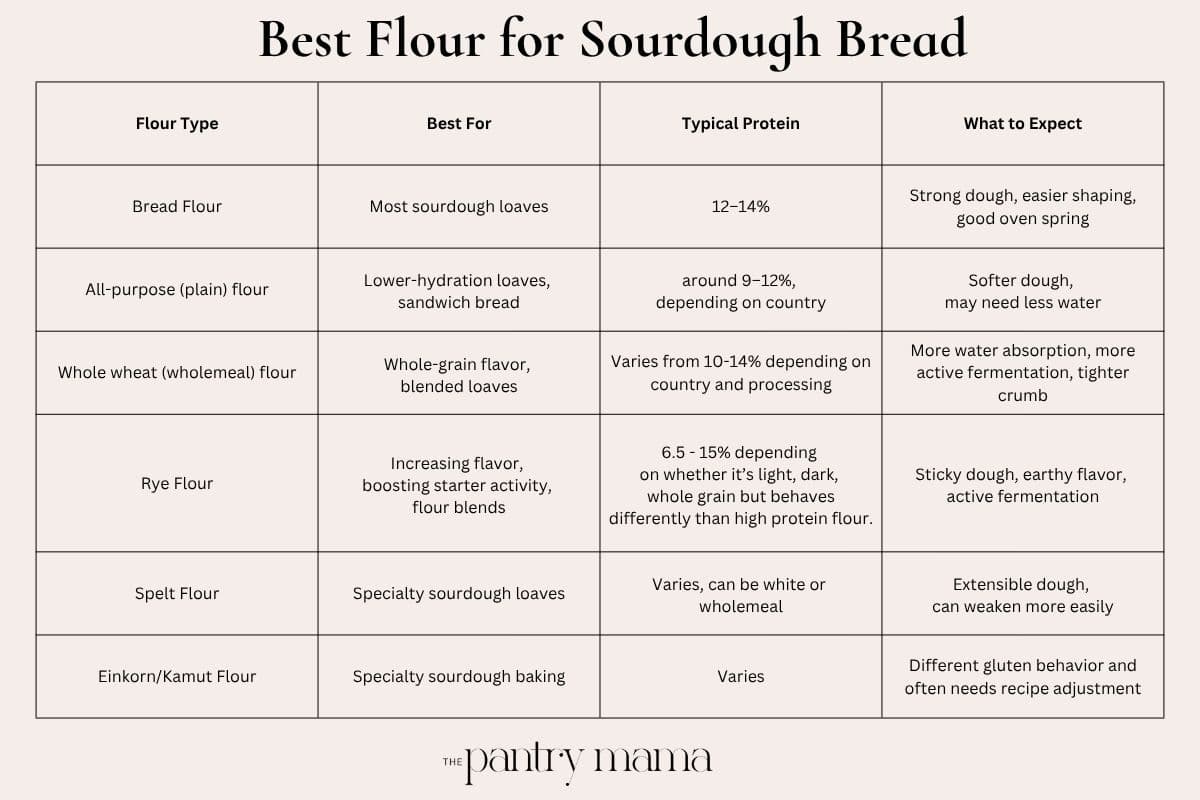
Table of Contents
- Why Protein Content Matters
- How to Read the Protein Percentage on a Flour Label
- A Note For US Bakers
- What I Look For When Choosing Sourdough Flour
- Choosing White Flour for Sourdough
- Other Flours You Can Use in Sourdough
- How Flour Choice Changes Hydration
- How Different Flours Change Your Sourdough
- Which Flour Should You Use?
- How To Choose A Good Bread Flour at the Store
- Common Flour Questions
- So, What Is the Best Flour for Sourdough?
Why Protein Content Matters
A “Bread Flour” or “Baker’s Flour” label on the bag is useful, but the protein percentage tells you much more about how that flour is likely to behave when making sourdough. The proteins in wheat flour form gluten when they are hydrated and agitated. That gluten network gives your dough the strength to hold onto the gas created during fermentation.
For everyday artisan sourdough, I generally prefer flour with around 12–14% protein because it gives the dough good strength while still being easy to handle. This is especially useful for beginners, because a stronger flour is generally more forgiving while you are learning bulk fermentation, shaping and dough handling. The last thing you need for your first few loaves is soupy, unworkable dough!
The label on the front of the bag can sometimes be misleading too. A flour might be called “bread flour”, “strong flour” or “baker’s flour” but still have a lower protein content than you expect. That’s why I always recommend checking the protein percentage where possible.
How to Read the Protein Percentage on a Flour Label
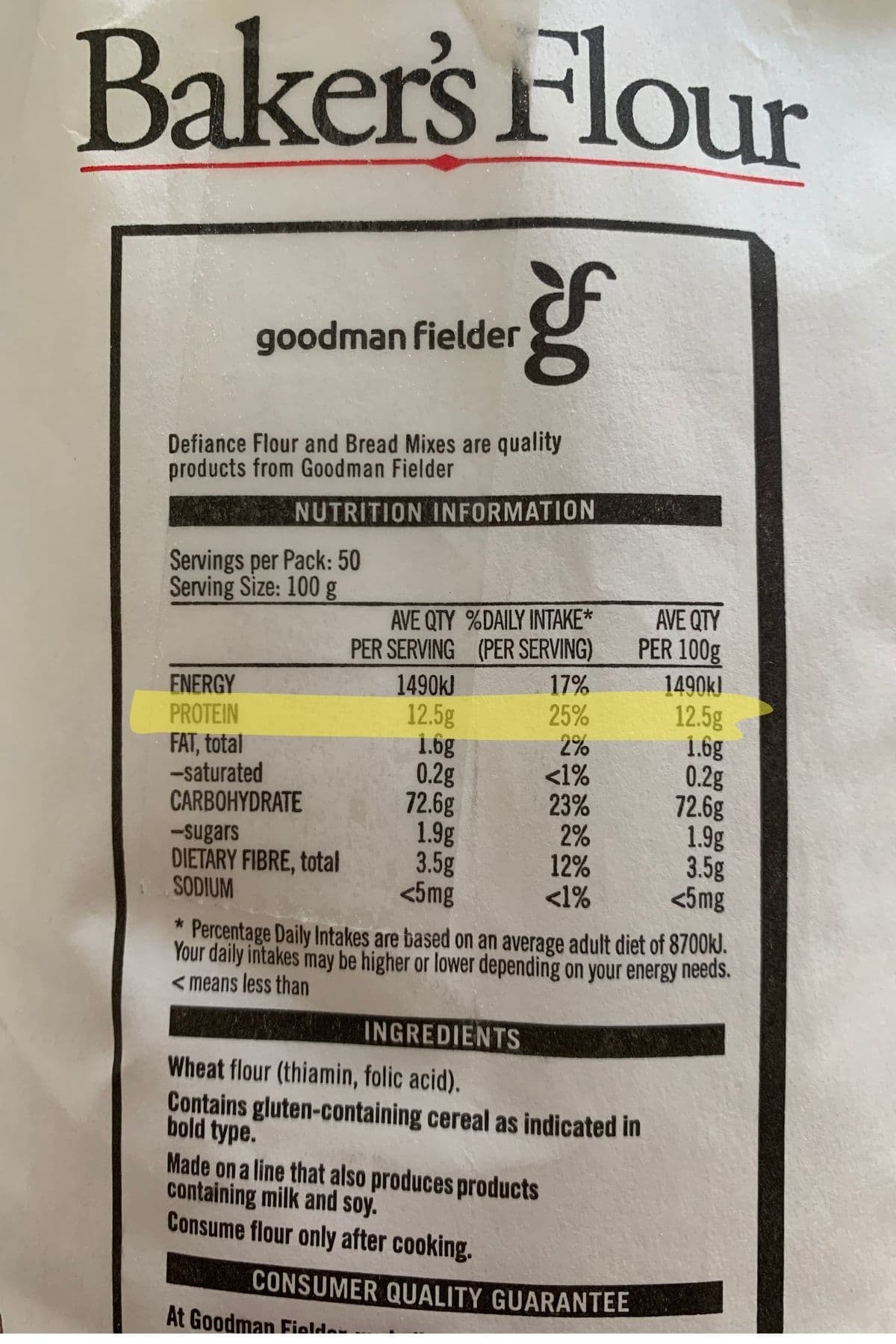
In Australia, this is usually very straightforward because nutrition panels list protein per 100 g. So if a flour contains 12.5 g of protein per 100 g, that flour has a protein content of 12.5%.
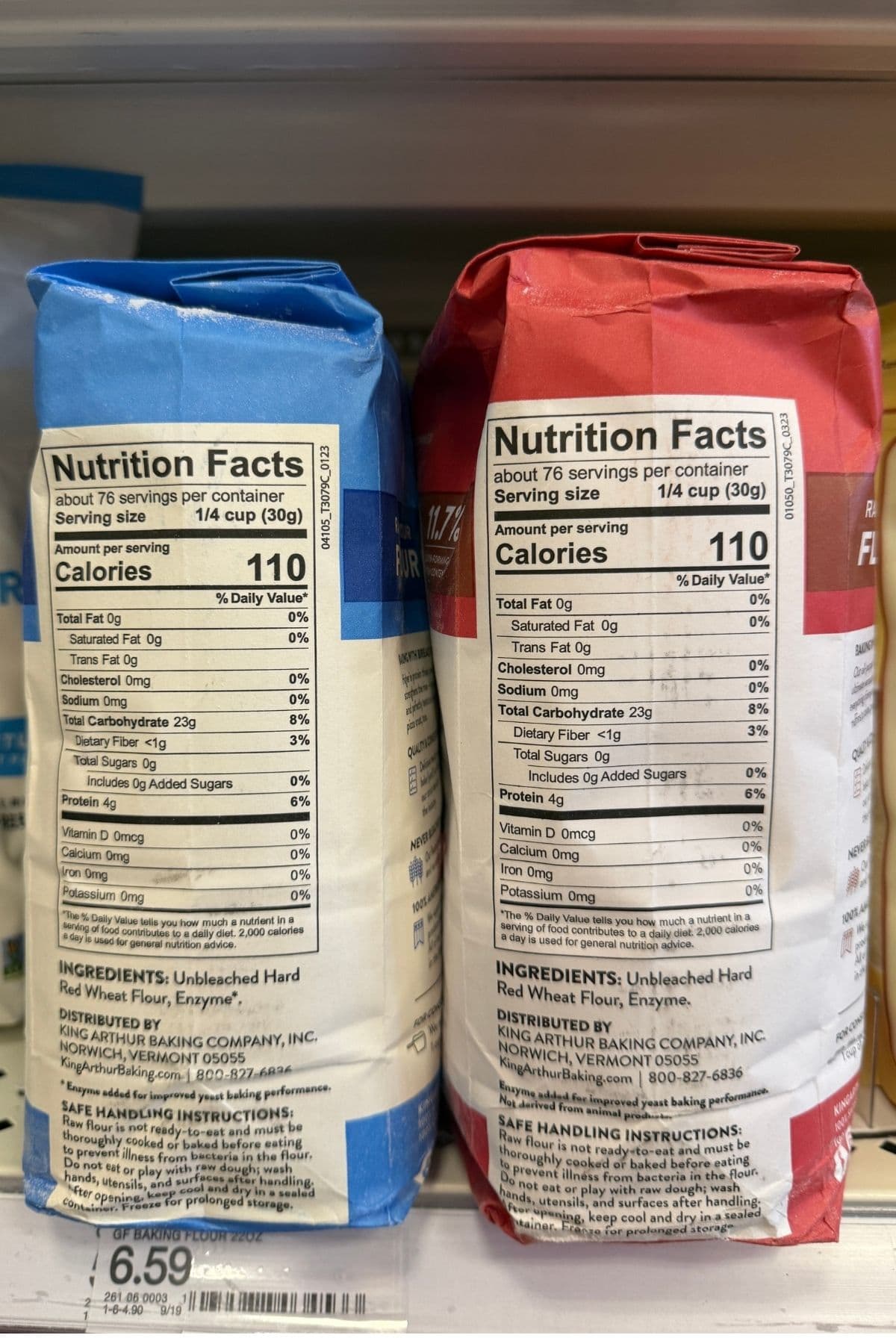
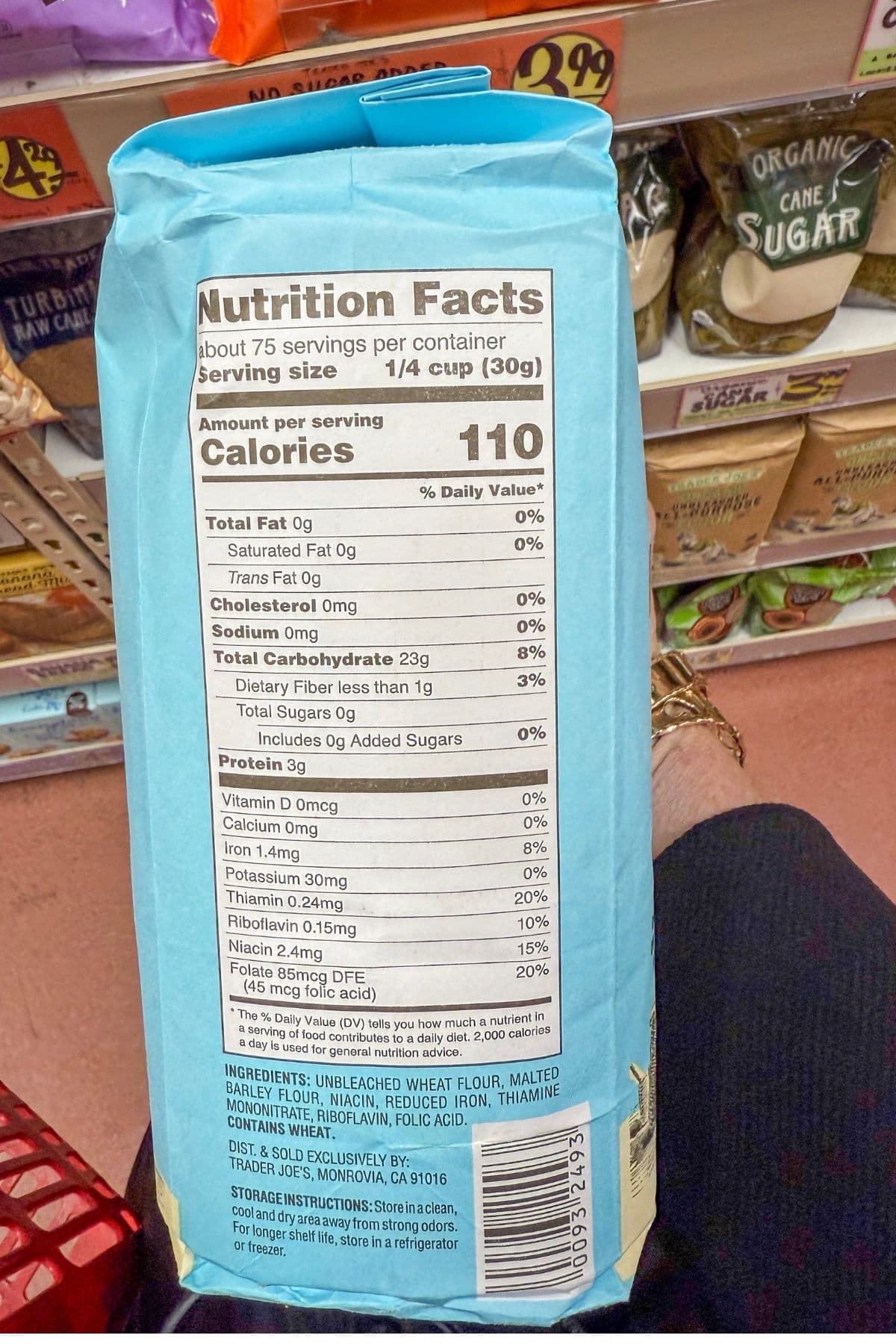
US labels can be a little trickier because protein is generally listed per serving and rounded to a whole gram.
For example, two different flours may both list: 4 g protein per 30 g serving.
If you calculate that manually: 4 ÷ 30 × 100 = 13.3%.
But that does not necessarily mean the flour contains exactly 13.3% protein because the 4 g figure may have been rounded.
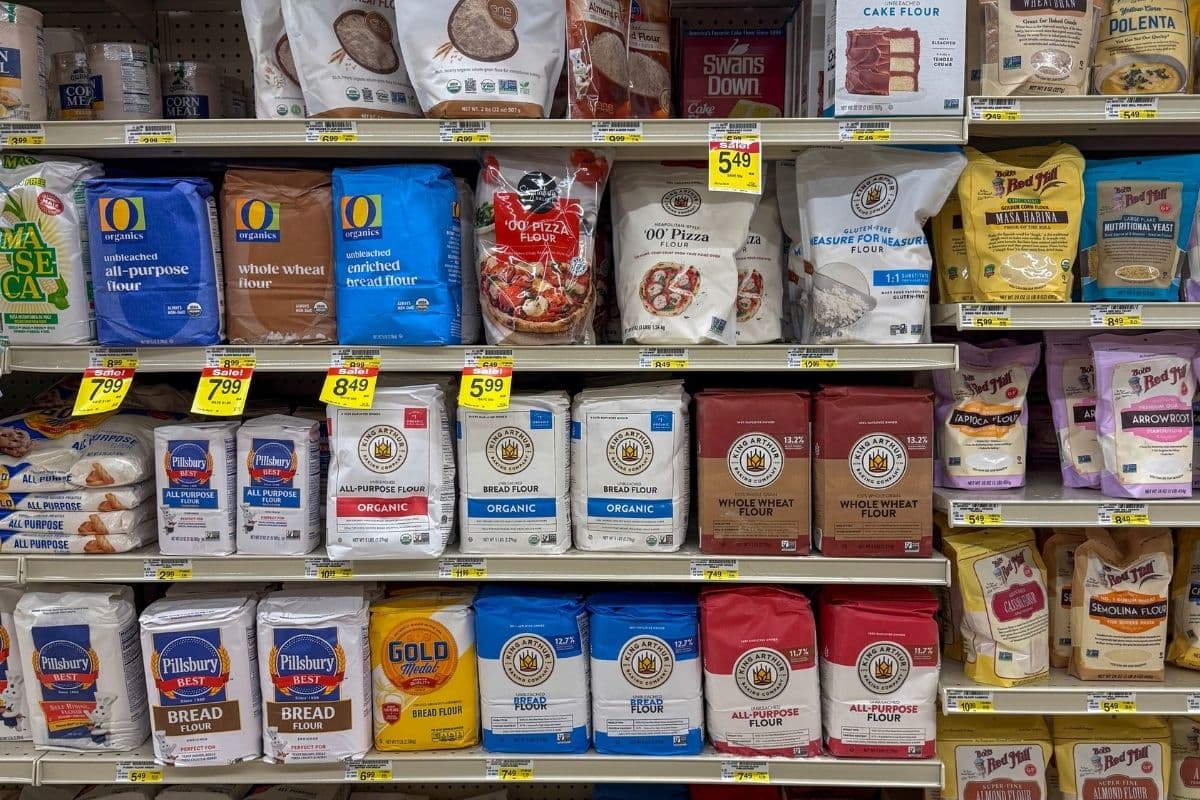
This is exactly what you can see in the nutritional panels below. One of the flours is King Arthur Bread Flour (blue bag), while the other is King Arthur All-Purpose Flour (red bag). Both nutrition panels list 4 g of protein per 30 g serving, yet the all-purpose flour states on the front of the bag that it contains 11.7% protein.
Kate’s Pro Tip
A Note For US Bakers
If the manufacturer lists an exact protein percentage on the bag or on its website, use that figure rather than calculating it from the rounded Nutrition Facts panel. If no percentage is supplied, you can still estimate it using: grams of protein ÷ serving size × 100. Just remember that the answer may not be exact if the protein figure on the nutrition panel has been rounded.
What I Look For When Choosing Sourdough Flour

After baking thousands of loaves in my own kitchen, I’ve learned that the best flour isn’t necessarily the most expensive one or the one with the nicest packaging. I care much more about how consistently it behaves.
These are the things I look for:
Protein – For my everyday artisan sourdough, I generally look for at least 12% protein minimum.
How It Absorbs Water – Two flours with the same protein percentage can still behave very differently. I pay attention to how much water a flour can comfortably absorb and adjust the hydration if necessary.
How the Dough Feels During Fermentation – I want dough that builds strength and holds its shape without becoming excessively sticky or slack. There’s nothing I hate more than sticky, unmanageable dough!
Availability – I prefer flour I can buy consistently rather than building a recipe around something difficult to source, especially with postage and delivery costs constantly increasing. I also don’t want to be running to the store every few days, so flour that is available in bulk is essential for my needs.
Price – You do not need the most expensive flour on the shelf to make great bread. Seriously, I don’t use expensive flour. I don’t use organic flour. I make hundreds of loaves of sourdough a month, so I need flour that performs well without making every loaf unnecessarily expensive.
Choosing White Flour for Sourdough
Bread Flour vs All-Purpose Flour
All-purpose flour, or plain flour, as it is commonly called in Australia and the UK, generally contains less protein than bread flour, although the exact amount varies considerably between brands and countries.
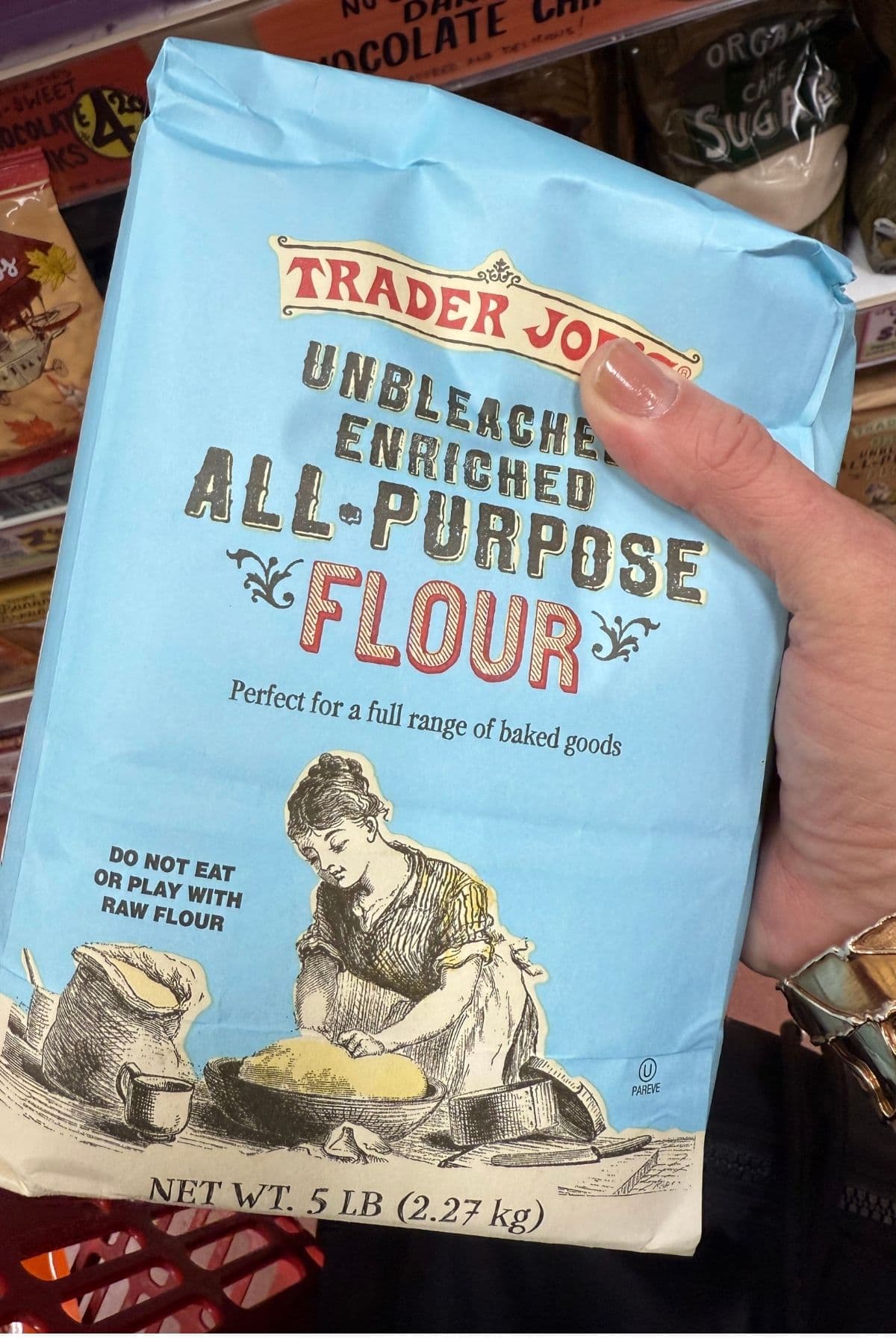
After looking at grocery-store flours in both Australia and the USA, I’ve found that US all-purpose flour often has a higher protein content than Australian plain flour. Seriously, don’t take me sight-seeing, just give me directions to the nearest grocery store! For example, King Arthur All-Purpose Flour contains 11.7% protein, while White Wings Plain Flour in Australia contains around 9.7%. That’s a huge difference when you’re trying to bake a great loaf of sourdough bread.
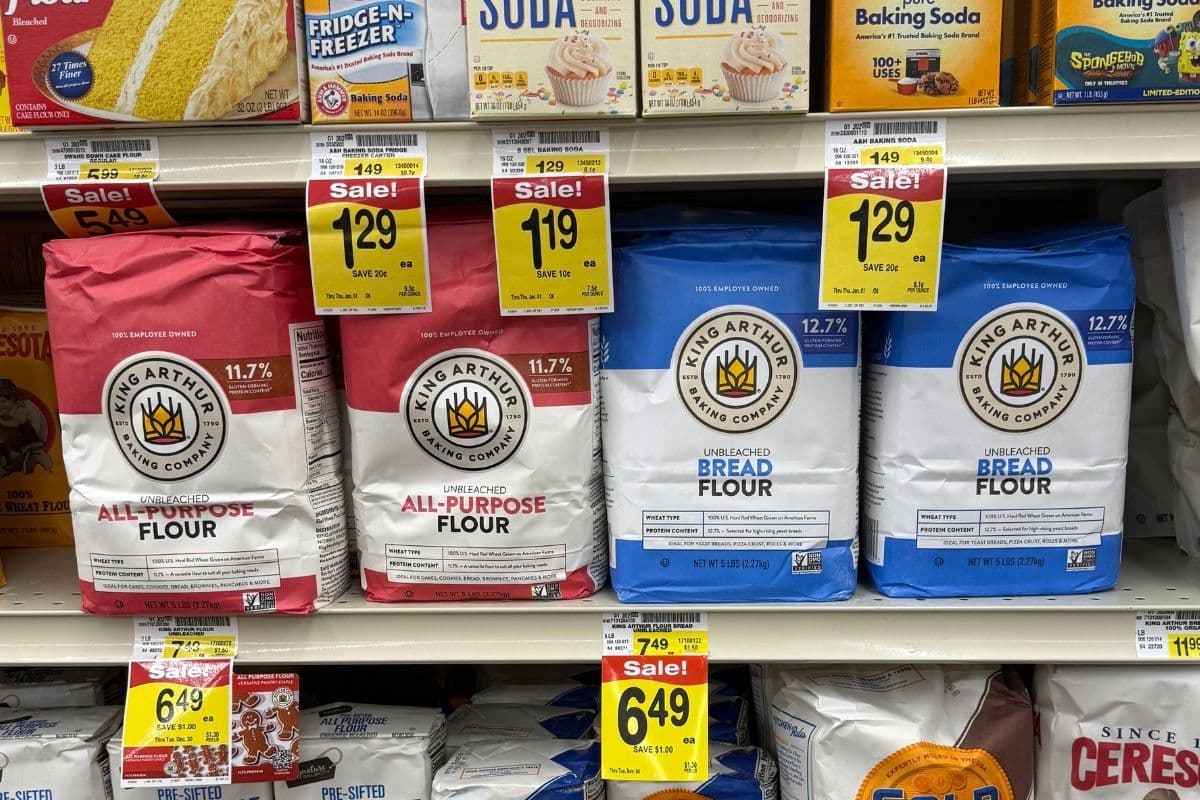
Bread flour is a higher-protein white flour milled specifically for bread baking. Most bread flours contain more than 12% protein, and I find something between 12–14% works beautifully for artisan sourdough.
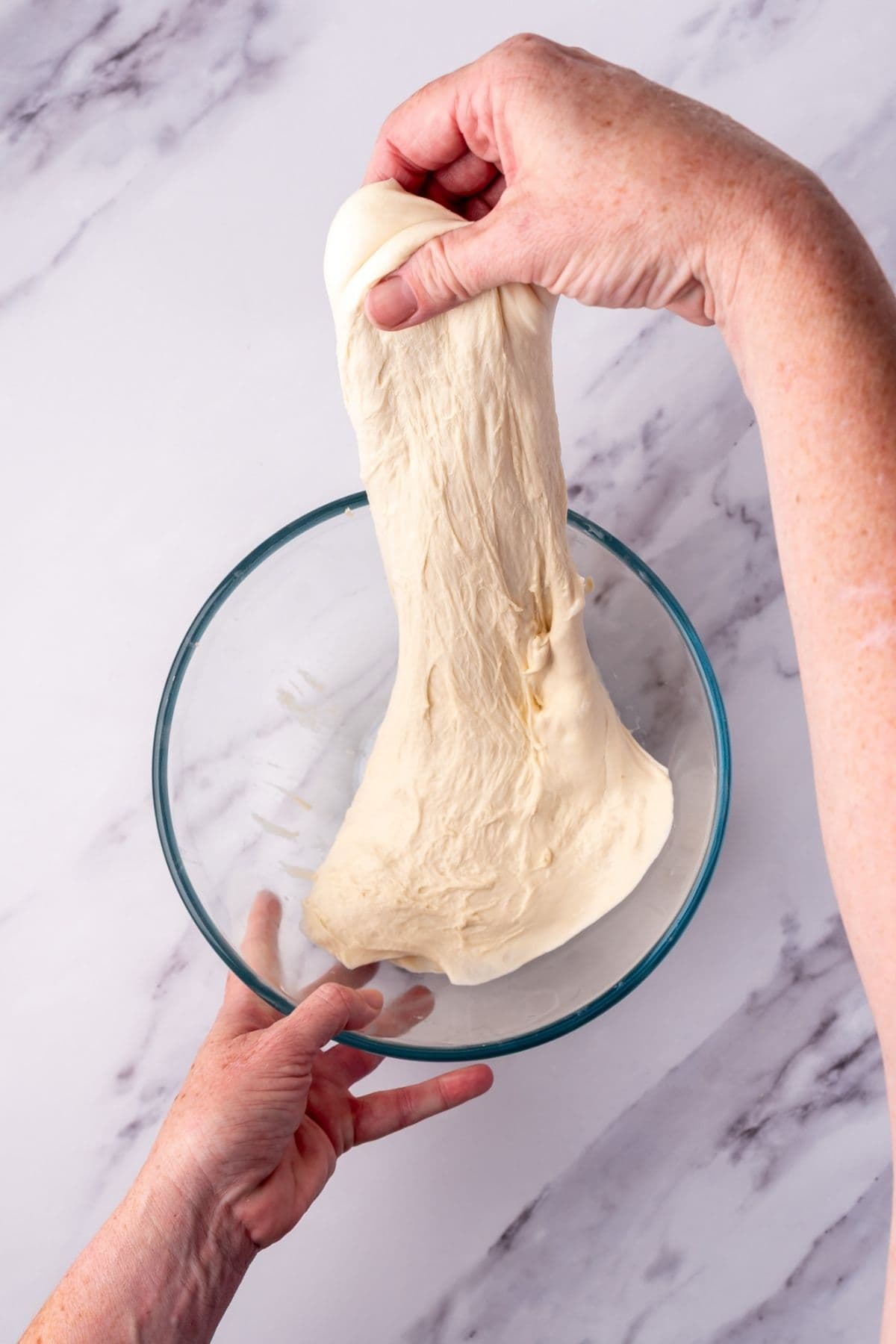
Because bread flour can generally build a stronger gluten network, it tends to produce dough that holds its shape better, traps gas more effectively and is easier to handle during fermentation and shaping.
Strong Flour, Bread Flour + Baker’s Flour Explained
Strong flour, bread flour and baker’s flour are all names used for wheat flours designed for bread baking, but the exact protein content can vary between brands and countries.
Strong flour or strong bread flour is a term commonly used in the UK and generally refers to higher-protein flour intended for bread making.
Bread flour is the term most commonly used in the United States. It usually contains more protein than all-purpose flour.
Baker’s flour is a term you’ll often see in Australia. It generally refers to flour suitable for bread baking, but it doesn’t automatically mean the flour contains 12% protein or more. Lauke Wallaby Baker’s Flour, for example, contains around 11.5% protein, despite being labelled as Baker’s Flour. The Manildra Baker’s Flour shown below is even lower at 10.7 g of protein! Can you see why relying only on the name on the bag can get confusing?
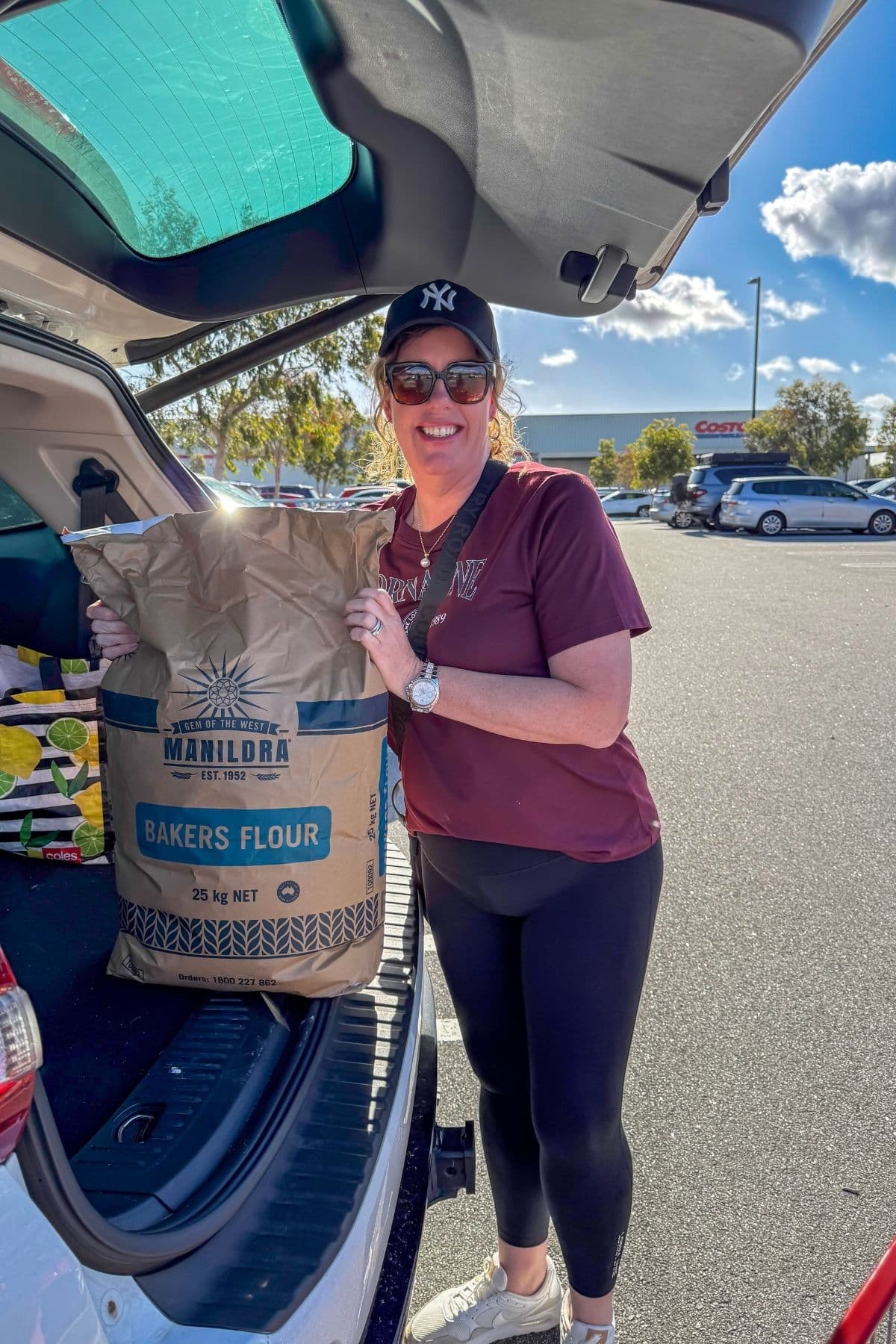
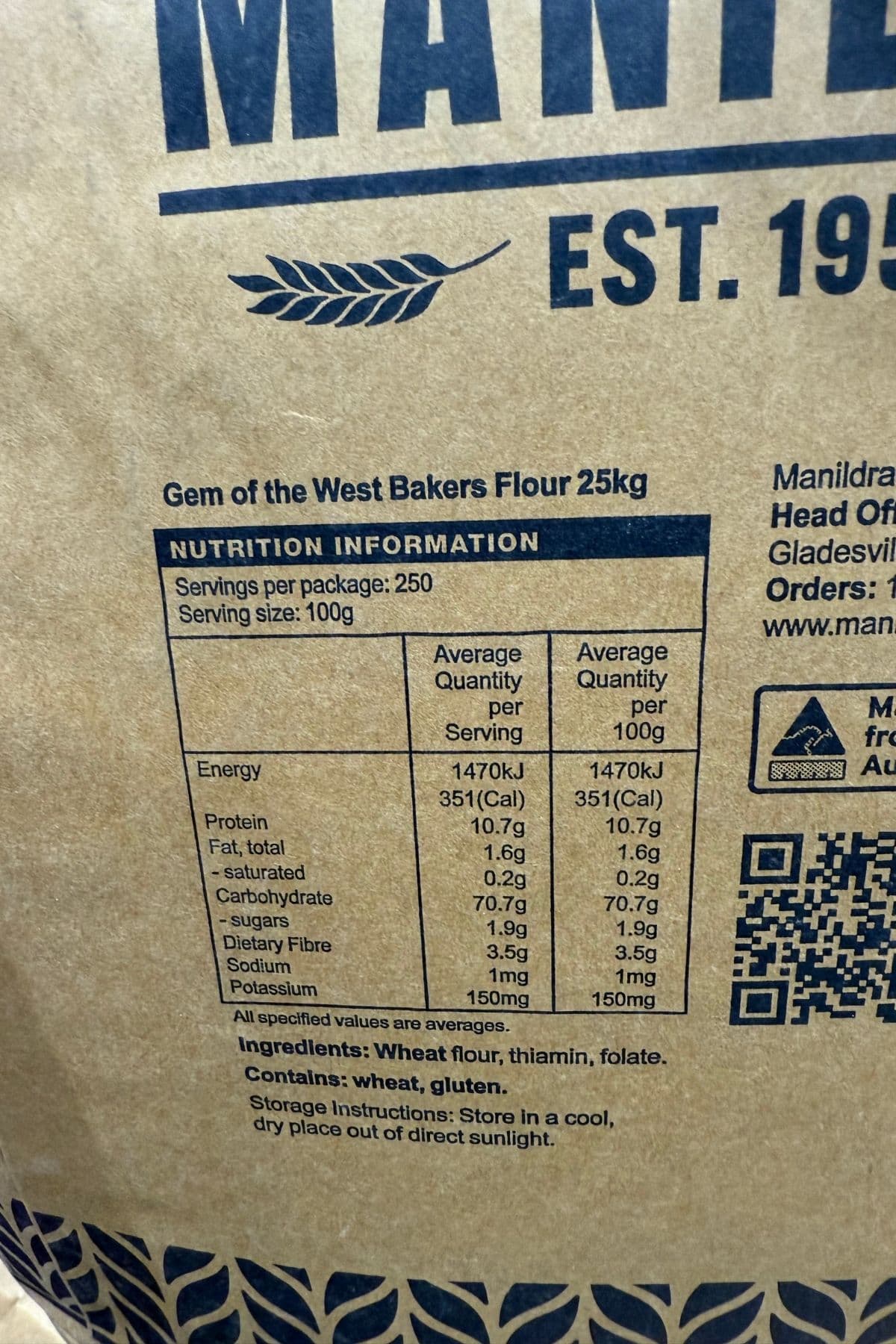
Rather than looking only at whether the flour says “bread”, “strong” or “baker’s”, check the actual protein percentage whenever you can. Two bags both labelled as bread flour can still behave quite differently depending on their protein content, wheat variety and water absorption.
Can You Make Sourdough With All-Purpose Flour?
Absolutely. All-purpose flour can make excellent sourdough, but because it generally contains less protein than bread flour, the dough may feel softer, spread more easily and require less water.
One of the most common problems when swapping bread flour for all-purpose flour is keeping the same amount of water in the recipe. Lower-protein flour may not absorb that water as effectively, leaving you with much wetter, stickier dough. And you can see the differences in all-purpose flour between the US and Australia – that small percentage can make a world of difference when it comes to sourdough!
If you are using all-purpose flour in a recipe designed for bread flour, I recommend holding back some of the water initially. Around 50 g from a standard loaf recipe can be a useful starting point. You can always add more water if the dough needs it … it’s much harder to take water back out!
If your all-purpose flour is particularly low in protein (this is especially true in Australia), vital wheat gluten can also be useful for strengthening it. I’ve written a full guide to making great sourdough bread with all-purpose flour if that’s what you have available.
Other Flours You Can Use in Sourdough
Bread flour might be my everyday choice, but changing even a small percentage of the flour in your dough can completely change the flavor, texture and fermentation. If you want to experiment beyond white bread flour, these are some of the most useful flours to try.
Whole Wheat Flour
Whole wheat flour (also called wholemeal flour) contains the bran, germ and endosperm of the wheat kernel, giving it more flavor, minerals and fiber than refined white flour. It also absorbs more water, so dough made with whole wheat flour will often feel drier at the same hydration compared with dough made entirely with white bread flour. Whole wheat flour is best for nutty flavor, whole-grain loaves and adding more complexity to your everyday sourdough.
The bran can interfere with gluten development too, so as you increase the percentage of whole wheat flour, you may notice a tighter crumb and a more substantial loaf.
If you’re new to whole wheat sourdough, I recommend replacing around 10–30% of your bread flour with whole wheat flour to begin with. This gives you a nuttier flavor and more whole-grain character without completely changing the way the dough handles.
For a 100% whole wheat loaf, use a recipe specifically designed for whole wheat rather than simply swapping it gram-for-gram into a white-flour recipe. You can try my 100% whole wheat sourdough loaf or whole wheat sourdough sandwich loaf if you want to explore this further.
Rye Flour
Rye flour adds deep, earthy flavor and can encourage lively fermentation, but it behaves very differently from bread flour. Rye contains gluten-forming proteins, but it does not create the same strong, elastic gluten network as wheat flour. This means doughs containing a high percentage of rye can feel stickier, denser and more difficult to shape. Rye flour is best for earthy flavor, rustic loaves, flour blends and boosting starter activity.
For most sourdough bakers, I recommend starting by replacing around 10–20% of the bread flour with rye flour. That gives you extra flavor and fermentation activity without dramatically changing the structure of the dough. My easy whole wheat rye sourdough loaf is a good example of how rye can be incorporated into a mixed-flour loaf.
Rye flour is also useful when strengthening a sourdough starter because it tends to support strong microbial activity. I often describe it as a bit of a superfood for sourdough starter!
Ancient Grains: Kamut, Spelt + Einkorn
Ancient grains can bring fantastic flavor to sourdough, but they don’t behave exactly like modern bread wheat. They are best for experimenting with flavor, adding variety and creating more distinctive artisan loaves.
Kamut, also sold as Khorasan wheat, has a naturally golden color and rich, buttery flavor. It can produce beautifully extensible dough, but its gluten structure is generally less tolerant of aggressive handling or very high hydration.
Spelt flour has a sweet, nutty flavor and tends to create dough that stretches easily but can become slack if it is overmixed or over-fermented. Try this spelt sourdough loaf to see how you like working with this type of flour.
Einkorn has a rich, distinctive flavor and a very different gluten structure again. It can feel sticky and fragile, so it usually benefits from gentler handling and lower hydration than typical bread-flour dough.
If you’re experimenting with ancient grains for the first time, start by replacing around 10–20% of your bread flour rather than immediately baking a 100% ancient-grain loaf. This lets you experience the flavor and dough behavior while keeping the strength and predictability of your usual bread flour.
How Flour Choice Changes Hydration
One of the biggest mistakes I see newer bakers make is assuming that if a recipe says 70% hydration, every flour should be able to handle 70% hydration. It doesn’t work that way.
Flour absorption varies between brands, protein levels and grain types. If your dough feels much wetter and stickier than mine, that doesn’t necessarily mean you’ve done anything wrong, your flour may simply need less water. I see this all the time. My inbox is full of messages from home baker’s telling me that their dough doesn’t look like mine. Flour choice is often the reason!
If your flour cannot comfortably absorb that much water, reducing the hydration will usually give you a much better result than fighting unnecessarily wet dough. Your dough should work with you, not against you. For more information about hydration, read my beginner’s guide to sourdough hydration.
How Different Flours Change Your Sourdough
The flour you use affects much more than just the flavor of your finished loaf. It can change how the dough feels, how quickly it ferments, how easy it is to shape and what the crumb looks like after baking.
Dough Feel – Higher-strength flour can generally handle more water and hold its shape better. Higher-protein flour can produce a dough that’s hard to stretch if you don’t add sufficient water to adequately hydrate the flour.
Water Absorption – Whole grains and stronger flours can often absorb more water, although absorption varies considerably between individual flours. This doesn’t mean dough made with whole grain flours are easier to handle, in fact the opposite is often true!
Fermentation – Whole-grain and rye flours can ferment more energetically because they contain more minerals and nutrients available to the sourdough culture. But even white flours vary in the way in which they ferment. I don’t like estimating fermentation times because of this. It will always depend on many factors, including your choice of flour.
Shaping – Lower-strength flour often produces softer, more extensible dough that may be harder for beginners to shape. The dough can tear when you’re trying to form a loaf because the gluten network is weak.
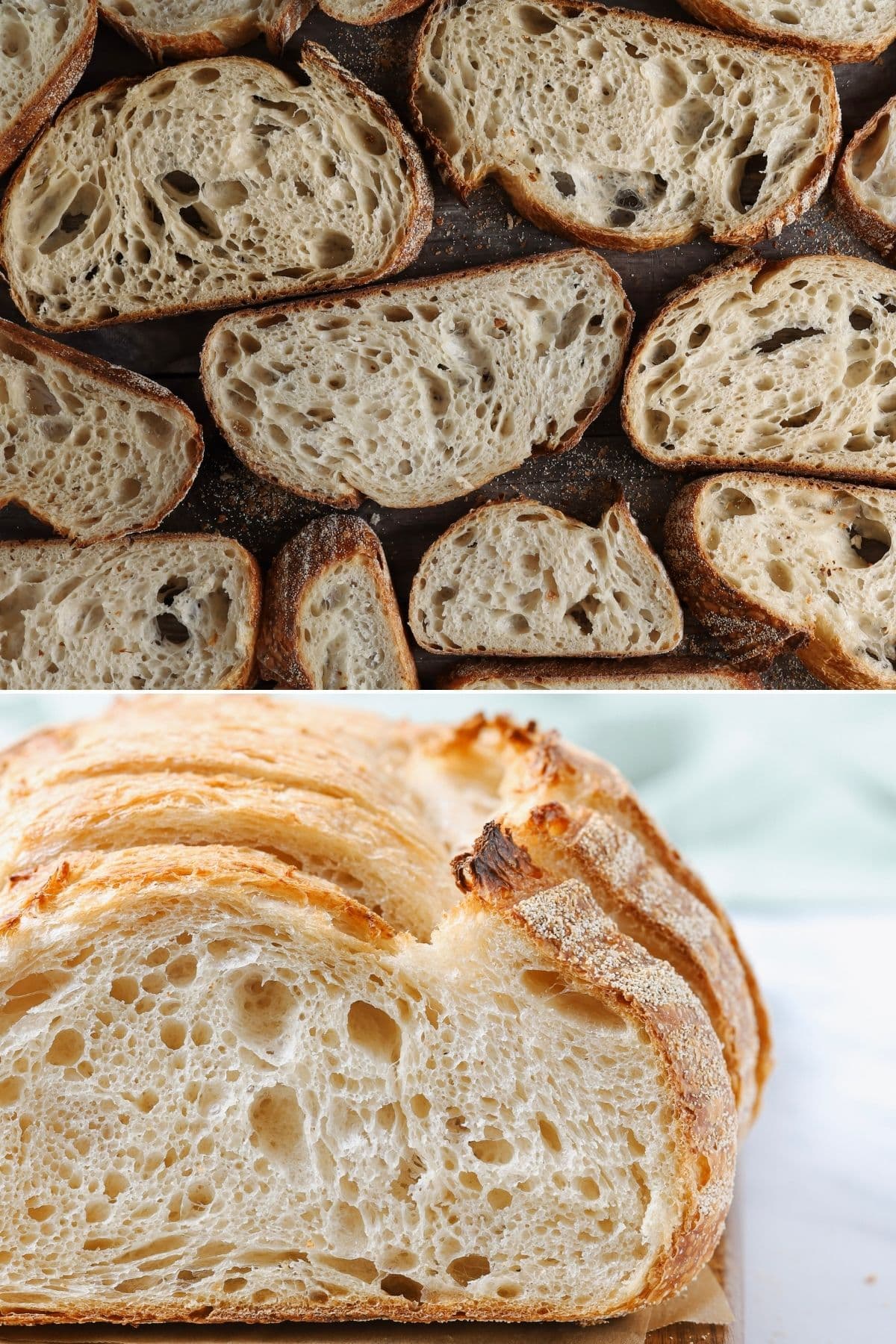
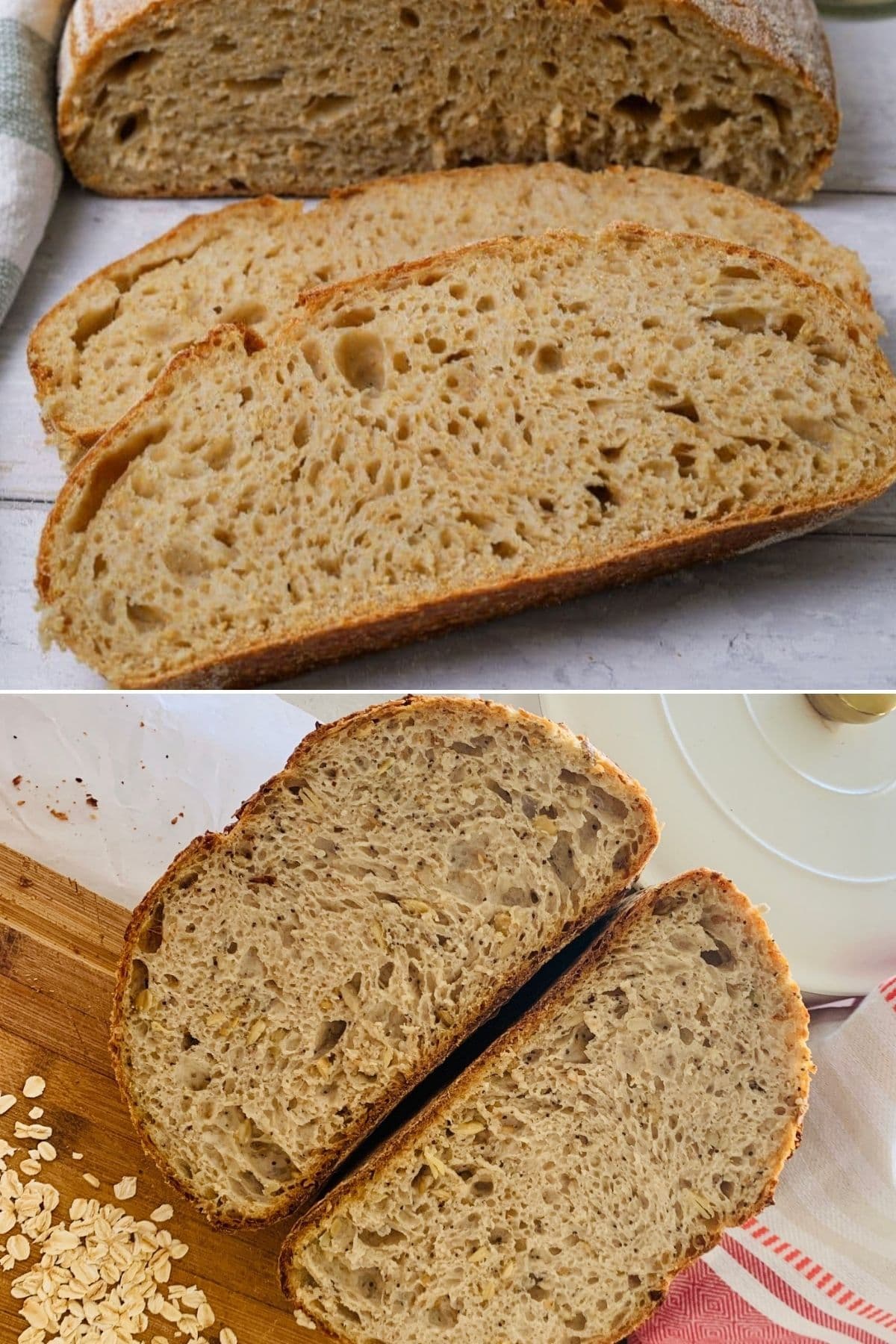
Crumb – Bread flour generally makes a lighter, more open crumb easier to achieve, while whole grains tend to produce a more closed, tightly woven crumb. This often frustrates bakers who initially start experimenting with whole grains, particularly freshly milled grains. You can see this demonstrated in the photos below, with white flour used on the left and whole grain flours used on the right.
Flavor – White flour is relatively mild, whole wheat is nuttier, rye brings deep earthy flavor and spelt can add a subtle sweetness and nuttiness. Personally, I love the way the mild flavor of white bread flour allows the tangy, fermented flavor of my sourdough starter shine through.
Which Flour Should You Use?
If all of these choices are starting to feel overwhelming, let’s keep it simple.
If you’re a beginner – Choose an unbleached bread flour with around 12–14% protein. It will generally give you a stronger, more forgiving dough while you learn fermentation and shaping.
If you only have all-purpose flour – Use it. Don’t wait until you can buy the “perfect” flour before you start baking. Reduce the hydration if necessary and learn how that flour behaves in your kitchen. If you’re using a bread-flour recipe, hold back some of the water initially and add it only if the dough needs it.
If you want more whole-grain flavor – Start by replacing around 10–20% of your bread flour with whole wheat or rye. You’ll get extra flavor without making the dough dramatically more difficult to handle.
If you want a 100% whole wheat loaf – Use a recipe written specifically for whole wheat rather than swapping the flour directly into a white-flour recipe. Whole wheat behaves differently and usually needs adjustments to hydration and handling. You can try my 100% whole wheat sourdough loaf and 100% whole wheat sourdough sandwich loaf.
If you want to experiment with ancient grains – Start small. Replace around 10–20% of your bread flour with spelt, Kamut or einkorn and see how the dough feels before increasing the percentage. There’s no need to jump straight into a 100% ancient-grain loaf.
Kate’s Pro Tip
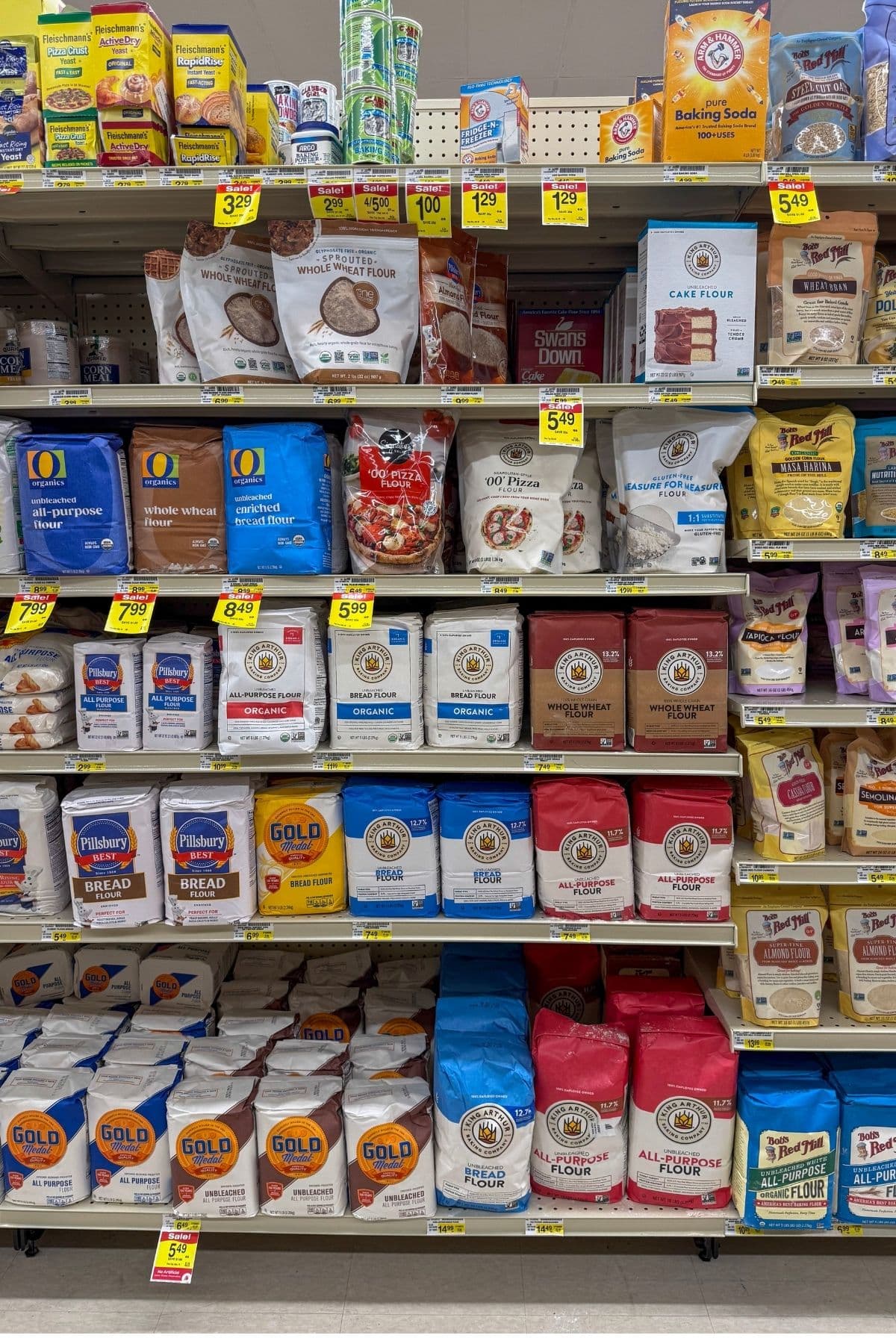
How To Choose A Good Bread Flour at the Store
Once you know what type of flour you need, the next step is choosing a bag from the shelf. Don’t choose it because the packaging looks good or because someone online told you it is the only flour that works.
Look at how it fits your baking. These are the five things I recommend checking:
1. Protein Percentage – Ideally around 12–14% for everyday artisan sourdough.
2. Unbleached Flour – This is what I prefer to use for my sourdough baking.
3. No Self-Raising Agents – You want plain flour without added chemical leavening.
4. Availability – Choose something you can buy consistently. Also consider the size of the bag. You don’t want to be running to the store everyday!
5. Price – Choose a flour that makes sense for how often you bake.
I regularly bake with different flour brands rather than staying loyal to one particular bag. What matters most to me is how consistently that flour performs in my kitchen.
Common Flour Questions
Does Starter Flour Need to Match Bread Flour?
No. This is a common misconception, but the flour you use to feed your sourdough starter does not have to be the same flour you use to make your bread.
I originally created my sourdough starter using all-purpose flour, while using a higher-protein flour for my bread dough. Even when I make a whole wheat sourdough loaf, I can still use starter that has been fed with white flour. It’s absolutely fine.
Do You Need Organic Flour?
No. Organic flour can make excellent sourdough, but it isn’t necessary for a healthy starter or a beautiful loaf. Flour freshness, grain type, extraction, protein content and processing can all affect fermentation and dough performance.
I would choose flour that performs well in your kitchen and fits your budget rather than assuming organic automatically means better sourdough. I personally do not use organic flour for either my sourdough starter or my everyday sourdough loaves, and I’ve never had an issue using non-organic flour in my recipes.
Can You Add Vital Wheat Gluten?
Absolutely. I’m a big fan of using vital wheat gluten when I need to strengthen lower-protein flour. Vital wheat gluten is a concentrated wheat protein powder that can increase the overall protein content of your flour and help it behave more like stronger bread flour.
As a general rule, I use around 10 g of vital wheat gluten per 500 g of flour, depending on the flour I’m starting with. I’ve written an in-depth guide to using vital wheat gluten in sourdough if you want to understand how and when to use it.
What About Bleached Flour?
I prefer to use unbleached flour for sourdough bread. If unbleached flour is readily available to you, that is what I recommend choosing. It gives me consistent results and is what I use for my own everyday sourdough baking. If the flour available to you is different, don’t let that stop you from baking. Learn how the flour behaves and make adjustments from there.
So, What Is the Best Flour for Sourdough?
If you’re just starting out, choose an unbleached bread flour with around 12–14% protein and learn how that flour behaves in your kitchen. Once you’re comfortable with your dough, start experimenting with whole wheat, rye, spelt, Kamut or other grains.
But remember, there isn’t one perfect flour that guarantees perfect sourdough. The best flour is one you can source consistently, afford to bake with regularly and understand well enough to adjust your hydration and fermentation when needed. That understanding gives you far more flexibility than chasing the “perfect” bag of flour ever will.
Good sourdough comes from understanding the ingredients you have and making them work around your kitchen, your schedule and your life.









What is Strong flour and will it work for sourdough bread
I live in Australia and the plain flour is low in protein, so how much gluten flour do I add to bring up the protein percentage? Thanks.
this has been very helpful
Hi Kate. More good info from you to fall back upon.
All the flour blends I use from my supplier located in Minnesota are in the 11-12.5% protein range. We do not tolerate commercial flours well but this non hybridized mill was founded by a couple who were intolerant to the commercial garbage wheat produced in the US. This country ok’s glyphosates and it’s ruining our health.
Once we went to the new stuff, the inflammation stopped. But being as such, it has a lower protein content. A reasonable trade off I’d say. Less spring. Less inflammation. Amazing old time flavor.
However, a shorter autolyse / fermrntolyse (I’ve not noticed a difference) of 15 minute is recommended. And don’t overwork the dough.
Fermentolyse distributes the yeasts much better (like proofed yeast) and gives a more consistent crumb sans huge voids which may look cool but don’t hold butter or jam worth squat.
I’ve found that 65-68% hydration is about all medium protein flour will tolerate for a reasonable spring.
There are no hard and fast rules and even a reliable recipe and proven technique will humble you indiscriminately. It’s a living thing and subject to change without notice.
Regardless, the disappointments still taste wonderful or make great breadcrumbs.
And hooch-heavy discard added to your favorite pizza dough is pure Nirvana.
What about Kamut flour or Eikhorn flour?
Not sure if there is another Great Mill flour but the link in this article is to one that is only 10% protein – 3g per 30 g serving. Glad I read your article, checked the label and did the calculations before I bought it! I have been using King Arthur with 95% success but thought I’d see if there was another option out there.
Can I use regular bread loaf pans to make sour dough instead of a Dutch oven that I don’t have?
Does adding vital wheat gluten turn all purpose into bread flour or is it just a “modified substitute” and still not as great as bread flour? I’ve read your other article on vital wheat gluten but it doesn’t really clarify if it makes it the same as.
When I made regular bread I added 5gms Vitamin C or Ascorbic acid to improve the keeping quality of the bread. Can I use it in sourdough bread.
I’m loving the whole sourdough approach including the discard recipes, I’ve never made such lovely pastry! we are having sourdough pasta with the sourdough meatballs this evening…
Thank you for all the excellent hits and tips and recipes.
I just sent you a long email… the flour is 12% protein following your formula (4 grams protein for 30 gram serving). Maybe next time I will withhold 50 grams of water and see what happens!
Thanks for all your advice
Susan
Is it possible to use gluten free flour? Your site is so helpful. Thank you.
You can use gluten free flour to make sourdough bread but I don’t have any recommendations I’m sorry 🙂