
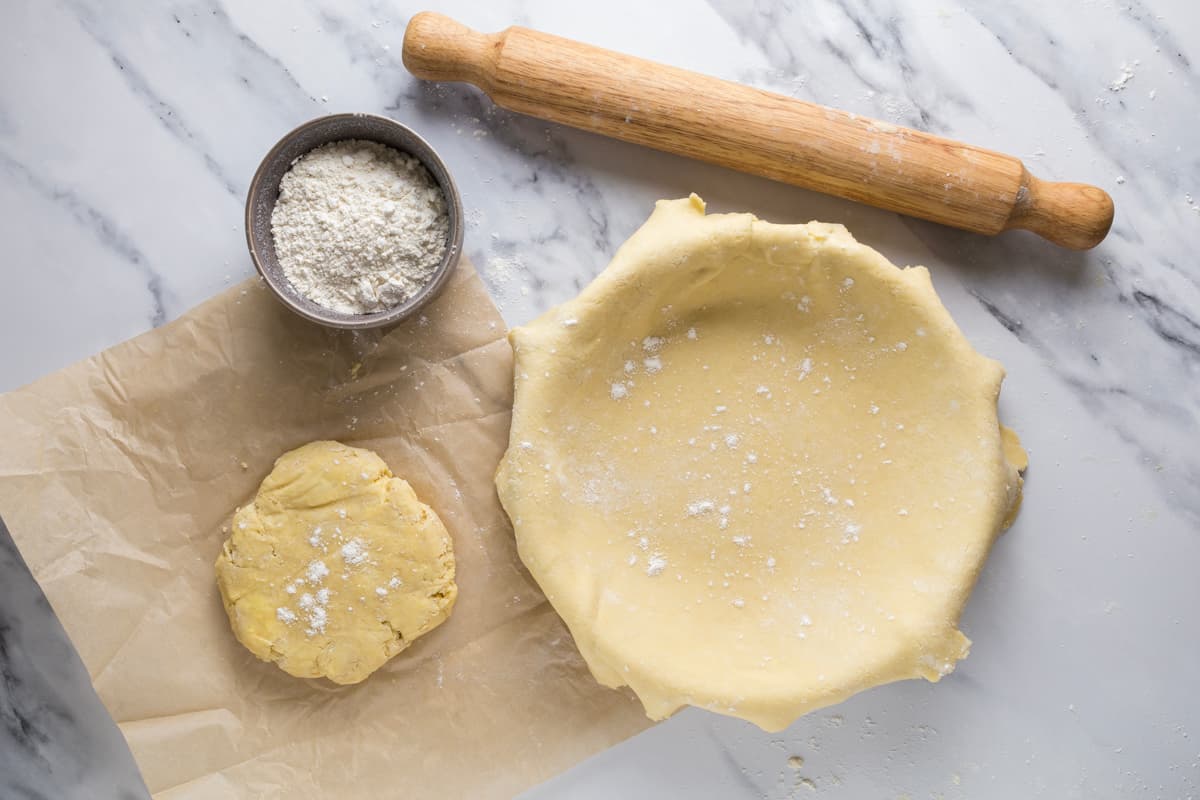
This is your go to recipe for making a sourdough pie crust for sweet pies or savory pies. This pie dough will be enough for a top and bottom pie crust (you can easily adjust it to suit your needs). It’s buttery, it’s got flaky layers and is oh so full of flavor, it’s going to rock your world! Making a sourdough pie crust is really easy. There are only a few ingredients, no kneading and very little hands on time.
This post contains affiliate links. Please see our disclosure policy.
If you love comfort food, you’re going to love baking and eating sourdough chocolate chip cookies, sourdough chocolate brownies, sourdough dumplings or even this sourdough stuffing, which will pair perfectly with this pie crust during the festive season.
Table of Contents
Why You’ll Love This Recipe!
It’s so easy – it could not be easier to pull this sourdough pie crust recipe together – even if you’ve never made pastry before!
Sweet or Savory – Whether you want to make sourdough pumpkin pie, sourdough apple pie, a sourdough chicken pot pie or even these iconic sourdough pop tarts, this simple sourdough pie crust will give the perfect pastry for sweet or savory pies.
Freezes Well – You can freeze this sourdough pie crust shaped in a pie plate or even par-baked for easy convenience.
Ingredients
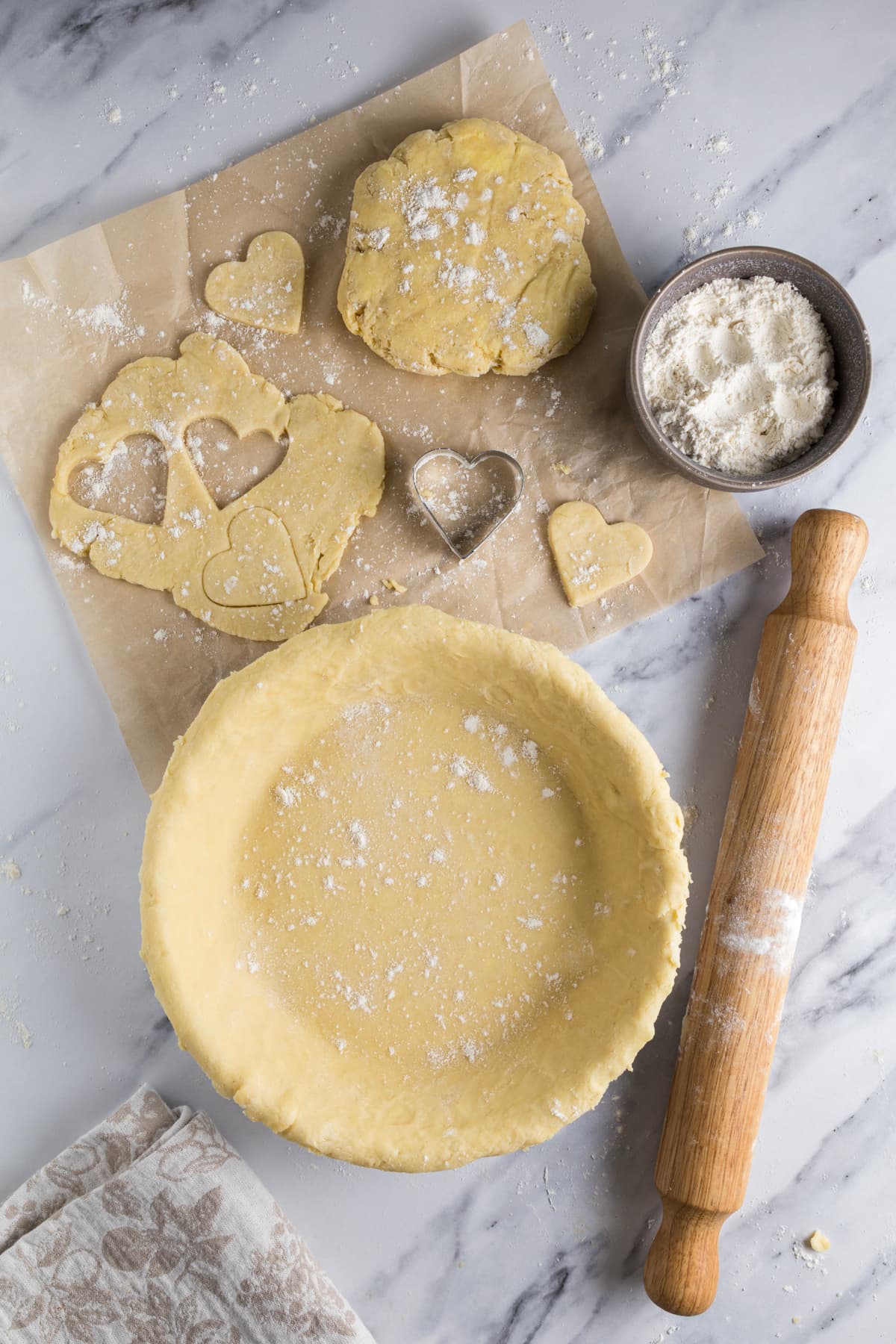
- All Purpose Flour – don’t use bread flour for this recipe, you want a lower protein flour. You can swap up to half of the all purpose flour in this recipe with whole wheat flour. Because whole wheat flour absorbs more water than all purpose flour, you’ll need to add iced water to bring the dough together into a ball. Whole wheat flour adds a more complex flavor to this already very tasty homemade pie crust and will give a nuttier flavor profile.
- Salt and sugar – just a little of each.
- Butter – the butter MUST BE COLD. Frozen, grated butter is best. If you have time, grate the butter and place it into the freezer 30 minutes before you want to make the dough. Use salted or unsalted butter, it really doesn’t make much difference.
- Active Starter or Sourdough Discard – You can use either active, bubbly starter or sourdough discard (unfed) in this recipe. Make sure whatever you use is 100% hydration. You’ll get the best results using sourdough starter that has been fed within the last 24 hours, but you can use discard that’s up to a week old.
- White Vinegar or Apple Cider Vinegar
- Ice Water – this is good to have on hand just in case you need some extra moisture.
Why Use Sourdough Starter in a Pie Crust?
Using sourdough starter or sourdough discard in your pie crust is a fantastic way to avoid food waste. But there are even more reasons to use sourdough in your pastry because it actually has a positive effect on the outcome of this recipe! It affects both flavor and texture.
Using active sourdough starter or sourdough discard in a pie crust will:
- give you a more flavorful crust than using flour alone (especially if you allow it to ferment and develop flavor).
- will give a flakier pastry crust due to the yeast in the sourdough starter.
- bacteria in your sourdough starter work with the vinegar to break down gluten and give you a more tender crust (no hard pie crusts here!).
How To Make Sourdough Pie Crust (for sweet or savory pie filling)
My best advice is to have all the ingredients ready before you start the process and make sure you’ve read through the recipe a few times so you understand exactly what you need to do. This dough makes enough pastry for a top and bottom crust. If you only need the top or bottom, just halve the amounts listed (or freeze some for another day).
Making this sourdough pie crust is more about feel than fuss. Start by whisking together your flour, salt, and sugar in a large bowl. Then grate in cold butter, the colder, the better for those flaky layers. Toss the butter gently through the flour so it’s coated but still chunky; a few visible bits mean a more tender, buttery crust later. Whether you’re mixing by hand or using a pastry blender, a food processor, or a Thermomix, the key is keeping everything cool.
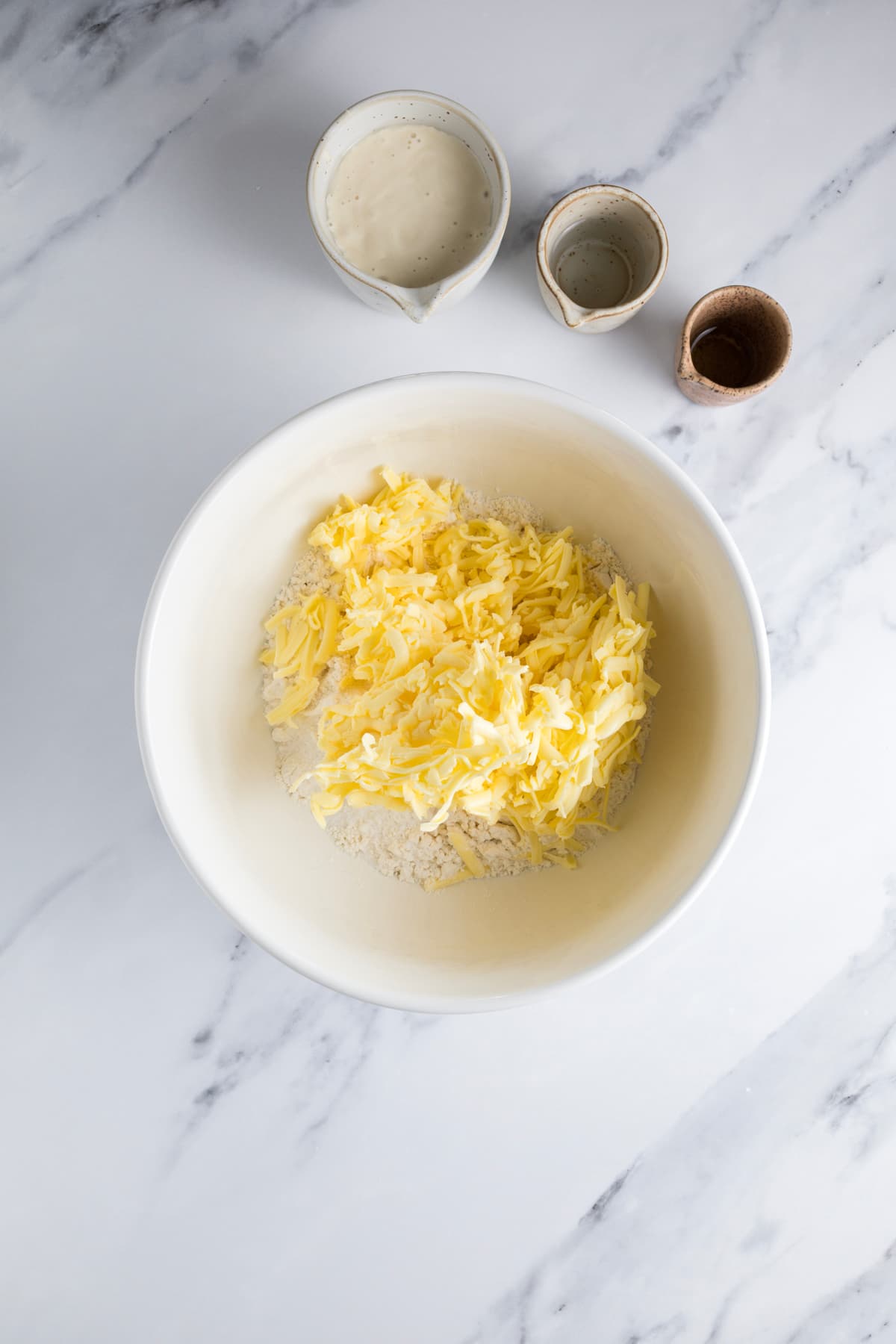
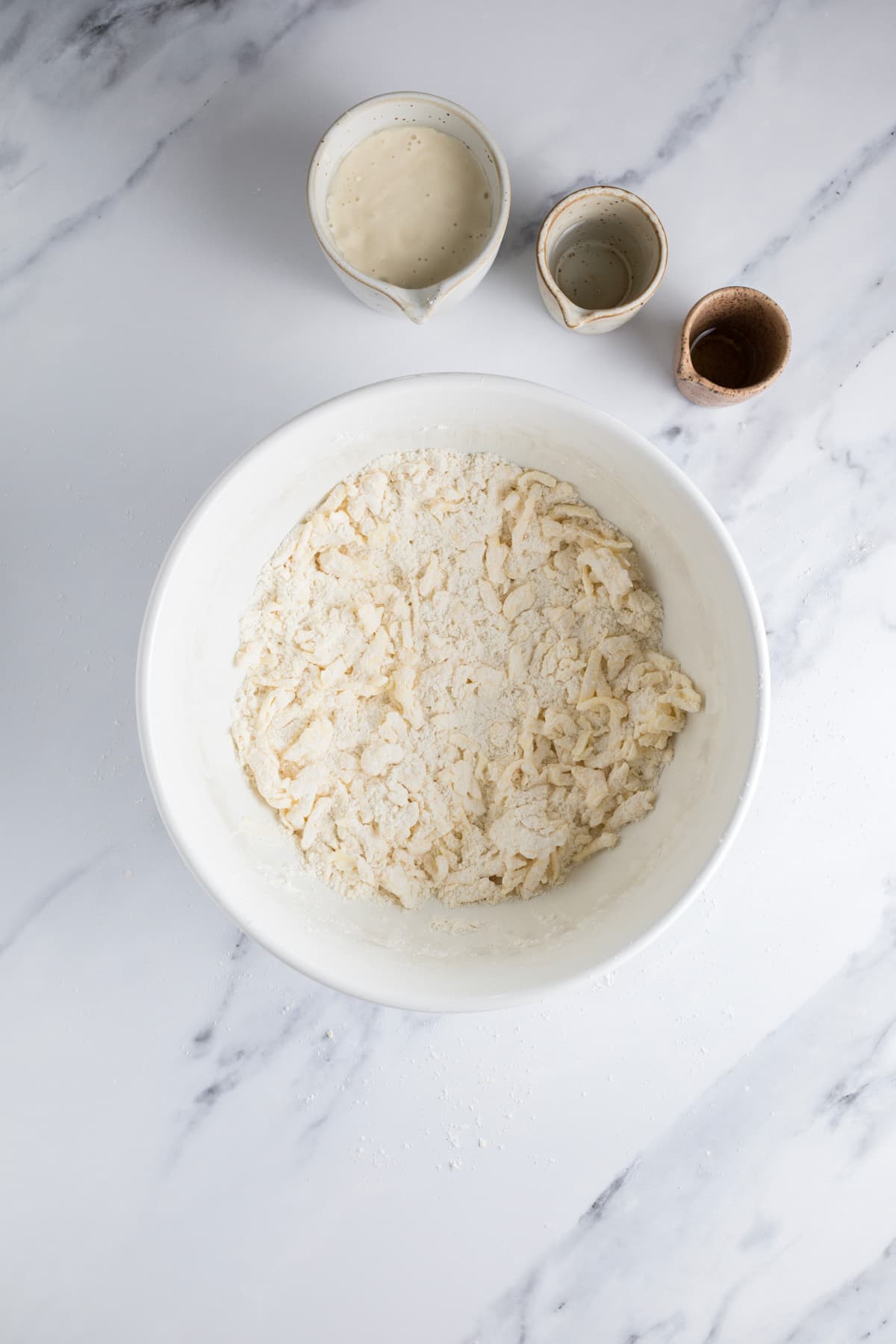
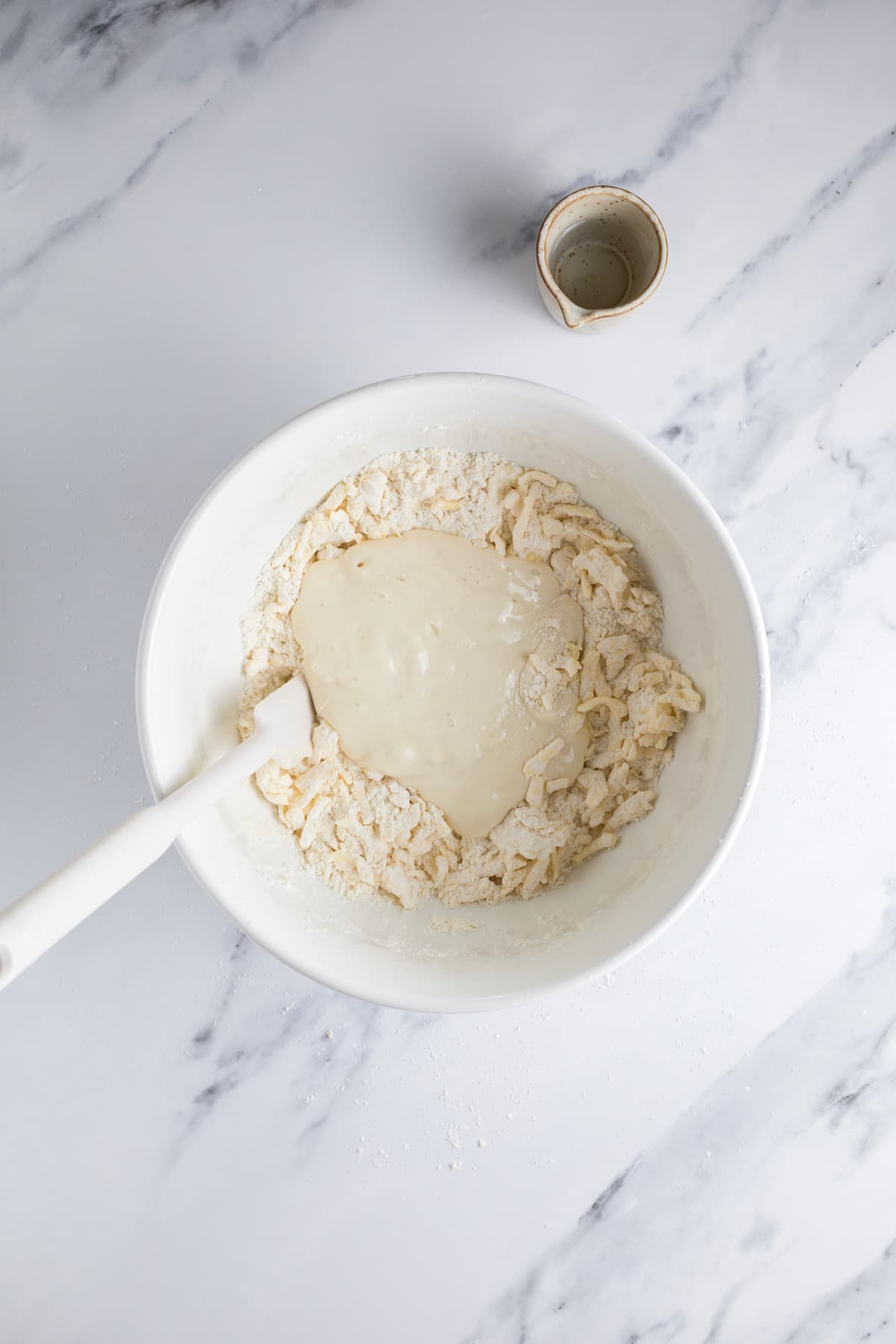
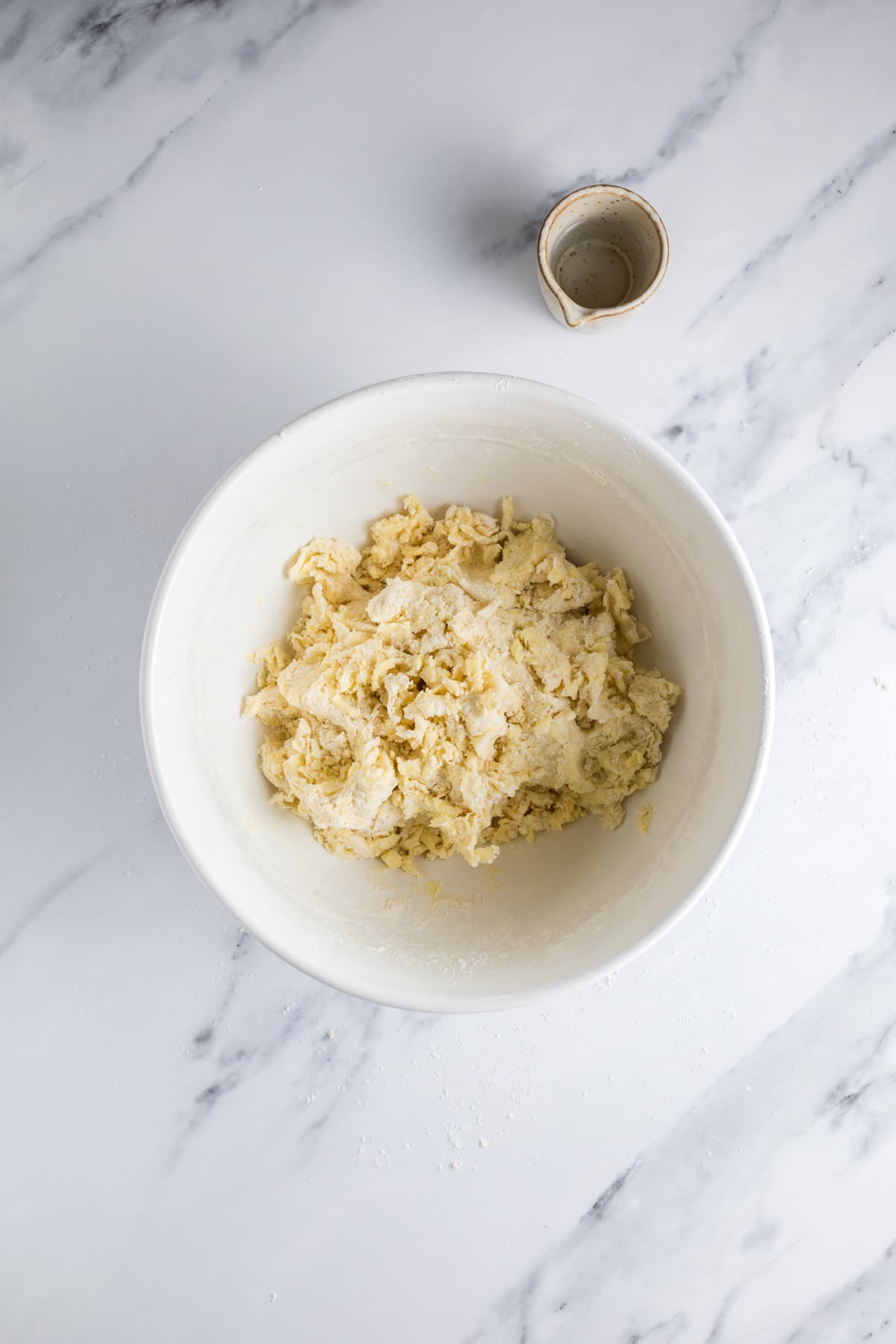
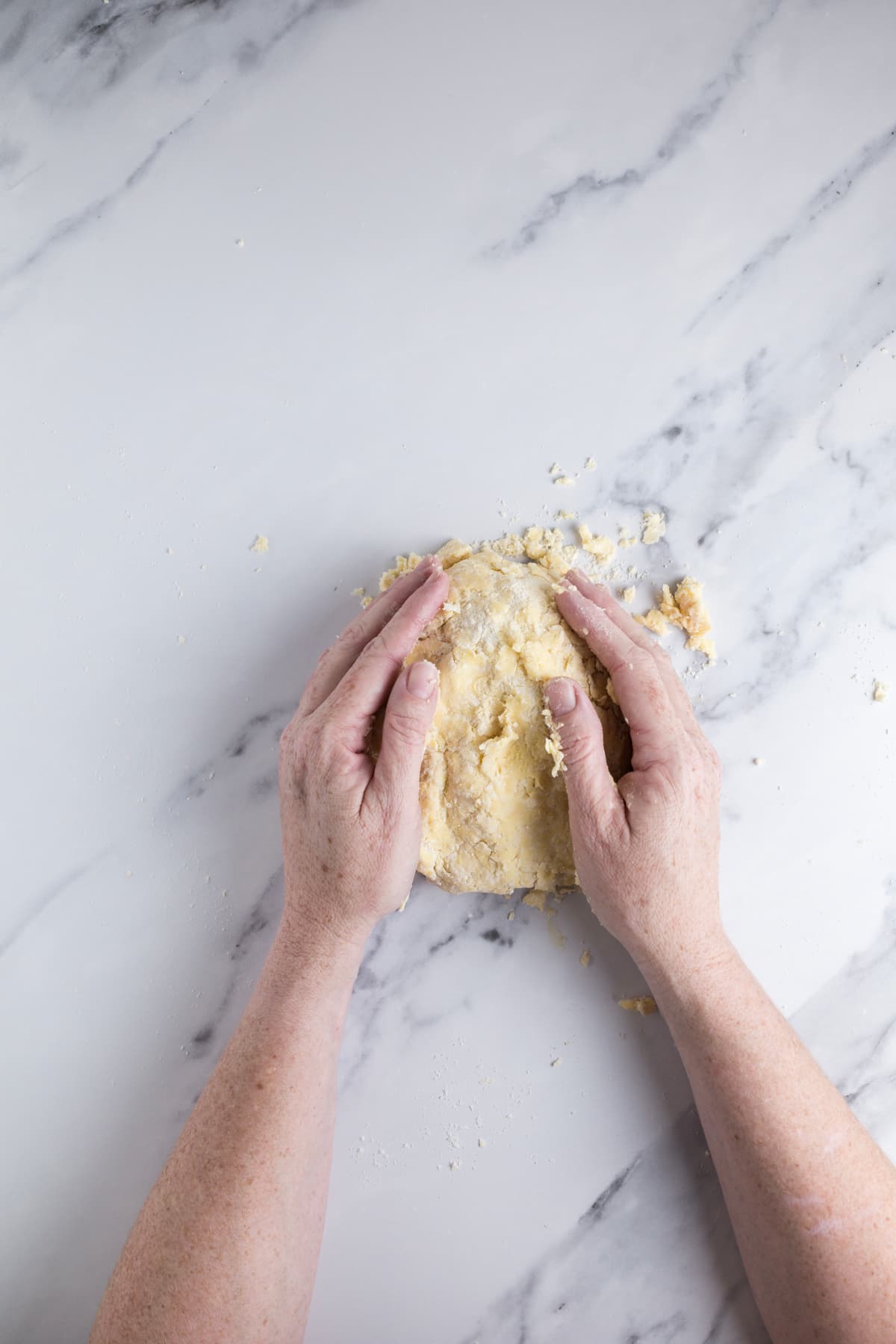
Once you pour in your sourdough starter (or discard) and vinegar, bring it together with your hands into a rough, shaggy dough, don’t worry if it looks a little dry. If it absolutely refuses to come together, a splash of cold water will do the trick.
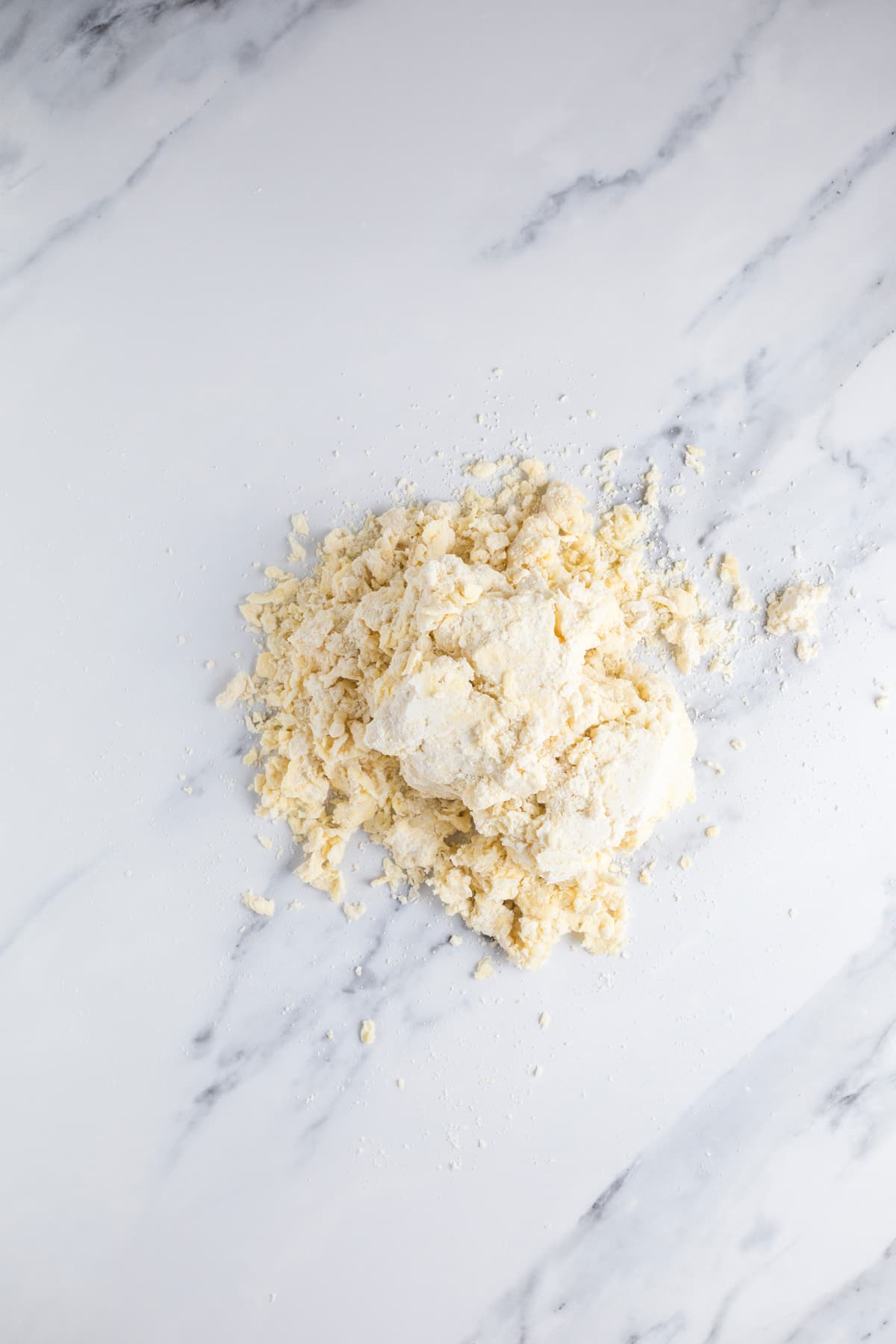
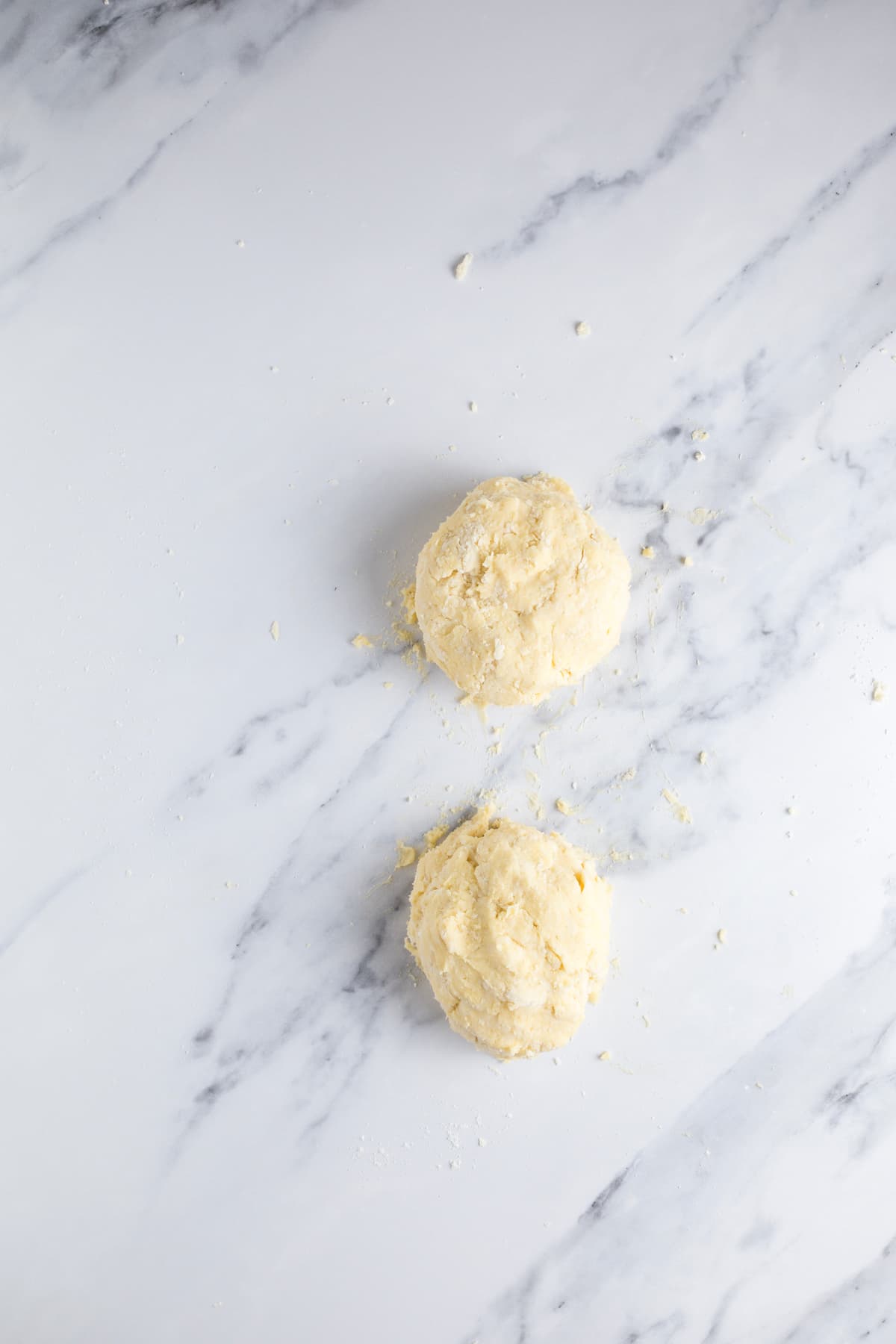
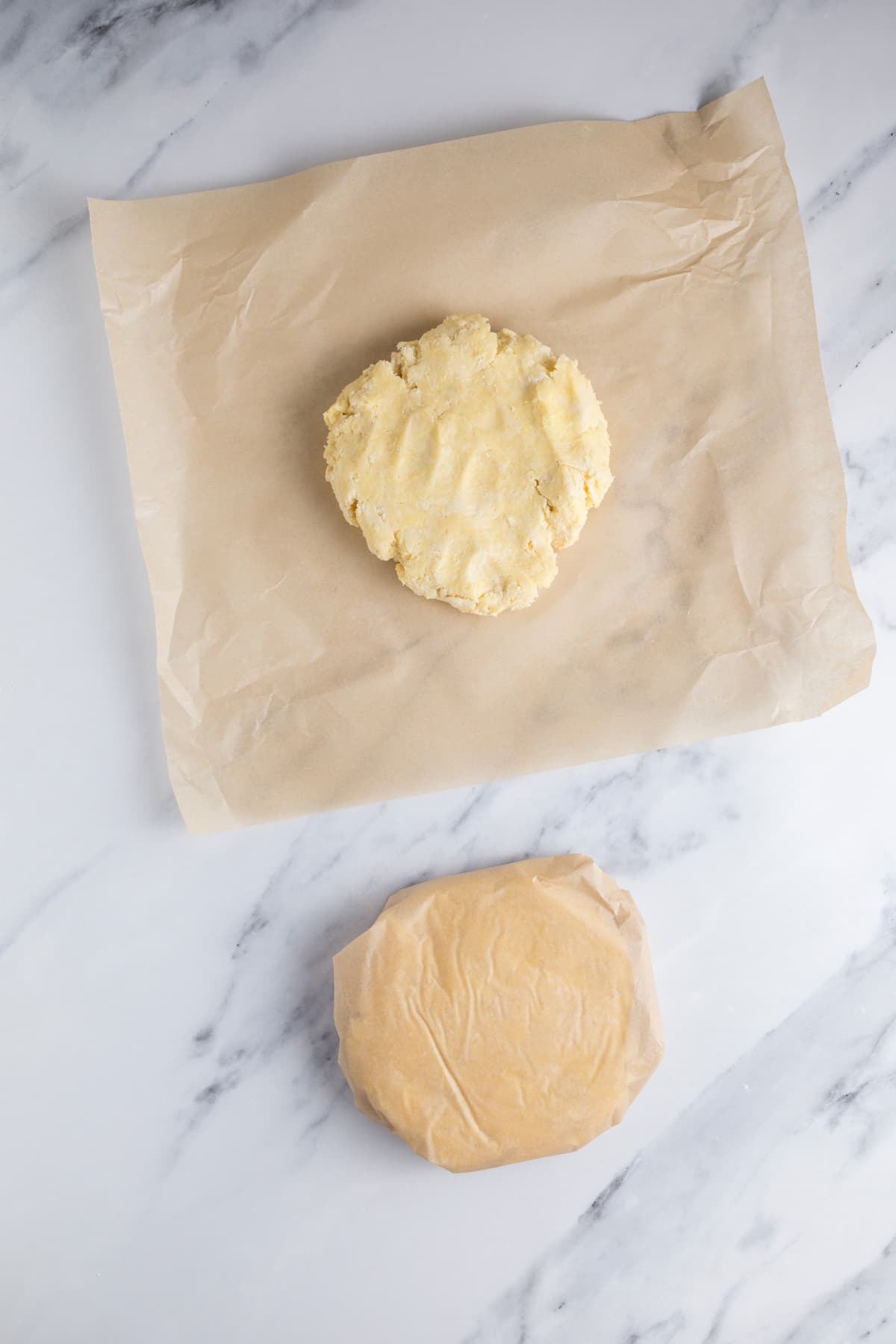
Turn the dough out, divide it into two, and shape each into a disc before wrapping and chilling (you can either use a piece of plastic wrap or parchment paper and a Ziploc bag).
The rest time in the fridge—anywhere from an hour to two days—gives the dough time to hydrate and develop flavor.
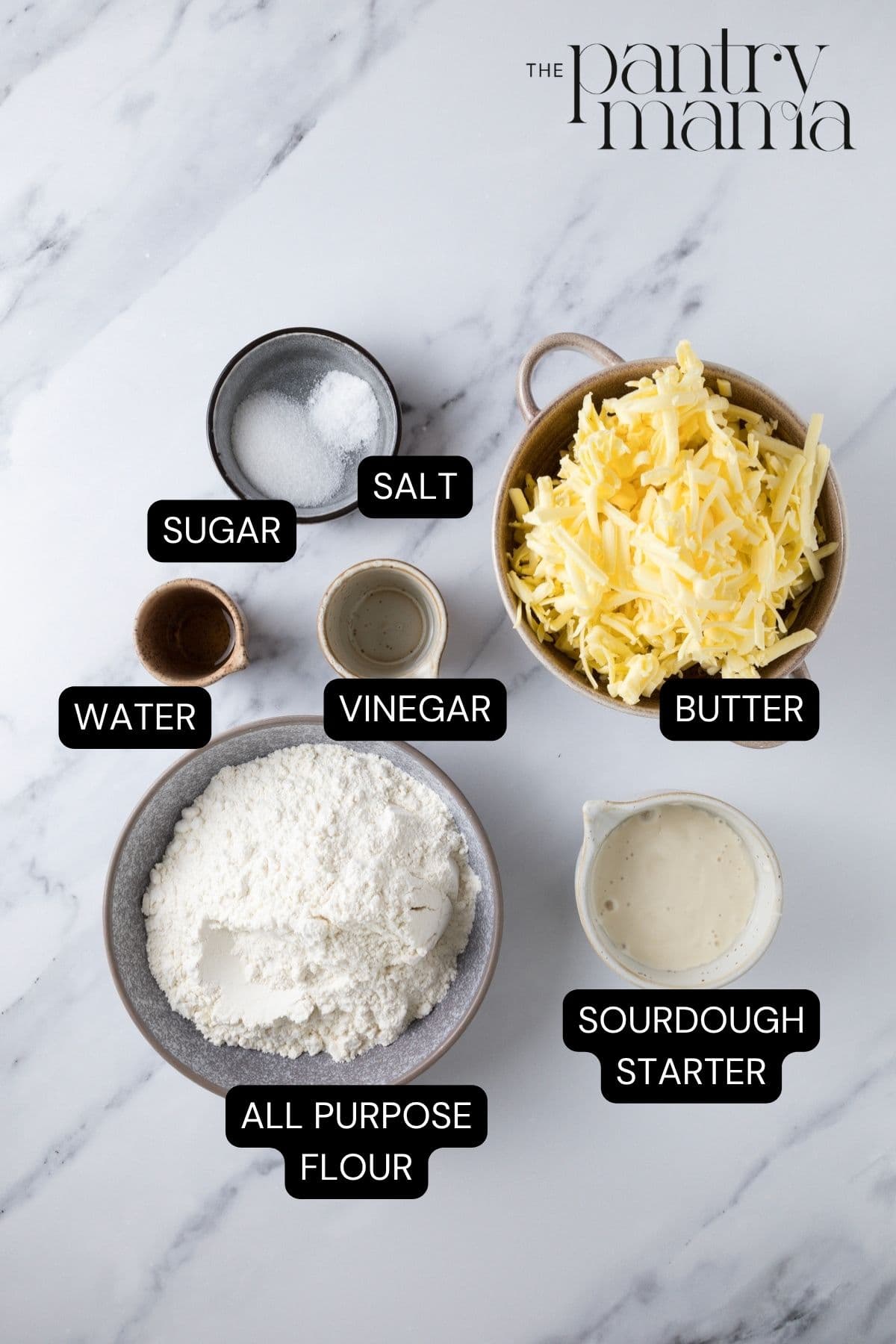
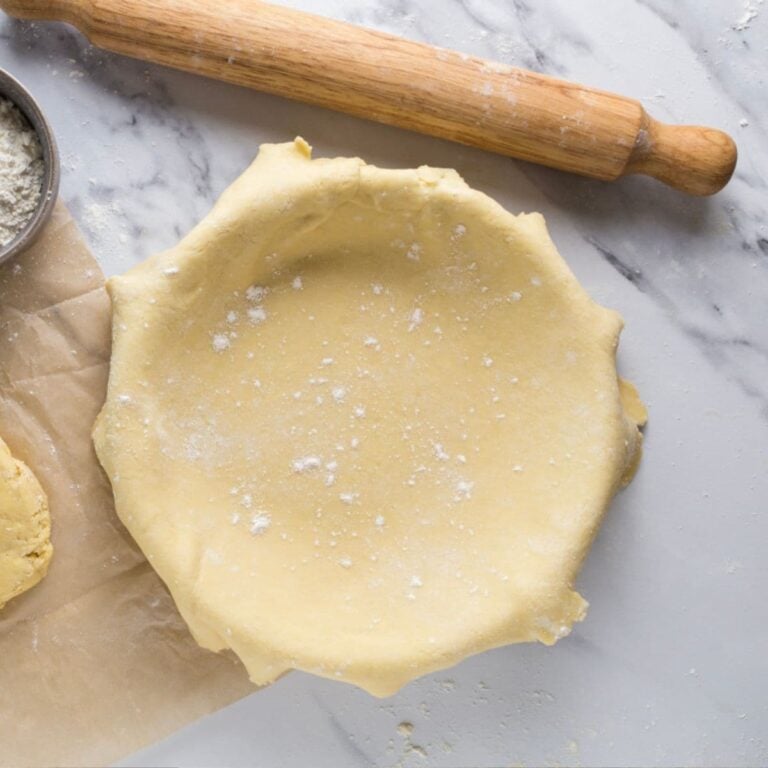
When you’re ready to roll, dust your counter with flour and work it out to the size of your pie dish using a floured rolling pin.
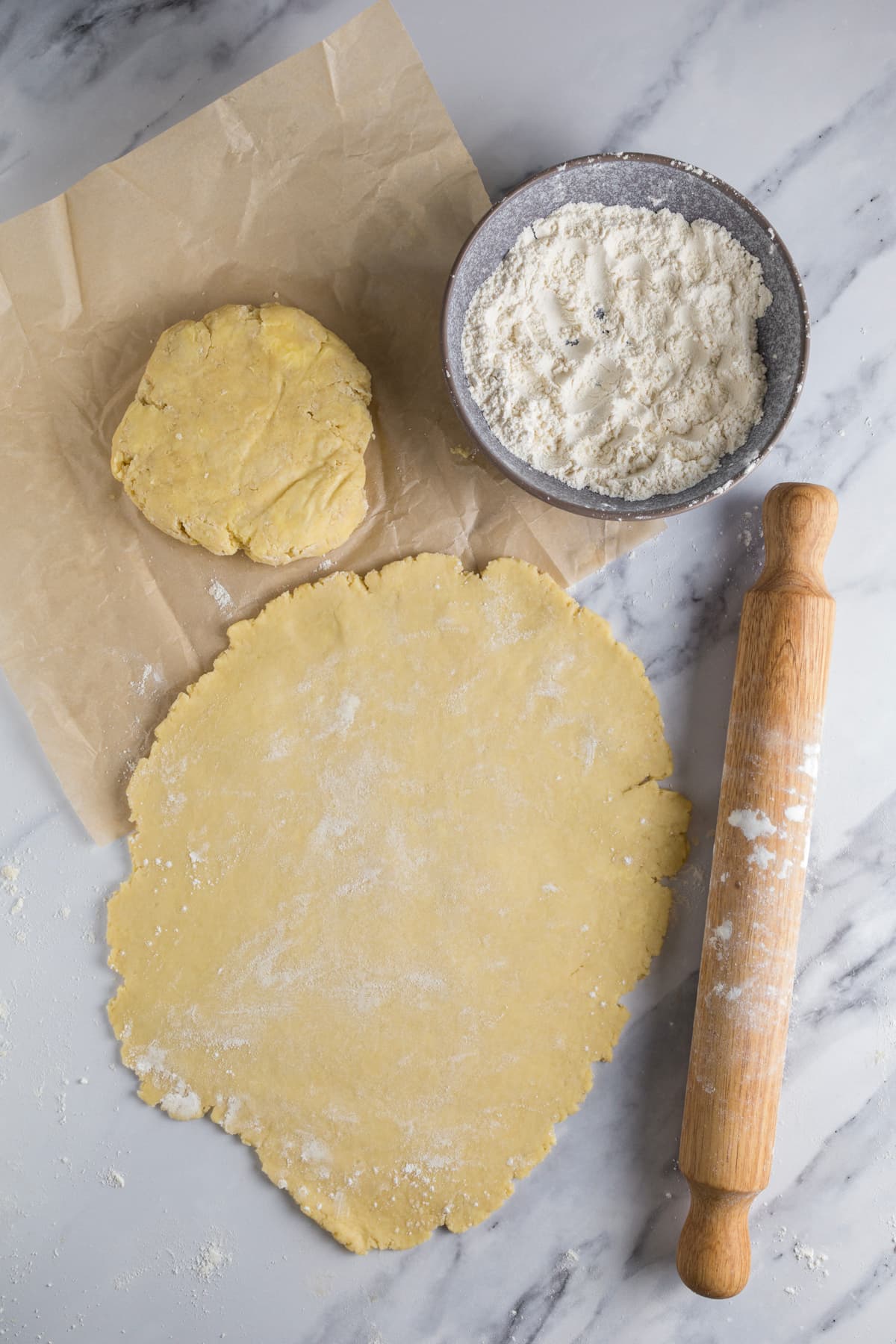
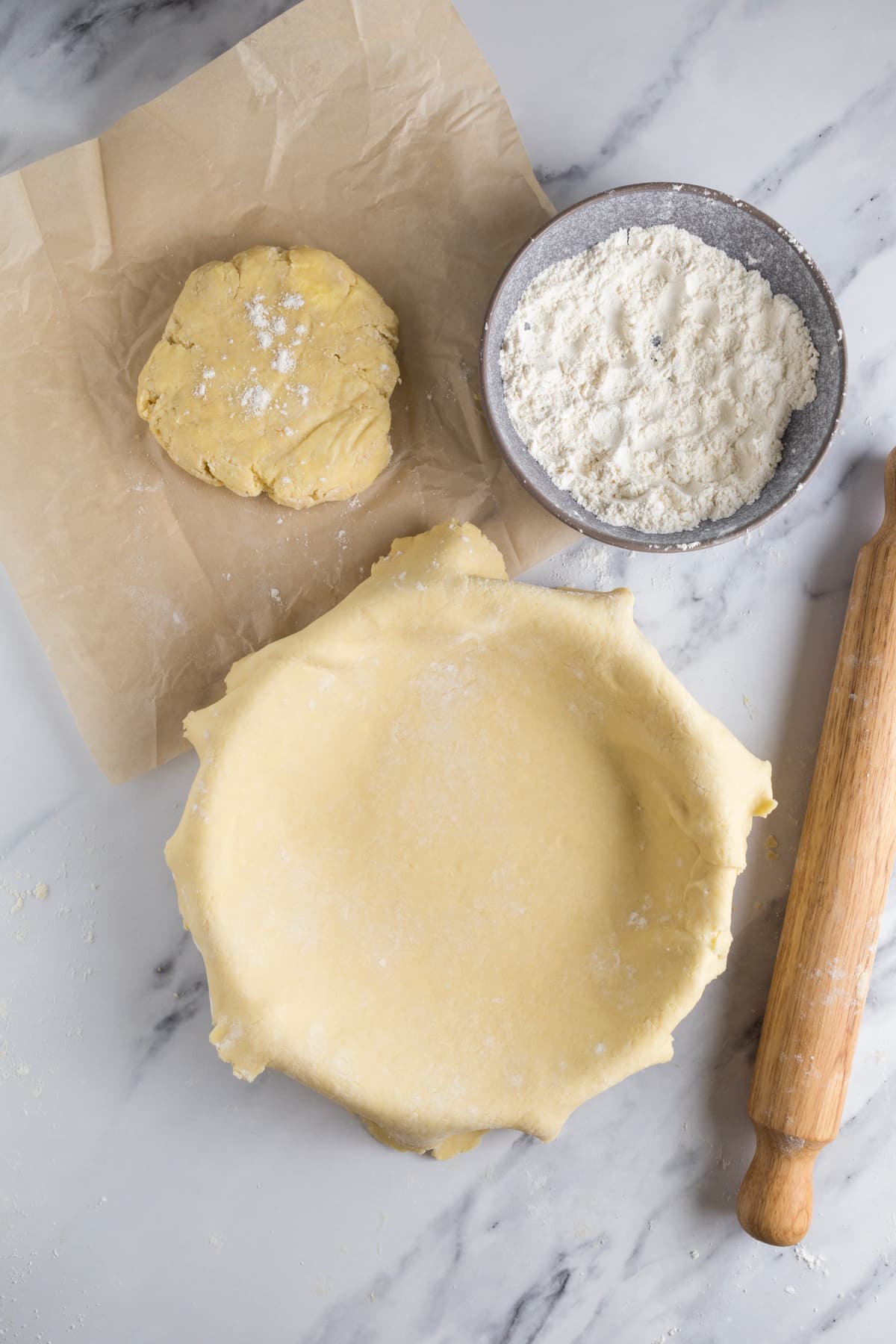
Save the scraps for decorative cutouts if you like. This recipe makes enough for a generous top and bottom crust for a 10-inch (26 cm) pie. Whether you blind bake or fill and bake straight away will depend on your recipe, but don’t skip the egg wash and a vent for steam. With its buttery layers and subtle sourdough tang, this flaky pie crust bakes up golden brown, flaky, and ready to steal the show.
How To Use Sourdough Pie Crust
This recipe is enough to make a double crust pie (that is a top and a bottom crust). You can use this sourdough discard pie crust in the same way as you would use a regular pie crust – it just has the added bonus of sourdough flavor!
I love using this flaky crust to make homemade apple pie – it’s a family favorite served with homemade vanilla ice cream! But here are some of the other ways I use this sourdough discard pie crust in my kitchen:
- Savory pies – this works well with any savory filling from a sourdough chicken pot pie, to beef and gravy pies, the base of a shepherd’s pie or even as a quiche base (you would just need to blind bake the base).
- Sweet pies – any sweet filling will work with this crust – from pumpkin and pecan pie to cherry pie, sourdough apple pie or even peach pie! Really any kind of pie you love! You can even use this pie crust to create this sourdough discard strawberry galette.
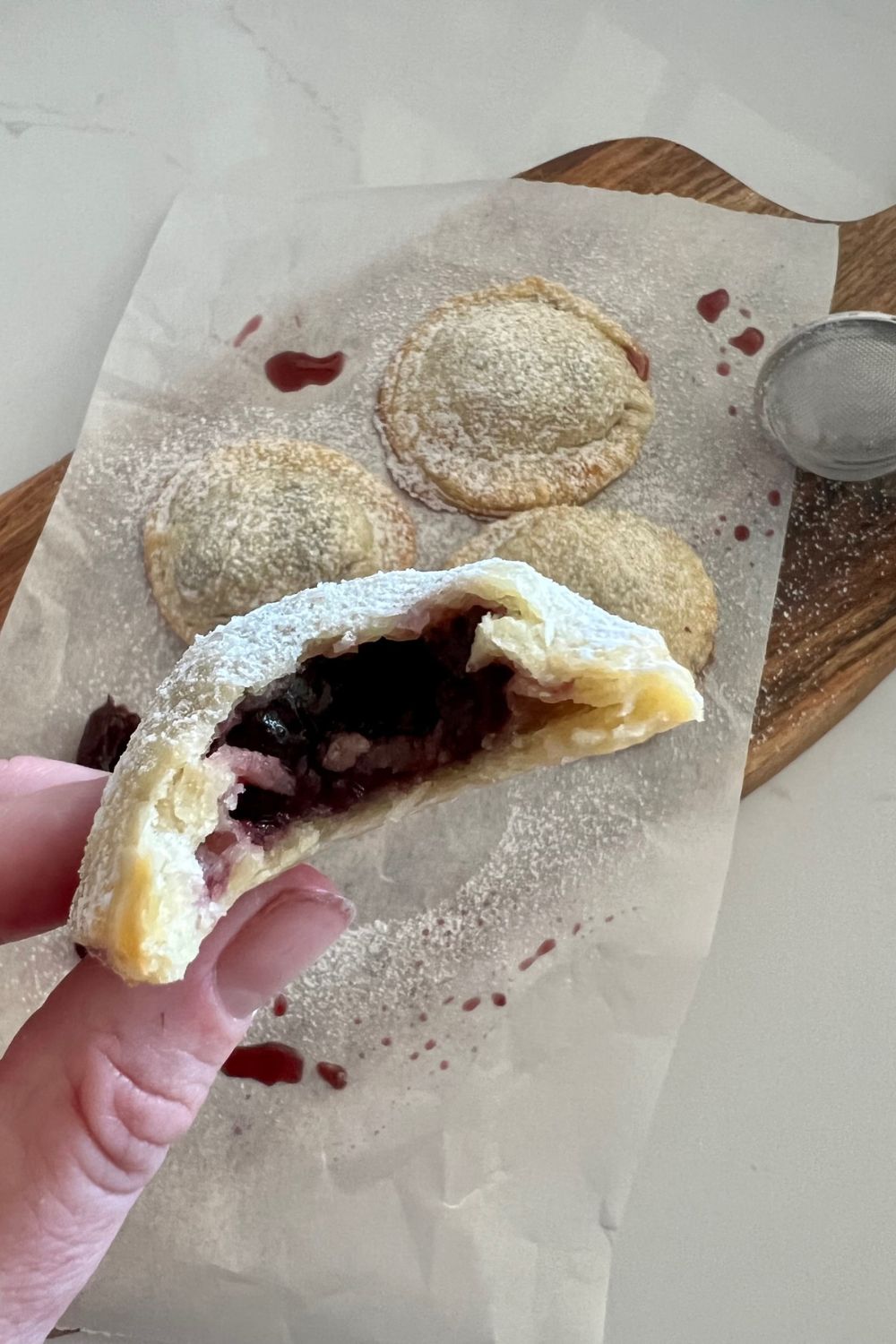
- Hand pies – this pastry is sturdy enough to work as a small pie or hand pie. I love filling it with cherry jam and dusting with icing sugar! Or why not try these sourdough apple and cranberry hand pies.
How To Blind Bake Sourdough Pie Crust
For many recipes, you’ll need to blind bake your pie crust. This is the case when you’re making a pumpkin pie or a farmhouse style quiche. Blind baking sourdough pie crust is very easy.
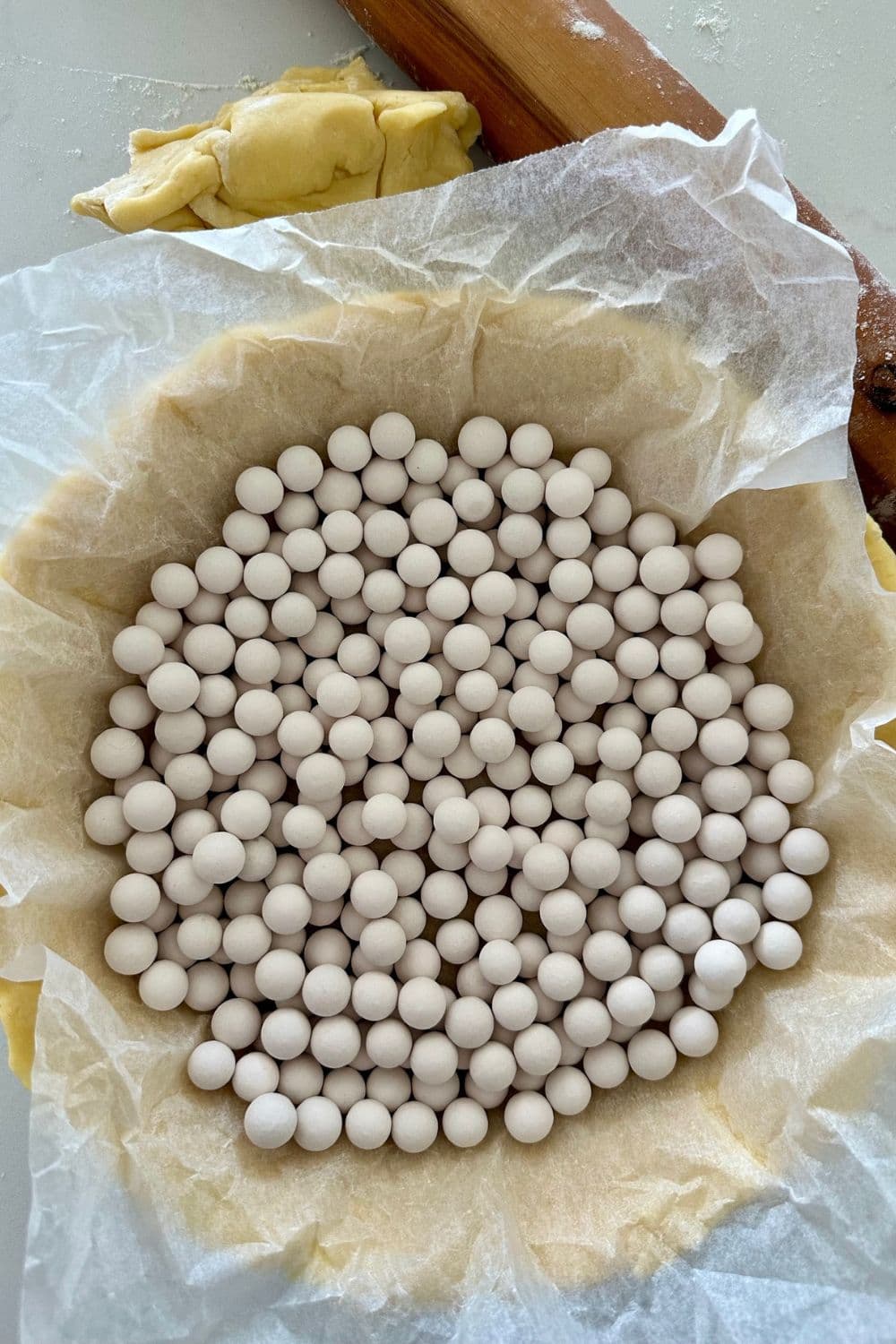
You’ll need to roll out the sourdough pastry and line your pie dish with it, being careful to push the the pastry down on the sides to ensure it doesn’t shrink when you bake it.
Use a sheet of parchment paper to cover the pastry and then place pie weights onto the parchment paper to hold the pastry down and ensure it doesn’t puff up.
Blind bake the sourdough pie crust for 10 to 15 minutes at 200C (390F). You don’t want the pie crust to be completely cooked because it will continue to cook when you add the filling.
Freezing Instructions
You can easily freeze sourdough pie crust in a couple of different ways:
- Freeze the pie crust in disks, wrapped parchment paper and placed into a ziploc bag.
- If you have a few spare pie plates, or you don’t mind using disposable pie plates, then you can roll the sourdough pie crust out and place it into the pie plates, cover with aluminum foil and then freeze.
Frequently Asked Questions
Not necessarily. Follow the instructions for the particular pie you are baking. Pies like apple pie or cherry pie will not require the crust to be blind baked, but a pie like pecan or a savory pie like quiche will need to have the crust blind baked before adding the filling.
No, you can use All Purpose flour to successfully bake this sourdough pie crust.
Vinegar (either white vinegar or apple cider vinegar) hinders the development of gluten in the pie crust, giving you a more tender, flakier crust. You don’t want a strong gluten network as this leads to a tough pie crust.
Sourdough Pie Crust Recipe
Equipment
- Pie Dish 1.4L / 1.47Q
Ingredients
- 250 g All Purpose Flour
- 5 g Salt, (or to taste)
- 10 g Sugar, (optional – see notes)
- 230 g Butter, (must be COLD)
- 200 g Sourdough Starter, (or Sourdough Discard)
- 10 g White Vinegar, (or Apple Cider Vinegar)
- 50 g Iced Water, (just in case)
Instructions
- This dough makes enough pastry for a top and bottom crust. If only need the top or bottom, just halve the amounts listed.
- Add all purpose flour, salt and sugar to a large mixing bowl and stir together until well combined. Set aside for now.
- Grate the cold butter into a bowl. If the butter starts to melt or is very soft once grated, place the bowl into the freezer. This will help to firm the butter up and make the next step much easier. I cannot stress enough how important it is for the butter to be COLD.
- Place the cold, grated butter into the bowl with the flour, salt and sugar and use a spatula, pastry cutter or simply your finger tips to coat the butter in the flour. You want the butter to stay cold, so try to touch it as little as you can.
- Now, add the sourdough starter or discard and vinegar and bring the mixture into a dry, shaggy dough. It's best just to use your hands to squeeze the pastry dough together. It will be a rough, dry dough.If the dough really isn't coming together at all, add a little iced water until you are able to bring it together.
- Tip the rough dough out onto the counter, divide the dough into two pieces and bring each piece into a rough ball. Wrap each ball of pastry dough in parchment paper and squash it down into a disc shape. Wrap each disc in cling wrap and place both discs into the fridge.If you prefer to just refrigerate as one ball, that's fine too. You can just divide the pastry into two pieces when you want to roll it out.
- Leave the dough a minimum of one hour to fully hydrate and become cold. You can leave the dough in the fridge for up to 48 hours before you use it.
- When you are ready to use the sourdough pastry to make a pie crust, take the dough out of the fridge and unwrap it. Dust the dough lightly with flour and use a rolling pin to roll the dough out to your desired size.This recipe makes enough for a top and bottom crust. I have used a 1.4L pie dish and it generously filled the dish with some to spare.
Notes
Nutrition
Nutrition information is automatically calculated, so should only be used as an approximation.
Like this? Rate and comment below!










Crust came out wonderfully. A little sticky to deal with so I should’ve added more flour as started but if you’re used to sourdough, that’s par for the course. So flaky & delicious!
Can you freeze the dough ?
Absolutely 🙂