
This post contains affiliate links. Please see our disclosure policy.

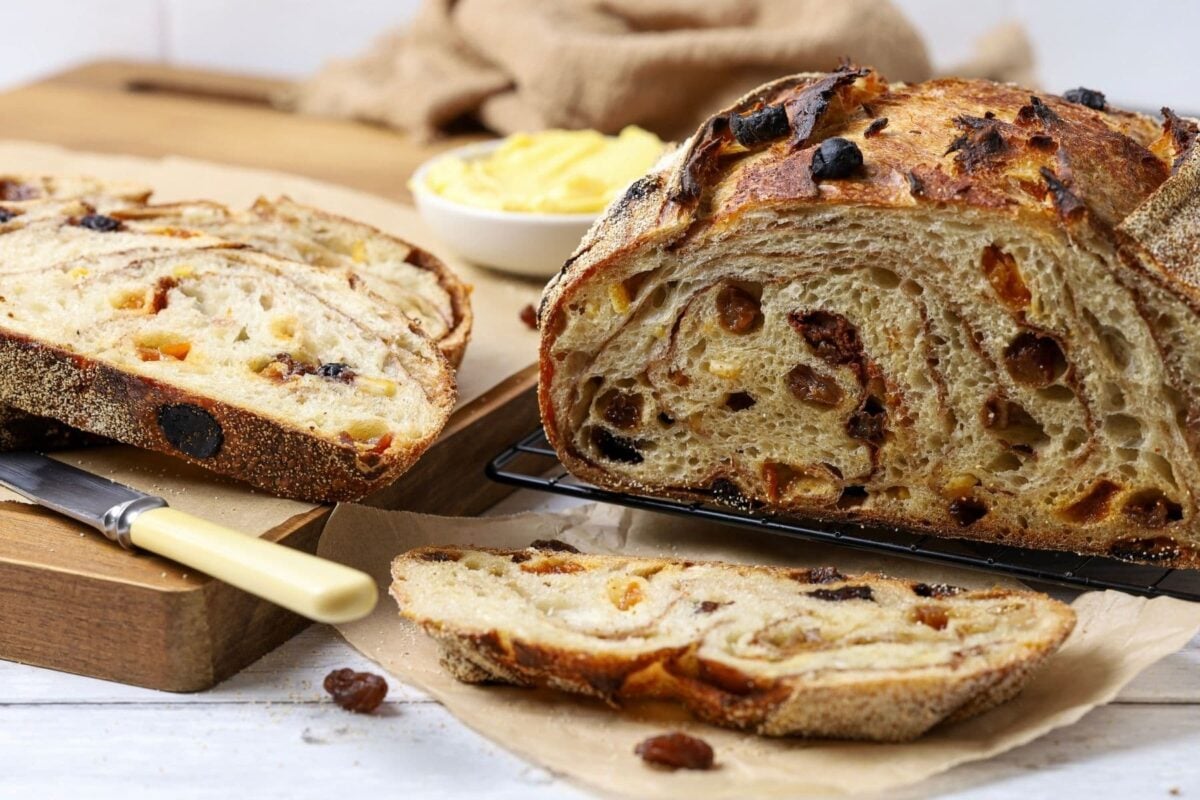
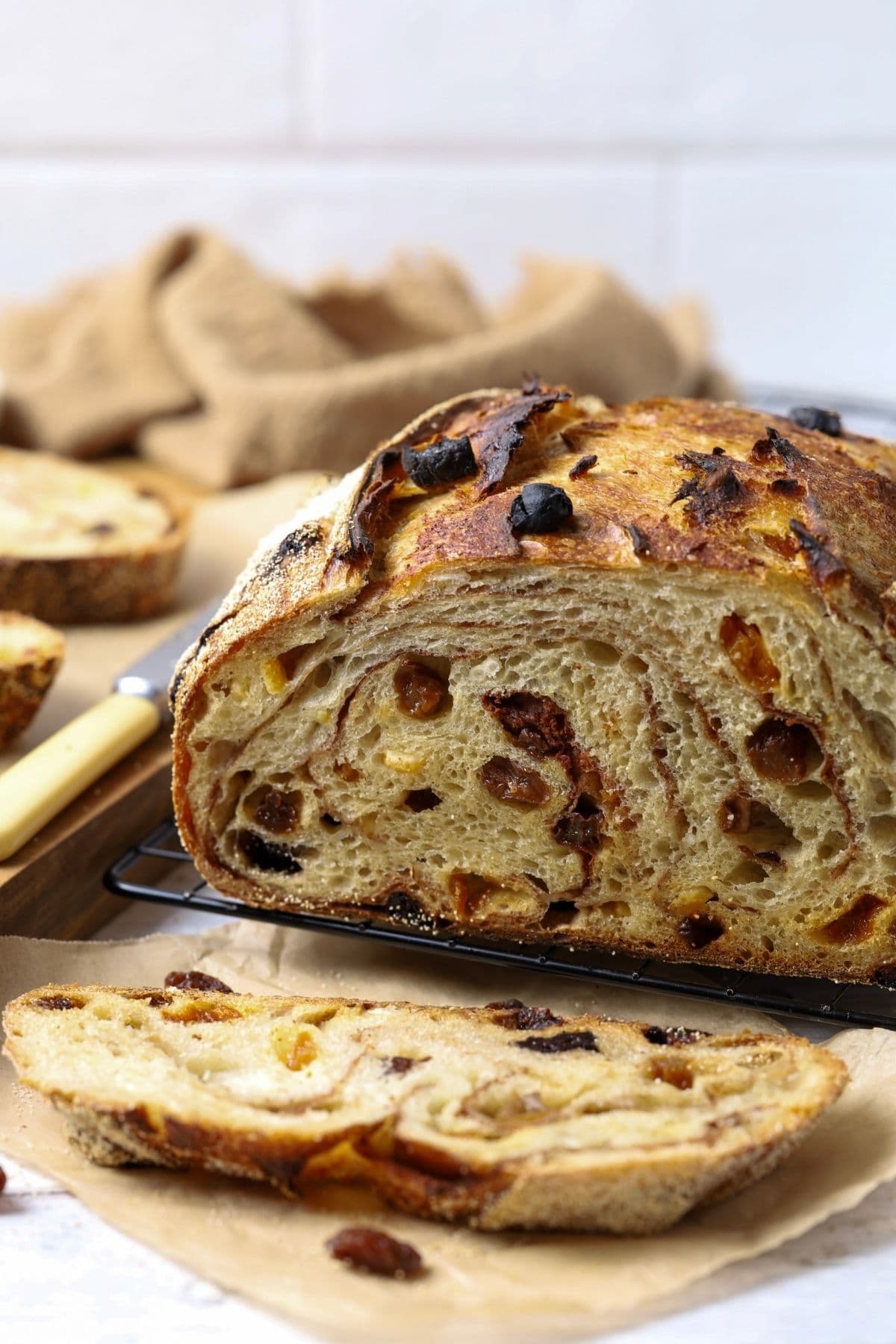
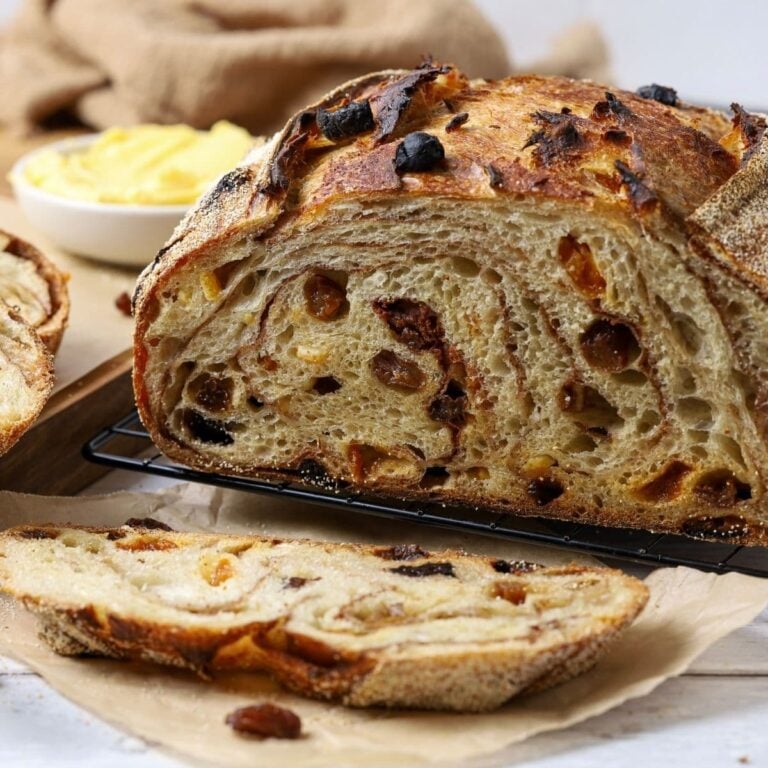
This sourdough fruit bread is absolutely next level, it’s the only sourdough raisin bread recipe you’ll ever need! It is an absolute family favorite here and a recipe that I have tweaked over time, to create what you see now. It pairs the wonders of sourdough with the sweetness of raisins and the delicate hint of cinnamon. You can absolutely just make this into a sourdough cinnamon raisin loaf, but I urge you to try it with the other fruits as well!
Why You’ll Love This Recipe!
Flavor – this sourdough loaf combines the sweetness of raisins (as well as other dried fruit) with the homely flavor of cinnamon to create a loaf that you will want to come back to time and time again.
Fresh or Toasted – It is delicious to eat fresh – with it’s delicate crust and tender, soft squishy crumb. But it’s even better toasted with homemade butter!
If you love sourdough bread with fruit and nuts, why not try this sourdough walnut raisin bread or this orange cranberry sourdough bread.
Ingredients
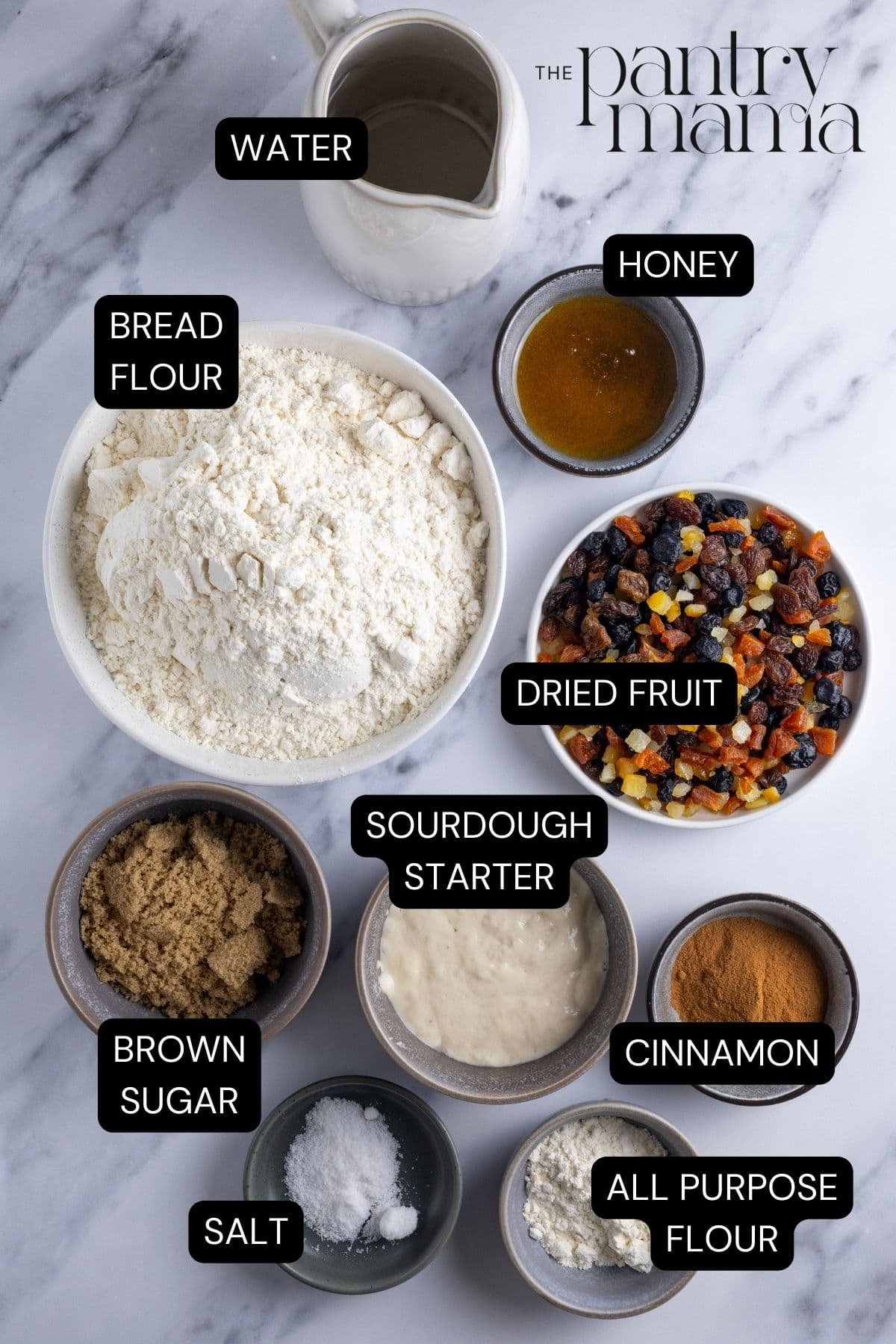
- Bread Flour – bread flour is non negotiable for this recipe!
- Water – you can replace the water with your favorite tea or even whey if you prefer. Adding whey to sourdough bread can create a soft texture, which works really well in this fruit loaf.
- Sourdough Starter – I’ve used 100g of active sourdough starter to create this loaf. You can use a sweet levain if you want to (and I used to when I made this recipe) however since updating the recipe, I don’t think it’s necessary.
- Salt
- Honey – use maple syrup if you prefer.
- Mixed Dried Fruit – You can just add raisins if you prefer, however, I’ve added an array of chopped dried apricots, dried blueberries and raisins, as well as dried orange peel, which add tangy little bursts of flavor! You can also add “mixed peel” like you would in a traditional hot cross buns recipe. Dried cranberries, cherries or apples can be a nice addition too. I honestly add whatever I have on hand at the time!
- Brown Sugar – I’ve used brown sugar swirl (similar to this sourdough cinnamon swirl loaf) to create a balanced sweetness in this recipe. It works particularly well when you’re using some of the tarter fruits like apricots, cherries and dried orange peel.
- Cinnamon – you can increase the spice here by adding some allspice and nutmeg to your cinnamon if you want to, but you definitely don’t have to.
- All Purpose Flour – I’ve only added a tiny bit of all purpose flour to the brown sugar and cinnamon mixture to stop the brown sugar from turning liquid inside your shaped loaf and leaking out.
A little note from Kate

This recipe came about because my husband absolutely LOVES raisin toast. You know, the generic store bought stuff. It’s sweet, easy and tasty … but really doesn’t fill you up. You can eat half the loaf and still wonder what’s for breakfast, right?
Well, I set about developing a loaf of sourdough bread that would not only satiate his love of all things cinnamon and raisin, but also fill up his belly so he was set to achieve great things for the day. Hence this sourdough fruit loaf was born!
I updated this recipe in March 2026 to make it more reliable. The original version used butter in the filling, which could sometimes melt and pool in the bottom of the loaf. This newer cinnamon swirl is much more stable, giving you that beautiful, even ribbon all the way through without any leaking or soggy patches (honestly, such a game changer). It’s similar to the technique I use in this sourdough cinnamon swirl loaf.
How To Make Sourdough Fruit Bread
To get started, you’ll mix your active starter with water and honey, making sure everything is nicely dissolved before adding your flour and salt. The dough will come together into a fairly dry, shaggy mix and that’s exactly what you want at this stage. Letting it rest (autolyse, or in this case fermentolyse) for an hour makes a huge difference here, as it gives the flour time to fully hydrate and makes the dough much easier to work with later.
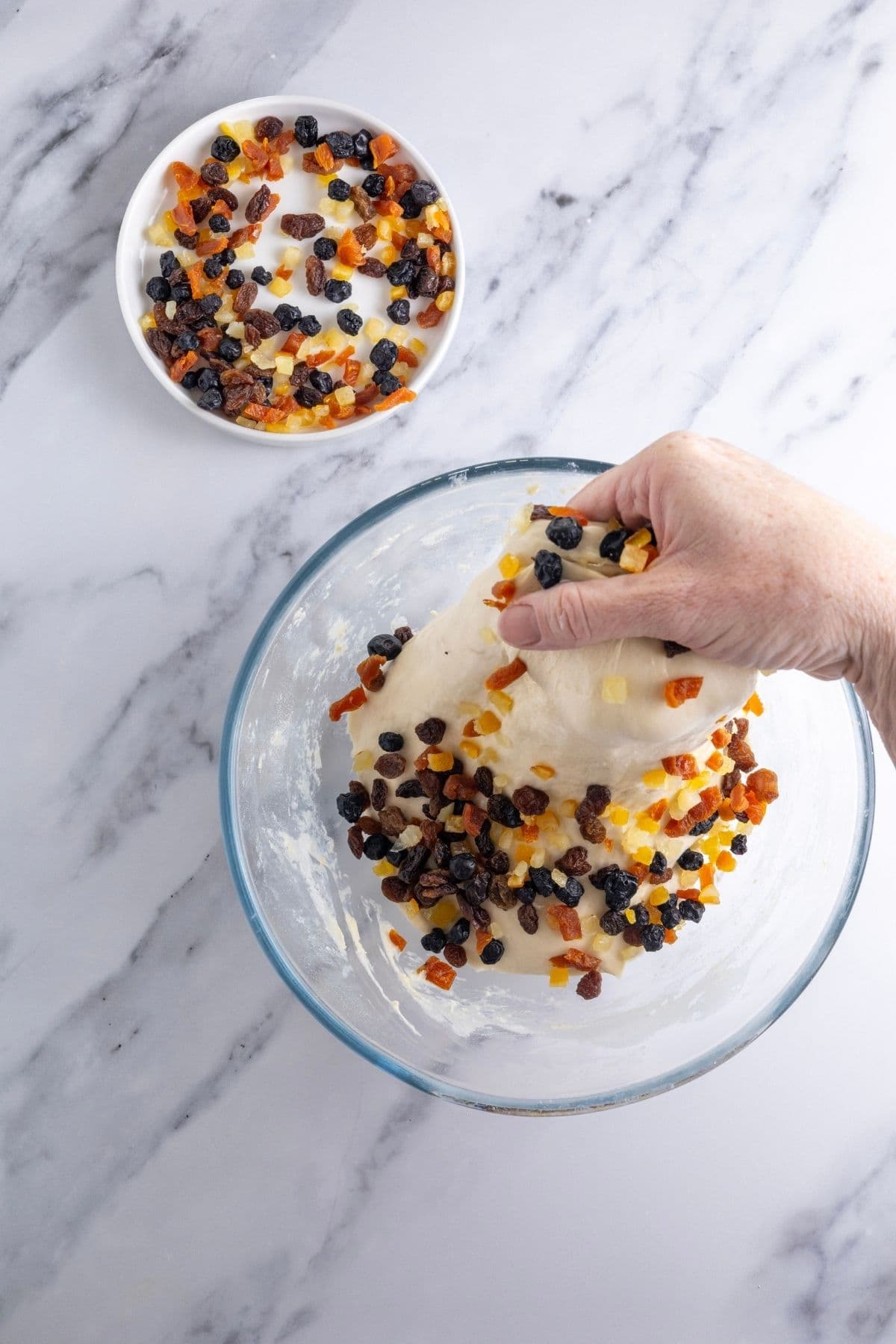
After that rest, a quick series of folds will bring it into a smooth ball, and from there you’ll build strength with a few stretch and fold sets. I like to add the dried fruit during the second or third set so it distributes evenly without tearing the dough. If you add it too early, it can make the dough harder to develop.
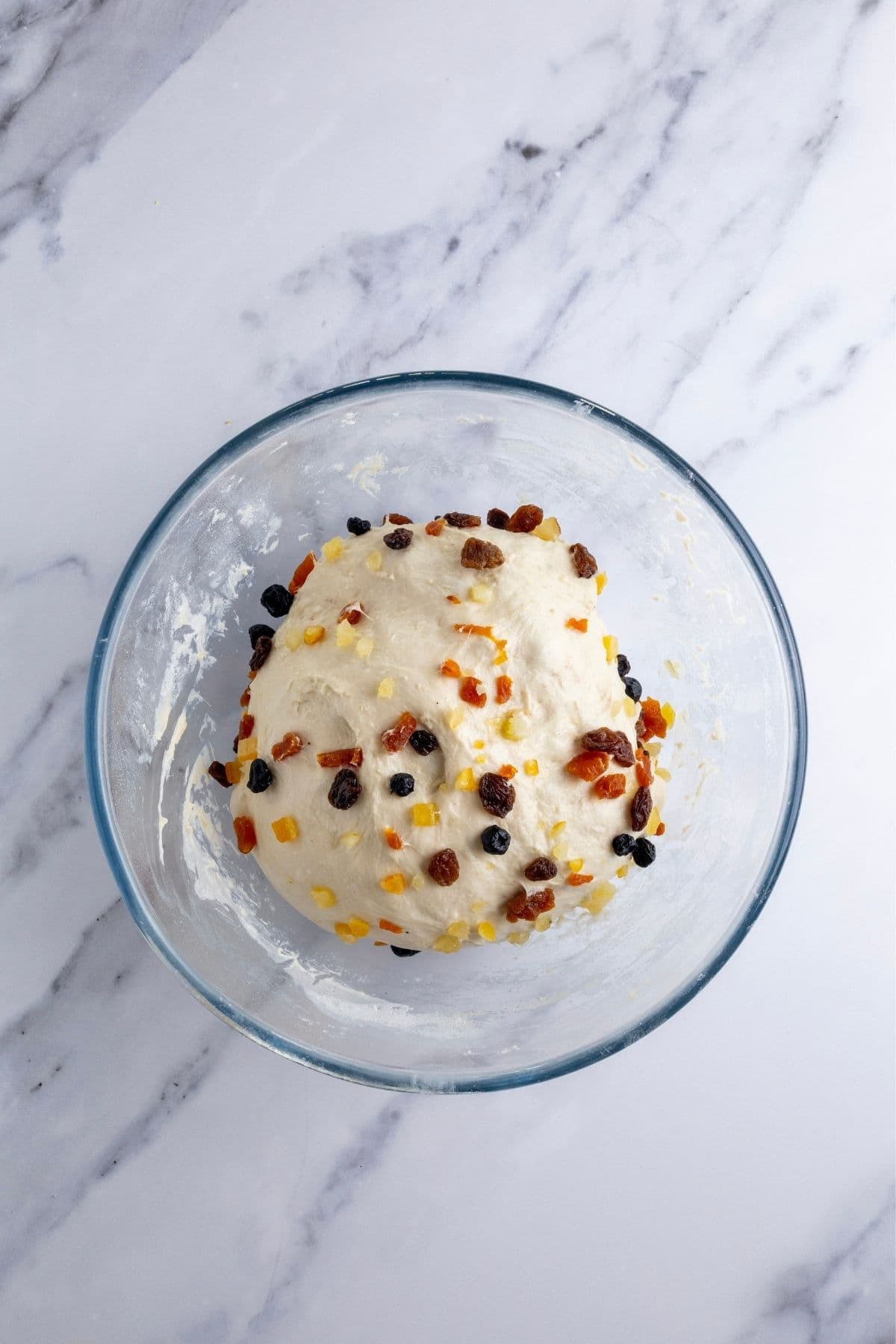
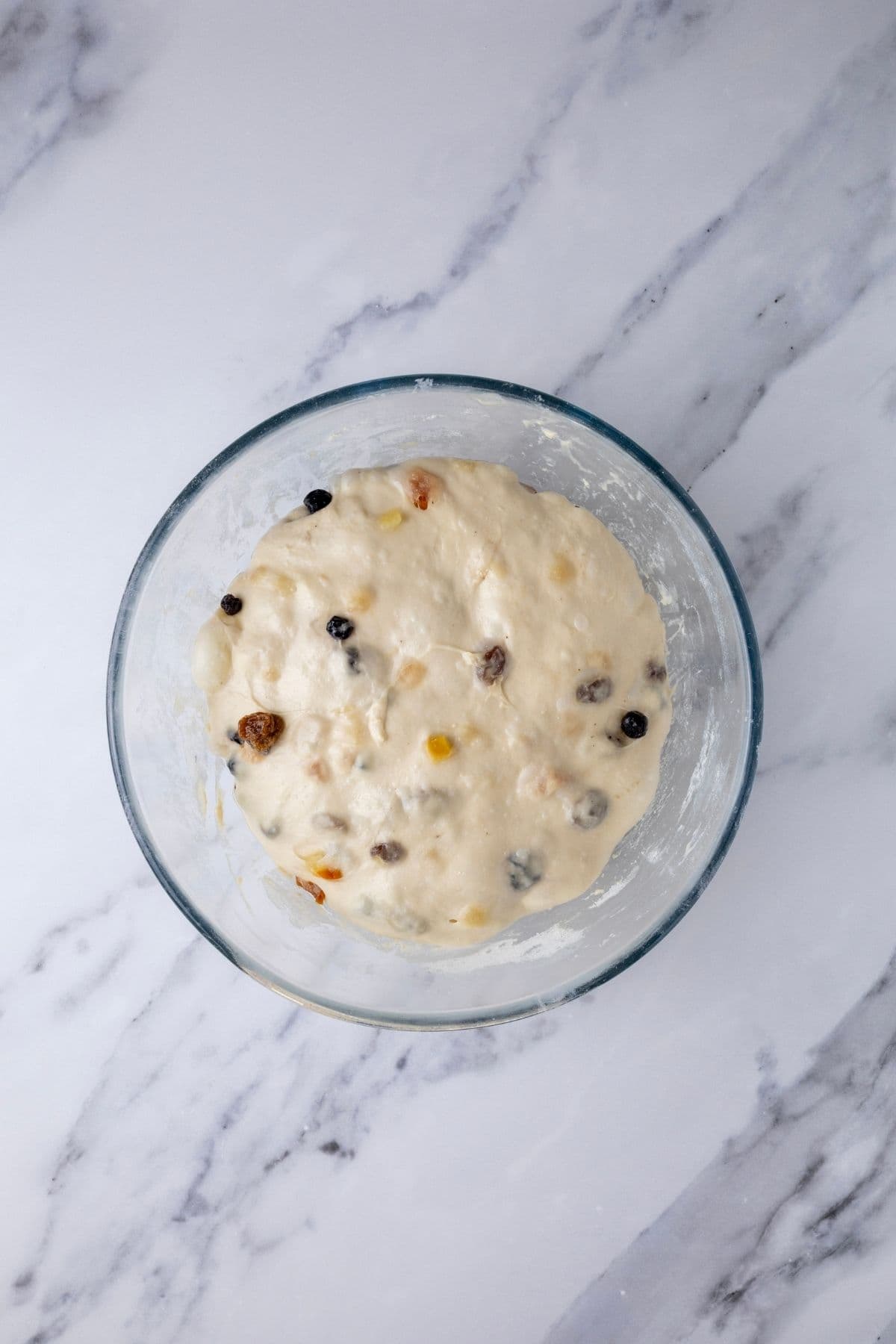
After the stretches and folds, you’ll need to leave your dough to ferment at room temperature. Once your dough has finished bulk fermentation and is nice and puffy (don’t be afraid to let it double, this dough can handle it), it’s time for the fun part: shaping and adding that cinnamon swirl. You can see how marshmallow like my dough is in the photos below and how easily it pulls away from the bowl onto the counter. This is how I know that bulk fermentation has finished.
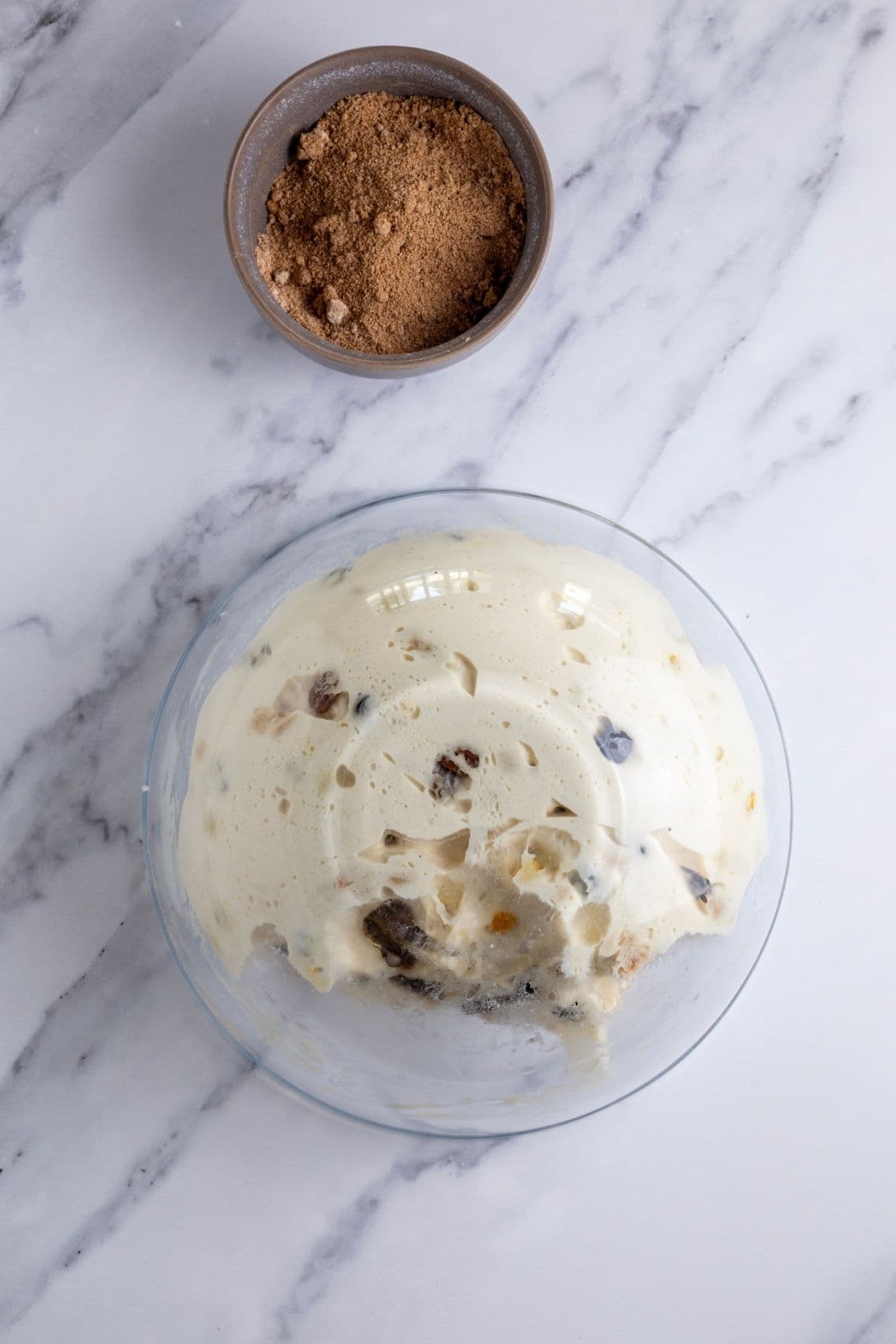
Mixing the cinnamon, sugar and flour beforehand helps prevent clumps and keeps everything evenly distributed through the loaf. As you gently stretch the dough into a rectangle, sprinkle the mixture in layers as you shape. This gives you that beautiful swirl without it all sinking to one spot.
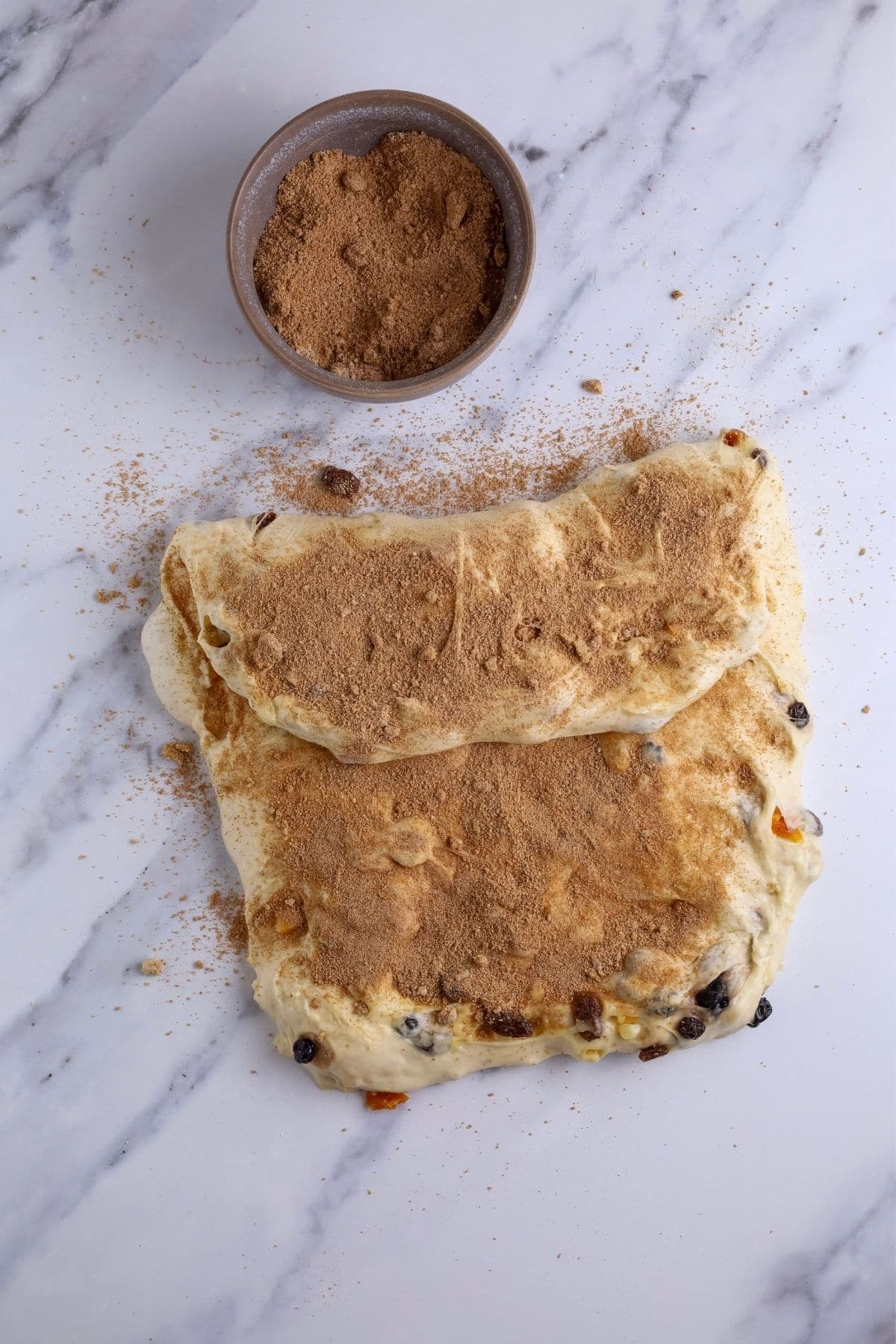
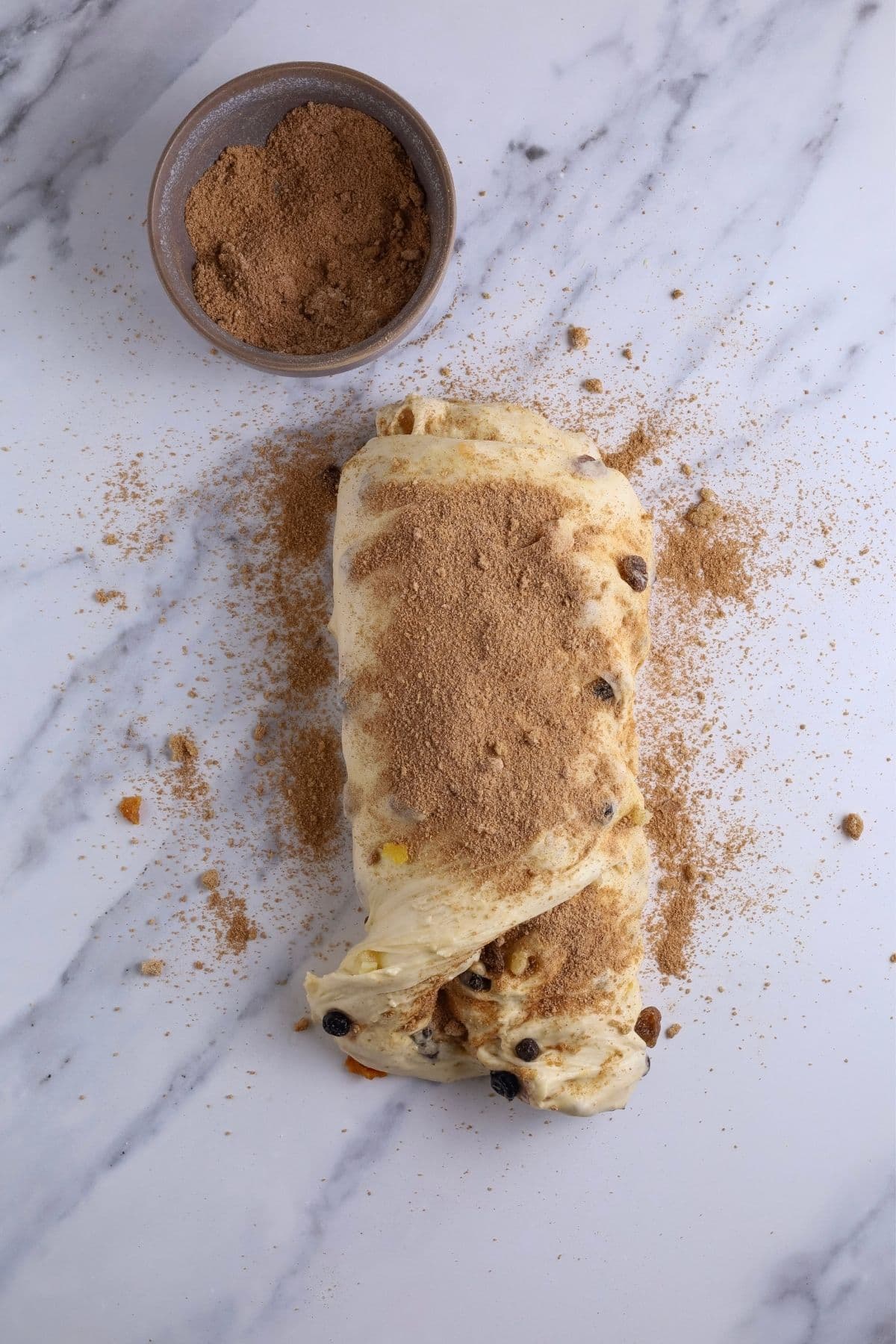
When rolling it up, take a little extra care to keep the dough tight and the ends sealed so all that delicious filling stays tucked inside where it belongs.
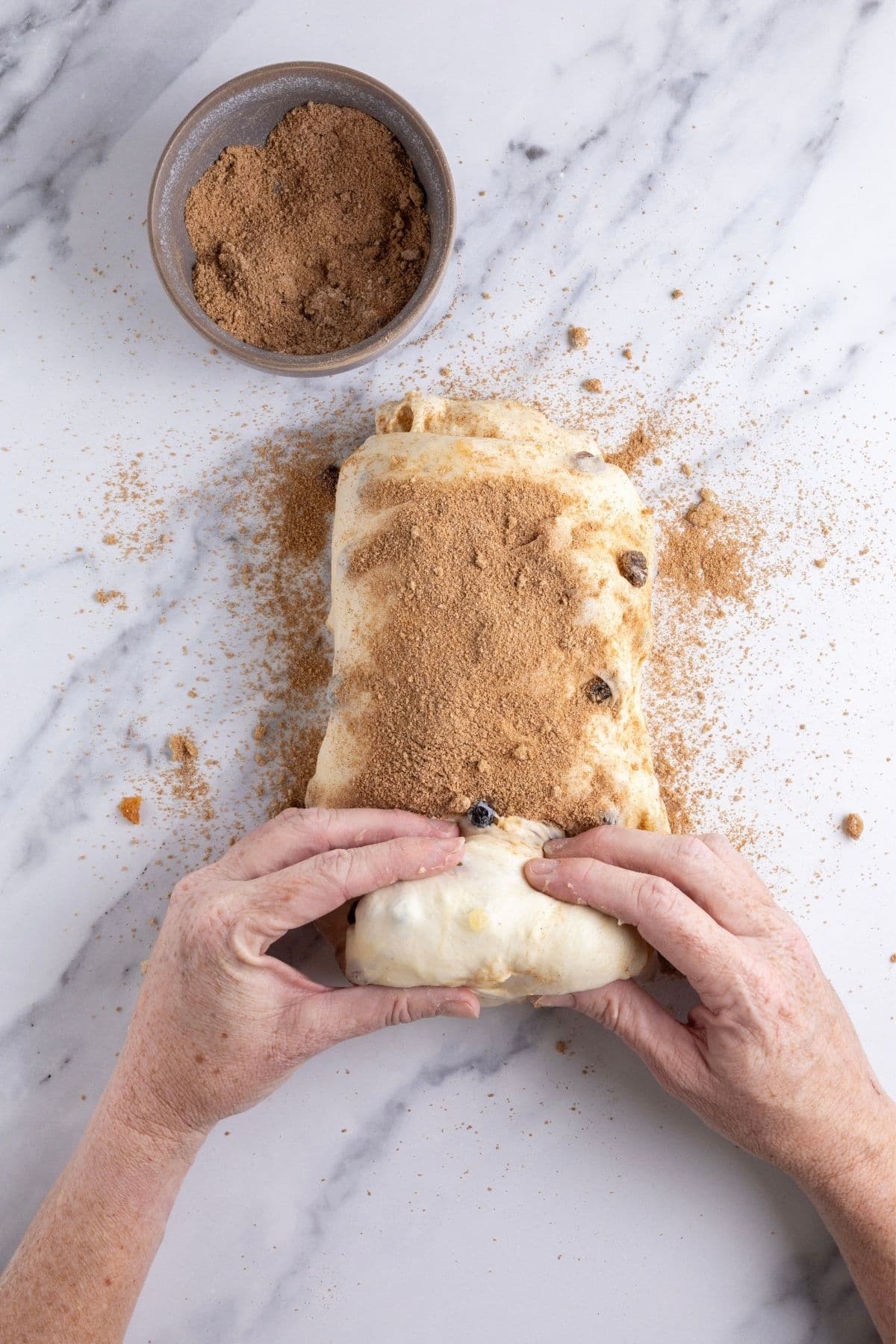
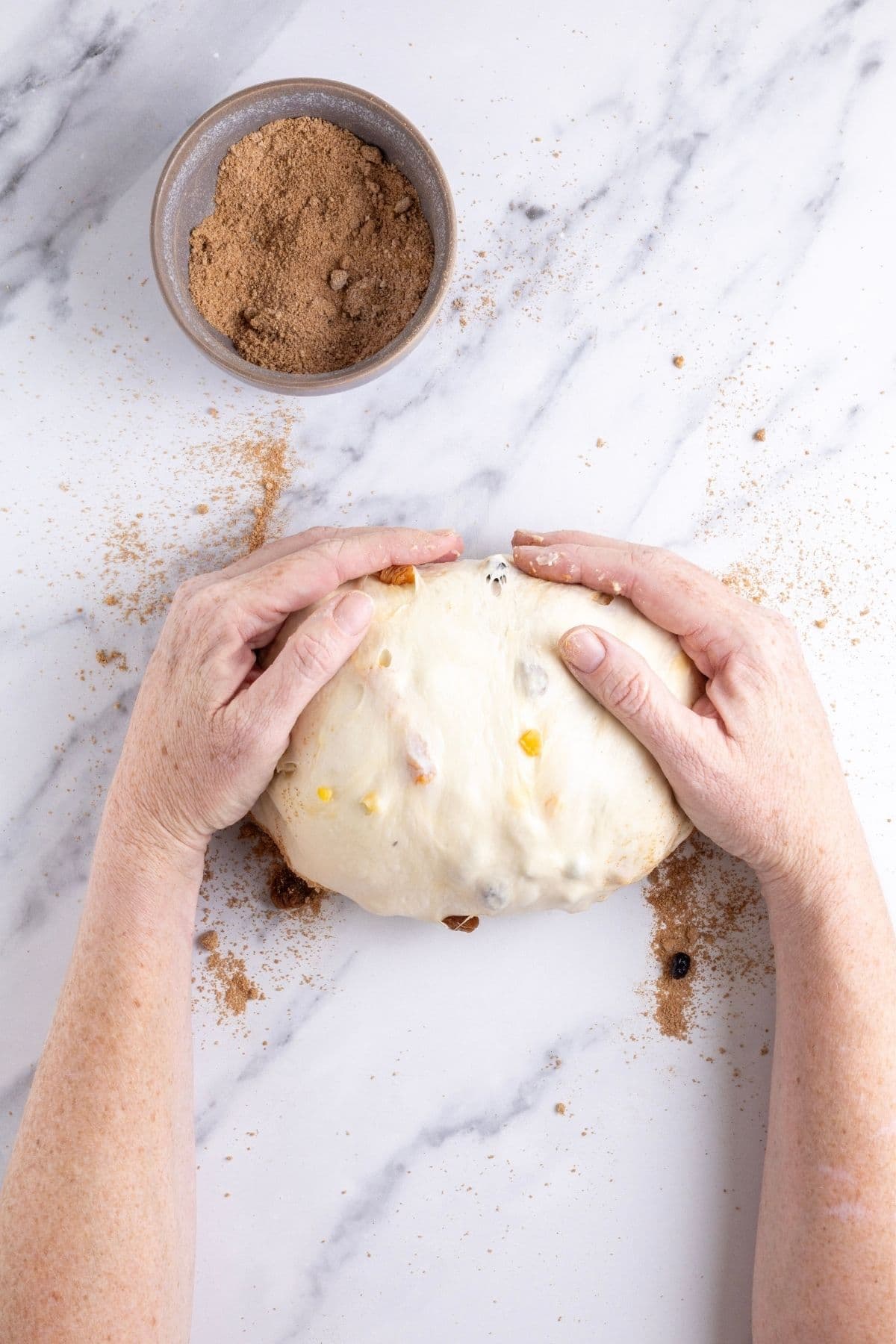
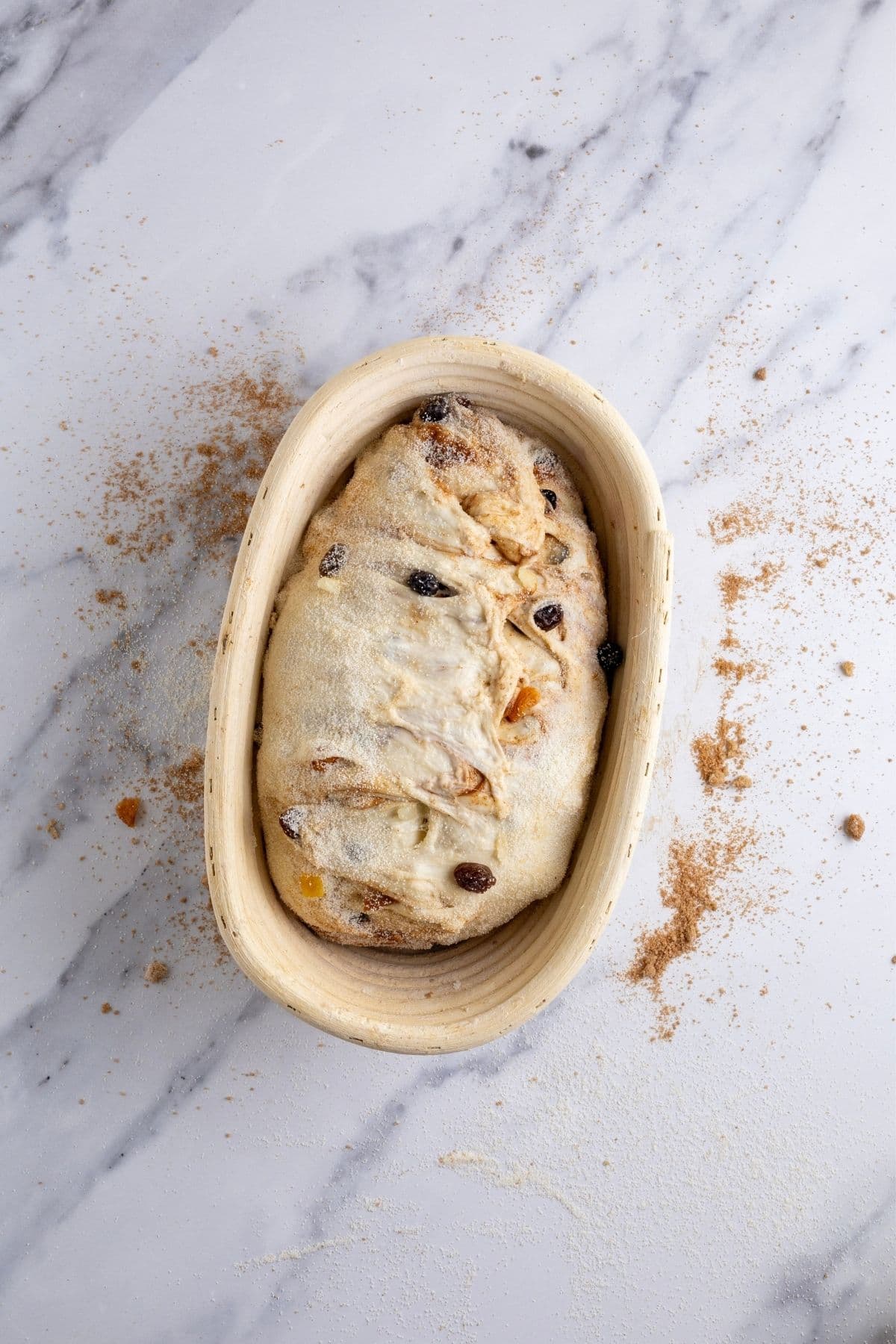
Pop it into your chosen banneton seam side up and then into the fridge overnight. After an overnight cold ferment in the fridge, your dough will be ready to bake straight from cold, which helps it hold its shape and gives you a lovely oven spring.
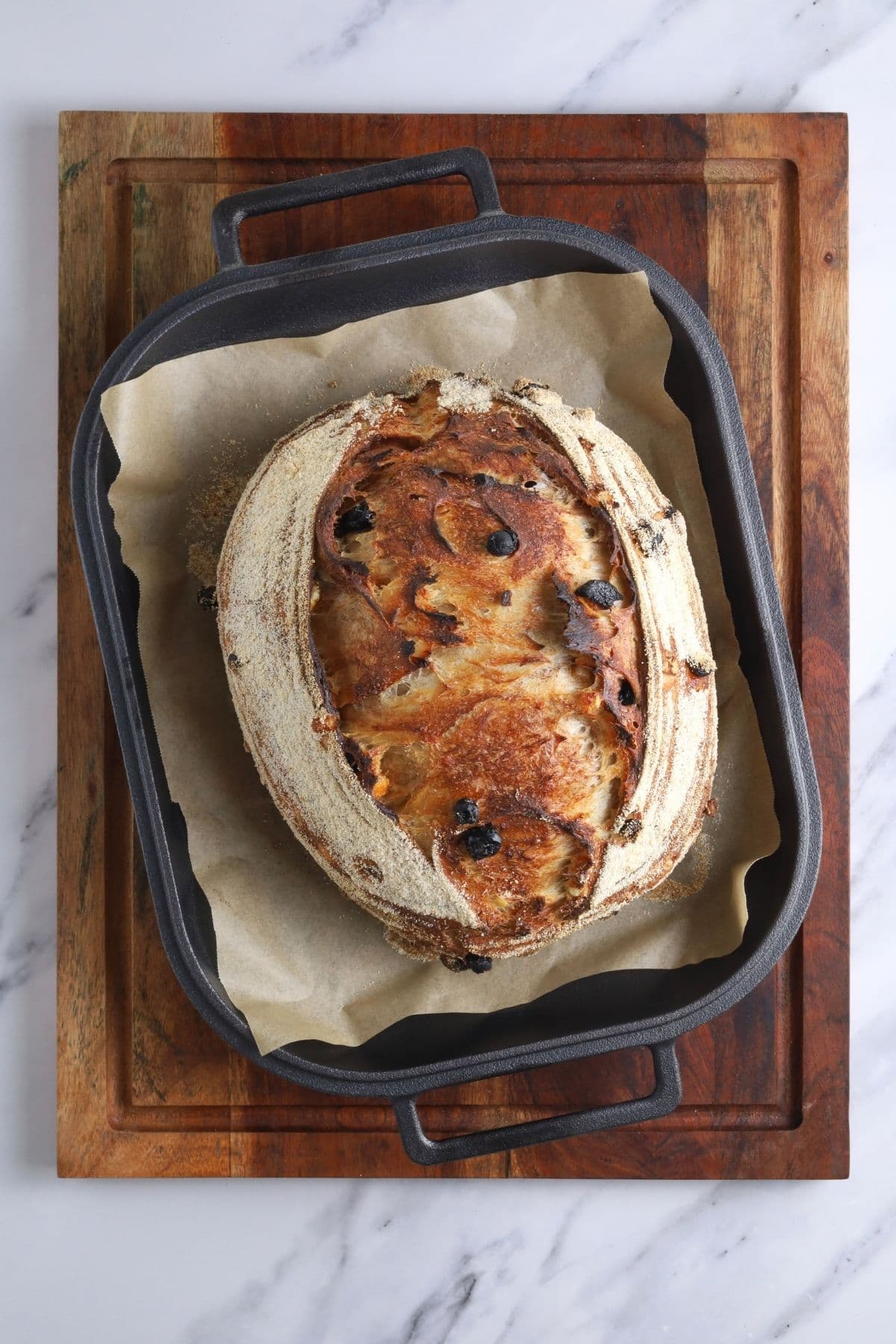
A hot Dutch oven is key here. It traps steam and helps create that golden crust. Bake with the lid on first, then uncovered to finish, and once it’s out of the oven, resist the urge to cut into it straight away (I know, it’s hard!). Letting it cool properly will give you the best texture.
Sourdough Baking Schedule
This is a sample sourdough baking timeline for making a loaf of sourdough fruit bread. You can adjust it to suit your own schedule and time available.
| TIME | PROCESS |
|---|---|
| 9 am | Premix and autolyse for around an hour, forming up the dough and leaving to rest for another 30 minutes before stretch and folds. |
| 11 am | 1st stretch and fold |
| 11.30 am | 2nd stretch and fold – add half the dried fruit. |
| 12 pm | 3rd stretch and fold – add other half of the dried fruit. |
| 12.30 pm | 4th stretch and fold |
| 1 pm | Bulk fermentation at room temperature remembering that the honey will speed up bulk fermentation. |
| 6 pm | Shape dough into a batard, adding in the cinnamon swirl, place into banneton and then into fridge for cold fermentation. |
| 9 am | Wake and bake! The next morning, you can get up, make a coffee and bake your sourdough fruit loaf! |
Sourdough Fruit Bread Recipe Variations
This sourdough fruit bread recipe makes a fantastic loaf – but there are so many ways you can tweak it. This recipe is literally the only sourdough fruit bread you’ll ever need! Check out some of these sourdough fruit bread variations:
Heavy Sourdough Fruit Bread – if you prefer a heavier fruit bread, you can double the amount of dried fruit you add. Instead of a generic “mixed dried fruit” you could also include some chopped apricots and figs. This will add to the heaviness of the sourdough.
Rye Fruit Bread – if you love the earthiness that rye flour brings to your sourdough, substitute up to 30% of the Bread Flour with Rye Flour. You can read about Baker’s Math here.
Sourdough Raisin Toast – love a traditional raisin toast. Substitute the mixed fruit with plain raisins. You don’t have to soak them before you add them, but if you want to, you could soak them in maple syrup, vanilla essence or even just some warm water to plump them up. You can also bake this sourdough in a loaf pan if you prefer.
Fruit & Nut Sourdough Loaf – love some crunch? Substitute half the dried fruit with your favorite chopped nuts. We love a combination of walnuts and pecans.
If you are looking for more of a sourdough raisin loaf perfect for toasting, then I recommend this sourdough discard cinnamon raisin loaf which is baked in a loaf pan.
How To Store and Freeze
This loaf freezes really well! Whether you freeze it as a whole loaf or in individual slices. It toasts really well from frozen too!
Sourdough Fruit Bread Recipe
Equipment
- Mixing Bowl
- Digital Scales
- Banneton
- Dutch Oven
Ingredients
- 500 g Bread Flour
- 350 g Water
- 100 g Sourdough Starter, fed and bubbly (see levain alternative in notes)
- 10 g Salt
- 30 g Honey
- 200 g Mixed Dried Fruit
Cinnamon Filling
- 50 g Brown Sugar
- 10 g Cinnamon
- 20 g All Purpose Flour
Instructions
- FermentolyseWeigh out your starter, water and honey in a glass or ceramic bowl. Mix them together so that the honey is dissolved in the water (or at least really well distributed).Then add your flour and salt and mix altogether into a dry, shaggy dough. Cover your bowl and let it sit for around 1 hour.
- Forming Up Your DoughWork your way around the bowl, grabbing the dough from the outside, stretching it up and over itself until a smooth ball is formed. You shouldn't need more than about 20-25 folds to form the ball. Once the dough has formed into a smooth ball, cover it again and allow it to rest for around 30 minutes.
- Stretch & Fold / Adding the FruitYou need to add the dried fruit to your dough during the stretch and fold phase. It's very easy to do! Try to add the fruit around the second or third set of stretch and folds. So do your first set of stretch and folds with the dough as is and then add the fruit on the second (or third) set depending on how your dough is behaving. Try to do around 4 sets of stretch and folds with around 15 to 30 minutes between each set.
- Bulk Ferment:Once you've finished your stretch and folds, cover your dough and let it ferment at room temperature until the dough has doubled.
- Shaping Your Dough:Now it’s time to shape your loaf. Before you tip the dough out on the counter, mix together the cinnamon, brown sugar and all purpose flour and ensure that it’s all evenly distributed and there aren’t any lumps of sugar.Tip the dough out of the bowl and pull it into a loose rectangle. Sprinkle some of the brown sugar mixture over the dough, so that it covers the whole rectangle. As you shape the dough, sprinkle a little more mixture onto each exposed surface, ensuring that you cover the dough evenly.Then roll your dough up into a nice, neat batard, making sure that you tension the dough on the counter and pinch the ends together to ensure that the brown sugar mixture is safely tucked inside. Place your dough seam side up in a well floured banneton. Stitch the top of the dough together if you need to.
- Cold FermentCover the dough with a plastic food cover and place into the fridge for cold fermentation. I like to leave this one around 12 hours.
- Preparing To BakeOnce you're ready to bake your sourdough, you'll need to preheat your oven to 230ºC/450ºF. Place your Dutch Oven into the oven when you turn it on so it gets hot.
- Time to Bake!When your oven is at temperature. Take your sourdough out of the fridge. Gently transfer it to a piece of parchment paper, ensuring the seam is now underneath.Gently score your bread with a lame, clean razor blade or knife.Carefully take your dutch oven out of the oven. Place the sourdough into the pot using the parchment paper as handles. Put the lid on and place into the hot oven. BAKE TIME:30 Minutes with the lid on at 230ºC/450ºF plus10-15 Minutes with the lid off at 210ºC/410ºF
- Finishing The BakeWhen you remove your dough from the oven, carefully remove it from the dutch oven as soon as possible and place on a wire rack to cool.
Nutrition
Nutrition information is automatically calculated, so should only be used as an approximation.
Like this? Rate and comment below!








Hi Kate. So there is no counter top rise after shaping? Just straight into fridge for cold fermentation?
That’s correct. The rising happens during bulk fermentation 🙂 xo
Made this as I’m over buying expensive and lightweight spicy fruit bread for the family! This was very easy to make and will definitely make it again maybe even this weekend haha.
Just baked and OMG delicious. Don’t think it would turn out as I put it into cold fermentation but it did.
delicious
Beautiful recipe. One of the best loaves I’ve cooked since I started my sourdough journey 12 months ago. Light and airy and easy to slice.
I’m so delighted with the results from this recipe! So easy and the loaf looks sensational, I can’t wait to try it. I skipped the cinnamon sugar as I don’t have a sweet tooth. This will definitely be on repeat – thank you!
I just made this cinnamon raisin bread for the first time and it came out fabulous! So soft and tasty, and it was delicious toasted! I made it alongside the cheddar jalapeño sourdough, and they were quite easy to make at the same time since the ingredients and method were so similar, except I let the cheddar jalapeño cold ferment 18 hours but the cinnamon raisin only for 12. Both turned out amazing! Thank you for the great recipes!