
Sourdough Pasta (3 Ingredient Recipe)
This post may contain affiliate links.
Homemade sourdough pasta is one of the simplest, yet tastiest ways to enjoy your sourdough starter. With a subtle tangy sourdough flavor, sourdough pasta is incredibly simple to make - using just 3 simple ingredients. It beats store-bought pasta hands down!
Why You'll Love This Recipe!
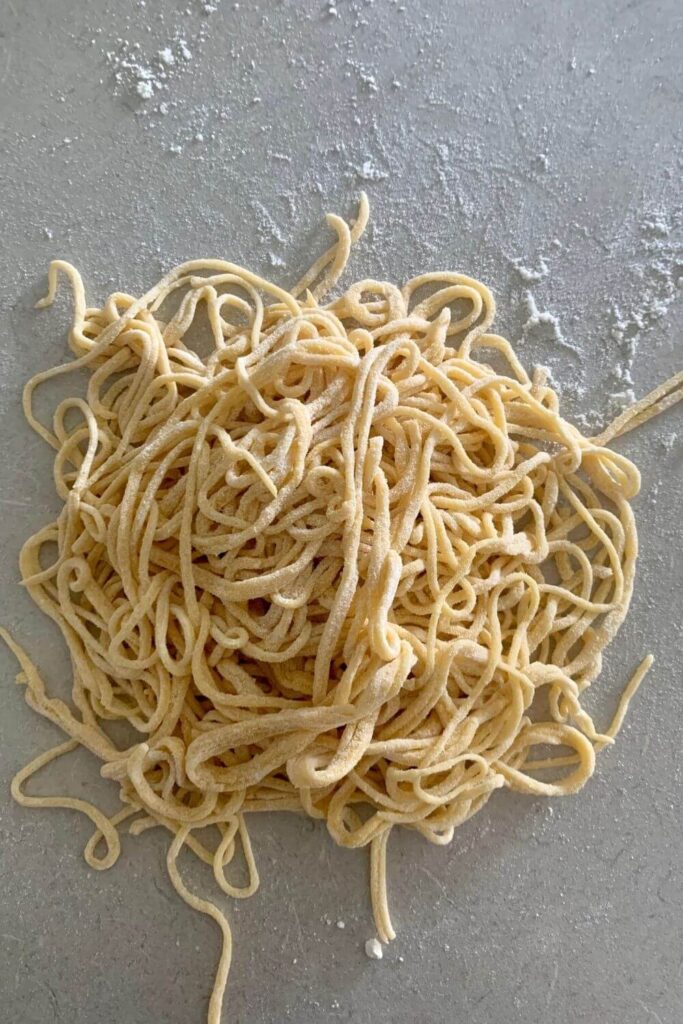
- Make Any Shape Pasta - You can use this sourdough pasta recipe to make any type of pasta - from fettuccine, linguine and papardelle to spaghetti or lasagna noodles. It's also perfect for ravioli!
- No Special Equipment - You don't need any special equipment, however a stand mixer and pasta machine do make it easier. Sourdough pasta can be loads of fun to make with kids (you'll find my full guide for sourdough baking with kids here)!
- Better Digestibility - My experience with sourdough pasta is that it doesn't leave me feeling bloated and over full. It's lighter and much easier to digest than store bought pasta due to the fermentation process and health benefits of using your sourdough starter. Pasta made with sourdough starter will have lower levels of phytic acid.
You can see how I use this simple homemade sourdough pasta in our weekly meals in this post - a week of sourdough dinner ideas using sourdough starter. Sourdough pasta goes really well with these sourdough meatballs!
Ingredients
- Sourdough Starter - you can use sourdough discard or active sourdough starter, it doesn't really matter too much for this homemade pasta recipe.
- Bread Flour - I use bread flour to make my pasta, but you can use all purpose flour if you want to. That's the great thing about pasta - it is such a flexible recipe! I will say that the quality of your flour will affect the texture of your pasta, and if you do have it on hand, semolina flour will actually give you the best result (I like to use a 50/50 blend of semolina and bread flour), however using straight bread flour or all purpose flour is absolutely fine here.
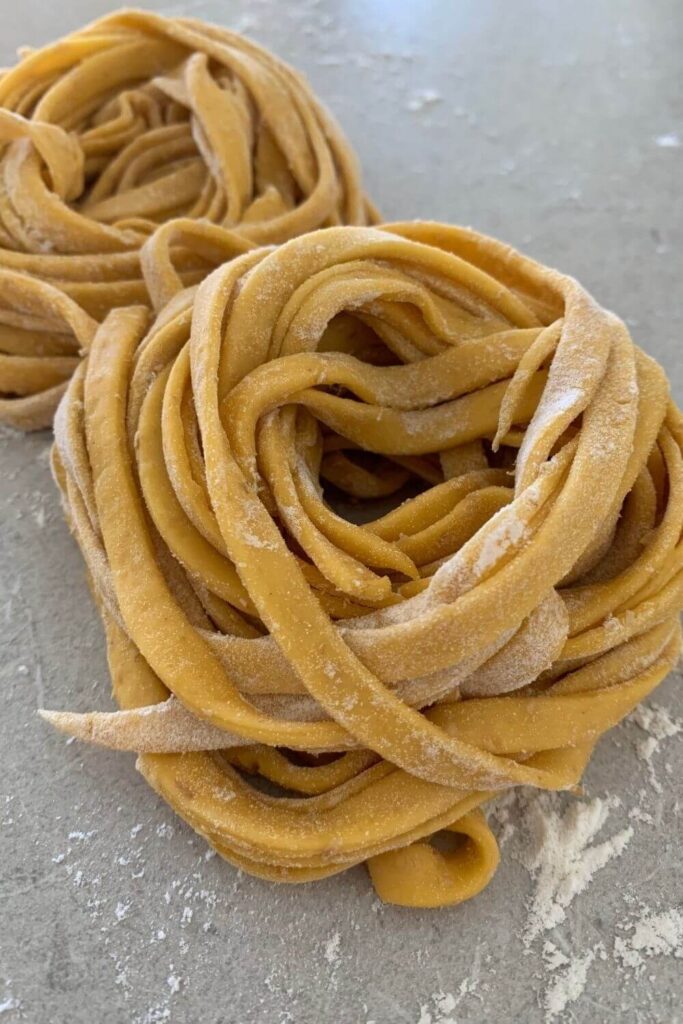
- Whole Eggs - I've used fresh eggs from my chickens to create this sourdough pasta. My eggs are approximately 70g each. If yours are smaller, you might need to use 3 eggs instead of 2. The color of your sourdough pasta dough will depend on the eggs you use. I use pasture raised eggs from my farm so the pasta dough is quite dark in color. It cooks up lighter, but it does looks more yellow in these photos.
Equipment for Making Sourdough Pasta
You can make this sourdough pasta from scratch using a rolling pin and a knife. I have done it this way many times.
If you do find you like to make it often though, these things can be a good investment. They will give you a better quality finish and save you time too.
Pasta Machine - This pasta machine is so much fun to use and allows you to make super fine spaghetti, fettucine, lasagne and ravioli dough with ease.
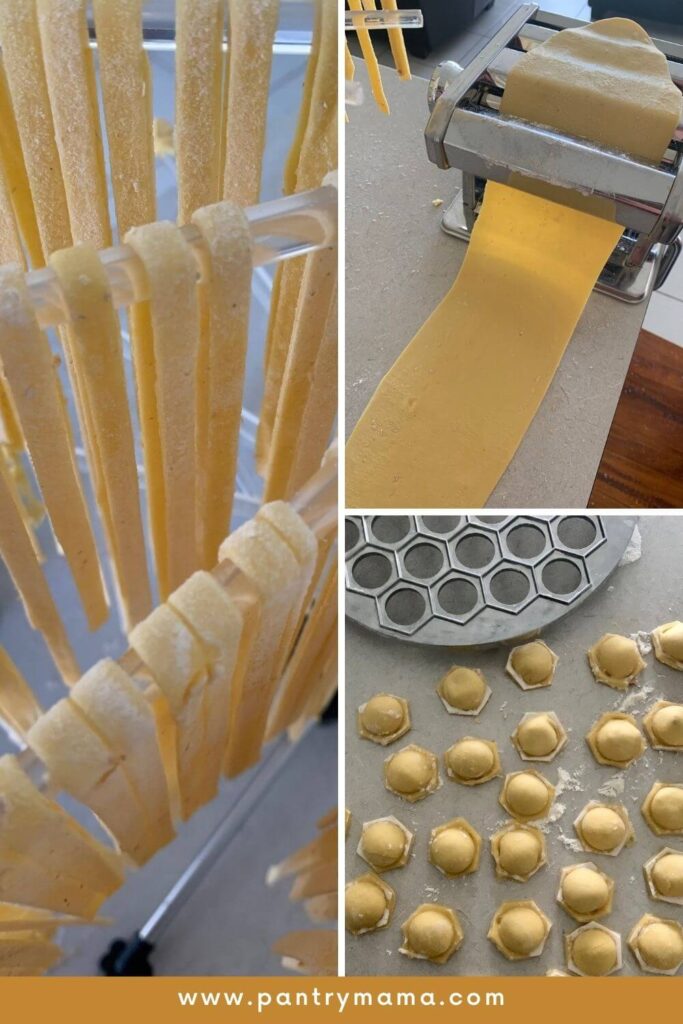
Pasta Drying Rack - This pasta hanger is a great investment. It allows you to dry 3 batches of pasta or noodles at a time. I love that it can be stored away compact. It allows me to dry the pasta up on the counter away from little fingers (for the most part haha).
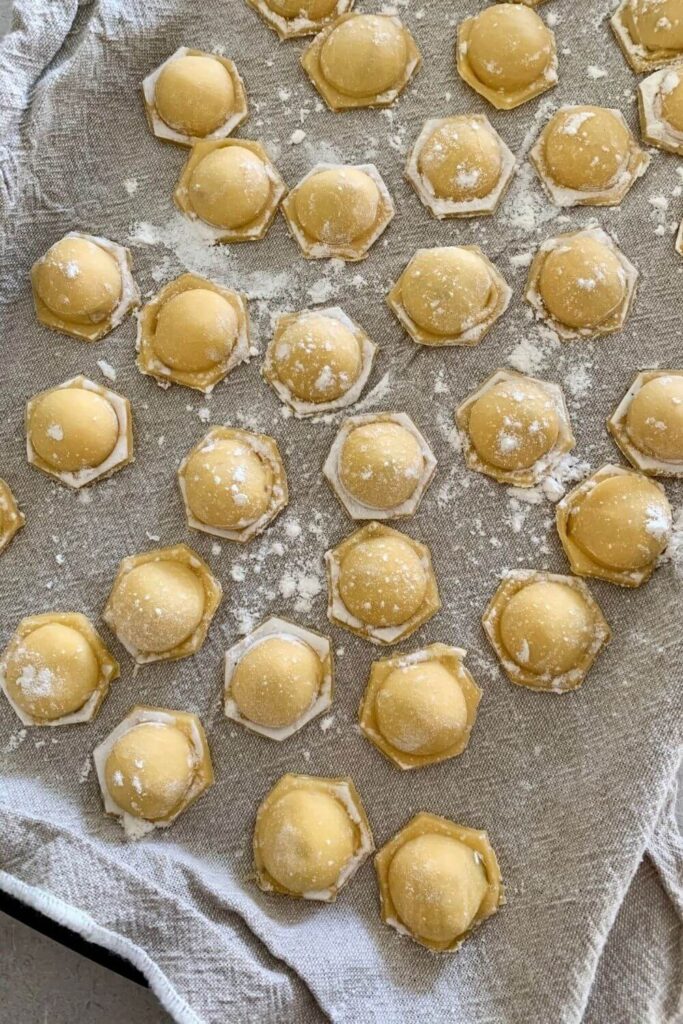
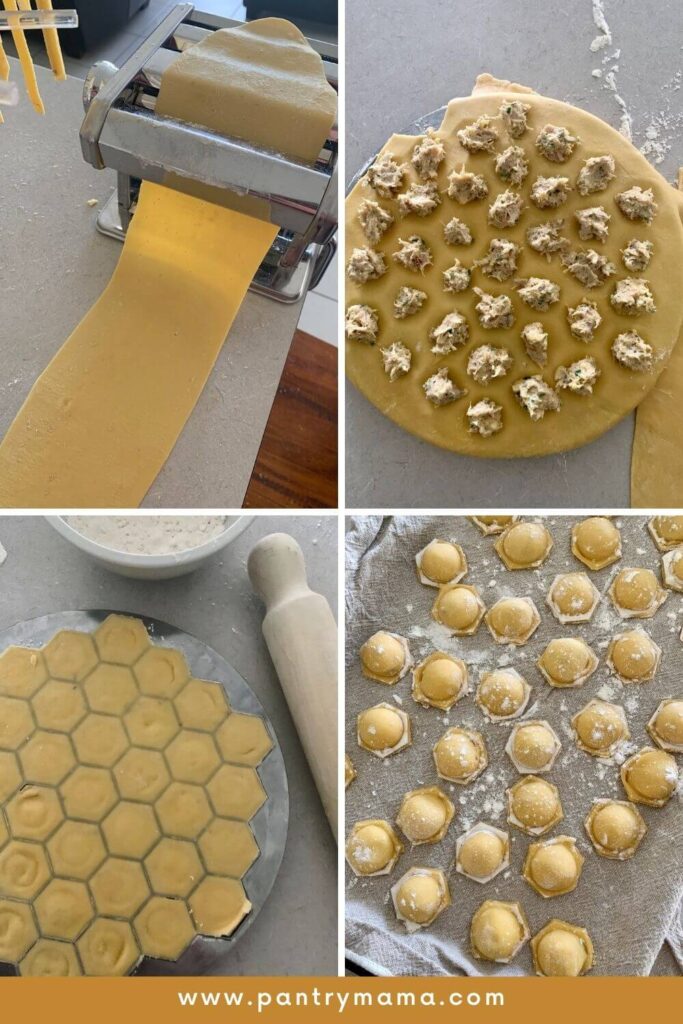
Pelmeni Cutter/Mold - This fun Pelmeni mold allows you to make hexagonal filled pasta shapes. You can easily make up to 37 at a time. You just roll over it with a rolling pin and then pop them out. While it's not true ravioli, it's my way of making homemade ravioli!
Ravioli Stamps & Cutters - this set of ravioli stamps can make pasta making lots of fun!
How To Make Sourdough Pasta
Making sourdough pasta could not be easier. You can mix the dough by hand (afterall, pasta was made long before modern mixers, right). But if you do have a stand mixer or Thermomix, you can most certainly utilise these to make the job much easier.
The dough needs to be kneaded very well, so if you are going to do it by hand, you need to really get your muscles working.
Here's the process for making sourdough pasta dough:
- Measure out the three ingredients - sourdough starter, flour and eggs.
- Add the ingredients to your stand mixer bowl and use the dough hook to bring it together into a dough.
- If you are using a Thermomix, knead the dough for around 3 minutes or until it clumps together.
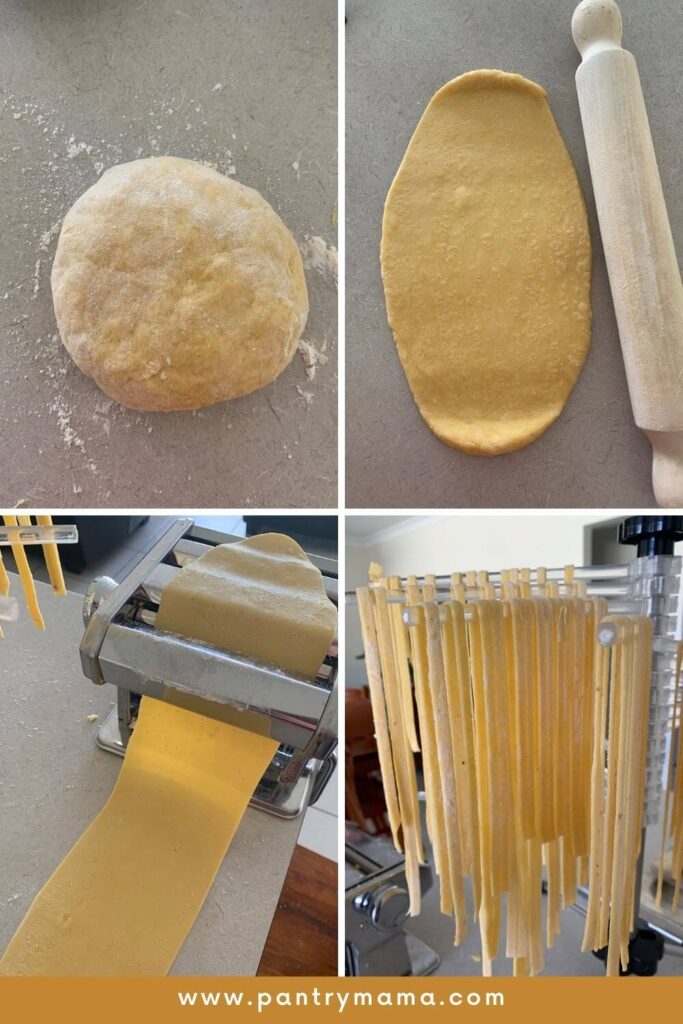
- Turn the dough out on to a floured surface and work it into a ball.
- Place into a bowl covered with cling wrap and let it rest for 30 minutes.
- If you want to do a long ferment, place the homemade sourdough pasta dough in the fridge overnight.
- If you are going to cut it after the 30 minute rest, leave it on the kitchen counter.
Tips for Rolling and Cutting Sourdough Pasta by Hand
You can definitely roll and cut this sourdough pasta by hand. The trick is to use flour to ensure that the dough is not sticky. Semolina flour is perfect for this!
A cool surface is good to stop the dough from getting too soft and tearing.
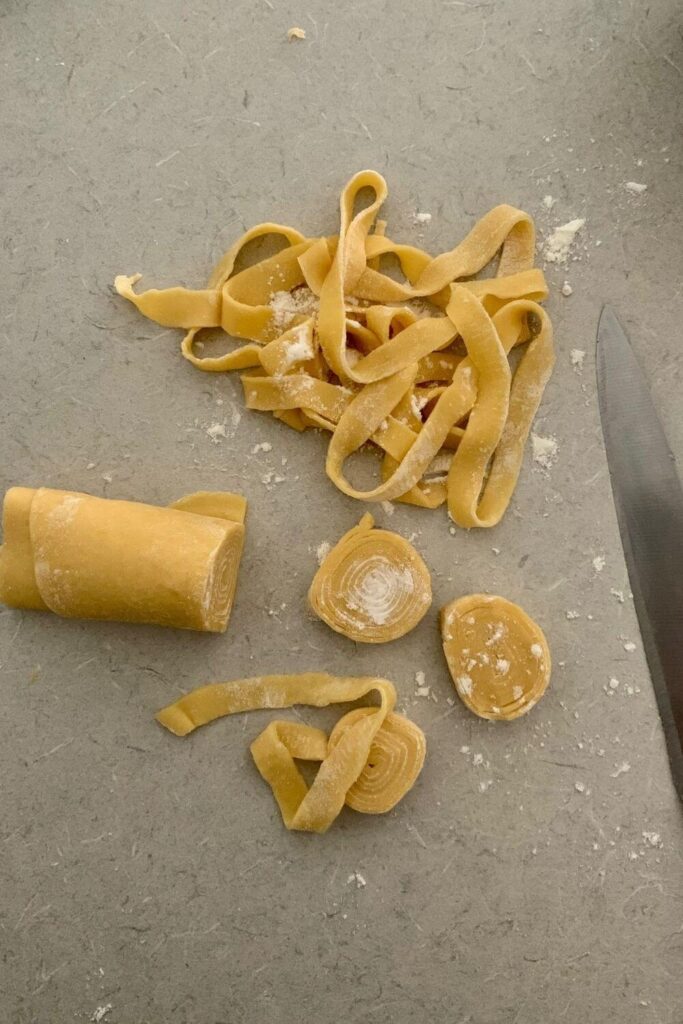
Simply roll the dough out to your desired thickness using a rolling pin. It can be easier to divide the dough into 4 pieces and roll each piece separately. This will enable you to get it nice and thin.
To cut into noodles, sprinkle the surface of the dough with flour and gently roll it up. Using a sharp knife, cut the pasta to the desired thickness. Gently unravel the noodles and toss in flour to stop them sticking together.
You can hang them up to dry or just leave them on the counter. Let them dryat room temperature for around 30 minutes before cooking.
How To Use a Pasta Machine for Sourdough Pasta
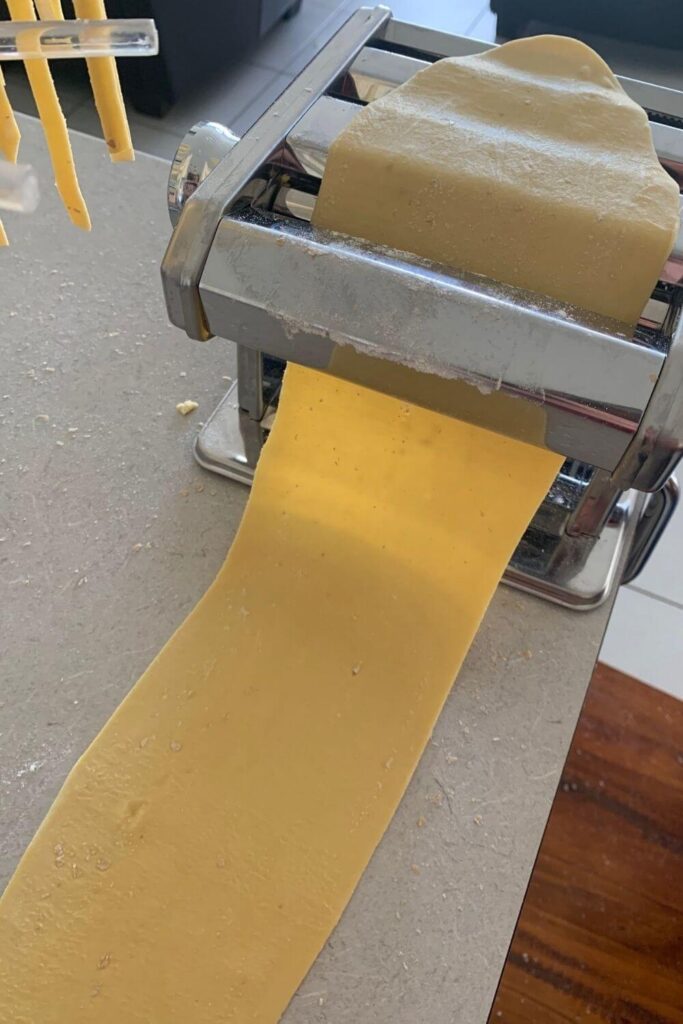
I find that a pasta machine is a really easy way to get uniform pasta. It makes it quick and easy to get the pasta dough nice and thin and is also lots of fun for my kids to get involved in.
Most of the time, I don't even need a rolling pin to start the dough off, I just feed balls into the machine and they come out flat!
A few tips to getting the most from your pasta maker:
- Use plenty of flour on the dough before you feed it into the machine. This ensures that the dough will not tear or get stuck.
- If you are making very long sheets or pasta or noodles, it can help to have a second pair of hands to help you feed the dough through the machine and catch the noodles. Otherwise, the extra length can make it a little hard to handle on your own (hello kids, can you help me please!!).
- Start the pasta machine at the thicker setting and work down. This will give you better quality pasta at the end.
- For really good pasta, laminate the dough as you go along. So roll it out and then when you feed it back through the machine, fold the dough over itself so it creates layers.
- Be careful when cleaning your pasta machine. Don't use your fingers to loosen dried on pasta underneath. Speaking from experience, the edges of the metal can be really sharp!
- A pasta machine is really handy for making sourdough crackers too! You can roll the dough super thin so you get lovely, crisp sourdough crackers. My absolute favorites are these sourdough rosemary and parmesan crackers.
Flavor Variations
While plain sourdough pasta is absolutely delicious in its simplicity. However, if you want to try something a little more adventurous, why not try these ideas:
- Add some finely chopped fresh chives or thyme to dough for a fresh, herby twist.
- You can make pink pasta by adding a little beetroot juice, green pasta by adding a little spinach juice.
- Add some saffron to the dough for a deeper yellow color.
- Why not add some delicate flowers from fresh herbs. Rosemary and chive flowers make beautiful additions, as do torn up nasturtium flowers and basil blossoms.
How to Cook Sourdough Pasta
Fresh sourdough pasta is super easy to cook. You'll need a large pot of boiling water with a few tablespoons of salt. Pop the fresh pasta into the boiling water and allow it come to the boil. It takes a lot less time than dried, store-bought pasta. I don't add olive oil to the water when I cook sourdough pasta, but you can if you want to.
Once the pasta has risen to the surface it's generally cooked al dente (to perfection). Test a piece to be sure before removing from the water.
I never actually drain the pasta - I use tongs to remove it from the boiling water and put it into the pan of sauce - that way you toss in some of the pasta water, which is essential for a good pasta sauce! I love tossing hot pasta through this easy bread dipping oil - absolute perfection!
How To Store and Freeze
Homemade sourdough pasta can be stored dry or frozen.
Same Day Sourdough Pasta - If you are going to use it the same day that you make it, you can leave it hanging on the pasta hanging rack until you want to cook it.
Freeze - To freeze sourdough pasta dough, let the pasta dry for at least an hour before you place it into a ziploc bag and freeze. Try to ensure there isn't too much air in the bag when you seal it.
Fridge - You can also store fresh pasta in the fridge for up to 2 days. Let it dry for around an hour and then place into a ziploc bag into the fridge. If you need to store it longer than this, place it into the freezer to inhibit bacteria growth.
Dried Pasta - While it can be dried out completely, the dough does have raw egg so storing in the fridge or freezer would be preferable than just storing it in the pantry in a dried state.
Sourdough Pasta Recipe
Equipment
- Rolling Pin
- Pasta Machine
- Pasta Hanger
Ingredients
- 100 g Sourdough Starter (or sourdough discard)
- 250 g Bread Flour (or all purpose flour)
- 2 Eggs (large eggs, use 3 if yours are small)
Instructions
- You can make this pasta dough by hand or in a stand mixer or Thermomix.
Making Pasta by Hand
- On a clean counter top, pour out 250g of flour, making a well in the centre.
- Crack the eggs into the centre of flour and then pour the sourdough starter on top of the eggs.
- Using a fork, gently beat the eggs and the sourdough starter together, gradually bringing in some of the flour.
- Once the flour, eggs and sourdough starter are roughly combined into a shaggy dough, knead the pasta by hand until it forms a smooth dough. If the dough is sticky, add a little more flour until you achieve the right consistency.
- Set the dough aside for 30 minutes (or overnight if you want it to be slow fermented pasta).
Making Pasta in a Stand Mixer or Thermomix
- Add the flour, eggs and sourdough starter to the bowl. For Thermomix, use the knead function for 3 minutes until the dough is clumping together.For a stand mixer, use the dough hook and knead the dough on low speed (not more than 2) until the dough forms a smooth ball.
- Turn the dough out on to the counter and gently knead it into a ball.
- Set the dough aside for 30 minutes (or overnight if you want it to be slow fermented pasta).
Rolling & Cutting Sourdough Pasta
- Once the dough has rested for 30 minutes - or overnight - it's time to roll, cut and hang the pasta. If you've had the pasta dough in the fridge, let it come to room temperature as it will be easier to roll.
- You can use a rolling pin or a pasta machine (you'll find detailed instructions for both in the post above).
- Use plenty of flour on the surface of the dough to stop the dough sticking to either the rolling pin or pasta machine.
- Once the dough is cut to the desired shape/length, hang the pasta on a pasta hanger for at least 30 minutes to dry.
Nutrition


I’m Excited to make lasagna!! Do I need to dry it as well?
I received my pasta maker on
Monday! Lasagna is on the menu tomorrow once I get the tomatoes to make the sauce.
YUM! You don't need to dry it, no it's fine to use it as is for lasagne 🙂
Can this be dried for long term storage?
Haven't made it yet, but this is the first time I've seen a pasta recipe with sourdough discard. My problem is that it will have to be gluten free, so I'm thinking rice and sorghum. But for trying to keep it not too dry, could I use oil instead of flour when rolling and to avoid the pasta sticking to the surface when rolling? It is what I do with my gluten free sourdough bread, though this may be a bit more fragile
My husband and I have made this recipe quite a few times. It is great! We use our pasta maker, but we have not hanged the pasta for 30 minutes. Just a question as we have a pasta sauce recipe that asks for "al dente" noodles. If we hang the pasta and let it dry, I am guessing that will allow us to cook it "al dente"?
Hi! If I’m putting it in the fridge, do I wrap it in plastic wrap or put it in a bowl and cover it with plastic wrap? Also I really cannot figure out what you mean by laminating it when you mention to fold it when putting it back through the machine. Would you mind elaborating on this for me or do you have a video I can reference?
I made this last Sunday. I actually made a double recipe. I used a pasta flour blend made of durum wheat flour, and semolina flour. The dough was soft, pliable, easy to handle and made spectacular spaghetti for that same night. The rest of the pasta went in the fridge, wrapped, in 8oz portions. We ate them in a ramen recipe 2-3 days later and boy were they spectacular! The chewiness, the depth of flavor! Perfect ramen noodle. When I make this again I will let them rest in the fridge a few days. Thank you for another amazing discard recipe!
I doubled the recipe and the dough is really tough - not pliable at all. Wondering why this might be?
Quick question... if doing a slow over night ferment do you leave it on the counter or in the fridge?
In the fridge 🙂
Great recipe! 🙂 I think my dough is a little drier than yours - might be due to the egg size? How many grams was each of your eggs (out of shell?) thank you!!!
I think mine are around 60g although we have our own chickens so some can be around 80g depending on which chook it came from 🙂 Just add a little water if the dough is dry 🙂
If we freeze the pasta, do we need to thaw it before cooking it, or can we add the frozen noodles to the boiling water? Is it the same amount of cooking time?
Does the sourdough pasta puff up at all when cooked? I presume the boiling process would quickly kill off the yeast and, therefore, not puff/rise at all. Thanks!
How well does this work for extruded pasta? I've found with non-fermented hollow noodles that the dough needs to be almost crumbly (i.e., a high proportion of flour) for the pasta to be firm enough to survive the boiling step - or even dried before cooking - at least when using the KA attachment. Maybe the consistency of fermented dough is different - ?
Just wondering if I could substitute the bread, flour for fresh milled flour?
Love this recipe! Maybe I missed this part, if I were to freeze the noodles, what’s the process afterwards? Can they go straight into boiling water or do they need to defrost?
Thank you
How many servings does this make?
Hello! Just wondering in terms of nutrition facts how many servings this is? Thank you! I tried it tonight and it came out DELICIOUS! I love your recipes!
Can we replace bread/all purpose for Italian 00 flour at same proportion?
How many servings does this make?
Have you ever added plant protein powder to the recipe? If so, would I supplement the powder for some of the flour?
Super easy, tasted amazing! My dough was slightly dry and was difficult to knead. I added a tbsp of olive oil and a little water and it was perfect.
Once the pasta is dry how do you store it and how long will it last?
Can the dough be stored in fridge longer than overnight or frozen? Before rolling and cutting?
Can Semolina flour be used?
How many servings does one batch make?
4 servings
Made this twice. Both times I found the dough to be a bit on the dry side... Any recommendations on the egg weight in grams?? Pasta was really good the first time, rolling it out tomorrow for the 2nd time!
How many servings does this make?
How long can the fermented sourdough pasta remain in the fridge without being rolled out?
Would you change the amount of flour or liquid if using fresh milled flour?
Thank you for sharing your recipes with us! I have been making so many great things.
Loved this recipe! I used a food processor for the dough, then rolling pin and hand cut. We did the over night ferment. It made so much, I checked back and re read, was very happy to see the freezer section. Thank you for the great info!!
This sounds awesome! I’ve never made pasta before, do you boil it or cook it after you hang it to dry?
You usually hang it to dry for around 30 minutes before boiling it 🙂