
How to Make Sourdough Starter
This post may contain affiliate links.

In order to bake sourdough bread successfully, you need to create your own sourdough starter, a bubbly best friend if you will. Here you'll find easy step by step instructions for making a sourdough starter from scratch. You'll find notes on what to do each day, as well as the type of flour to use and a handy troubleshooting guide - all essential for making a sourdough starter.
You can find my step by step instructions for how to make a sourdough starter (including a video) in the recipe card at the end of this post.
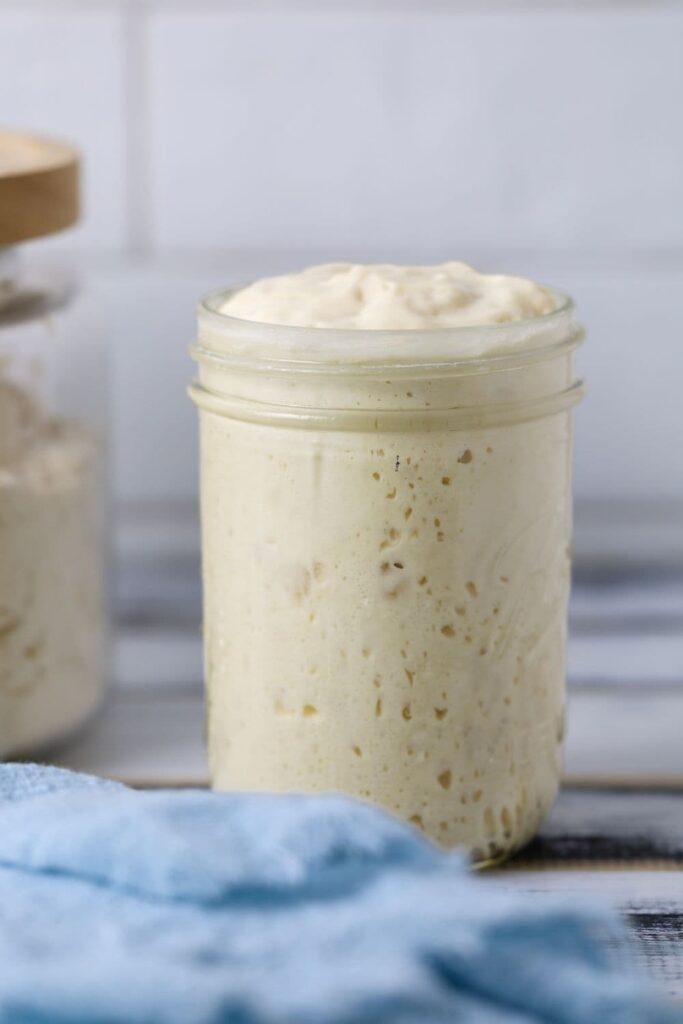
What Is A Sourdough Starter?
A sourdough starter is a mixture of flour and water which is colonised with wild yeast and bacteria over a period of time. The mixture is maintained at room temperature while it's being established. Then it can be kept in the refrigerator once it's considered mature. Active sourdough starter is used to bake sourdough bread.
The most amazing part is that every single sourdough starter will be unique in its own way because it is dependent on many environmental factors unique to your home and environment (in fact many baker's have fun naming sourdough starter). Want to understand the science behind a sourdough starter, take a look at how a sourdough starter works. You might also find the history of a sourdough interesting.
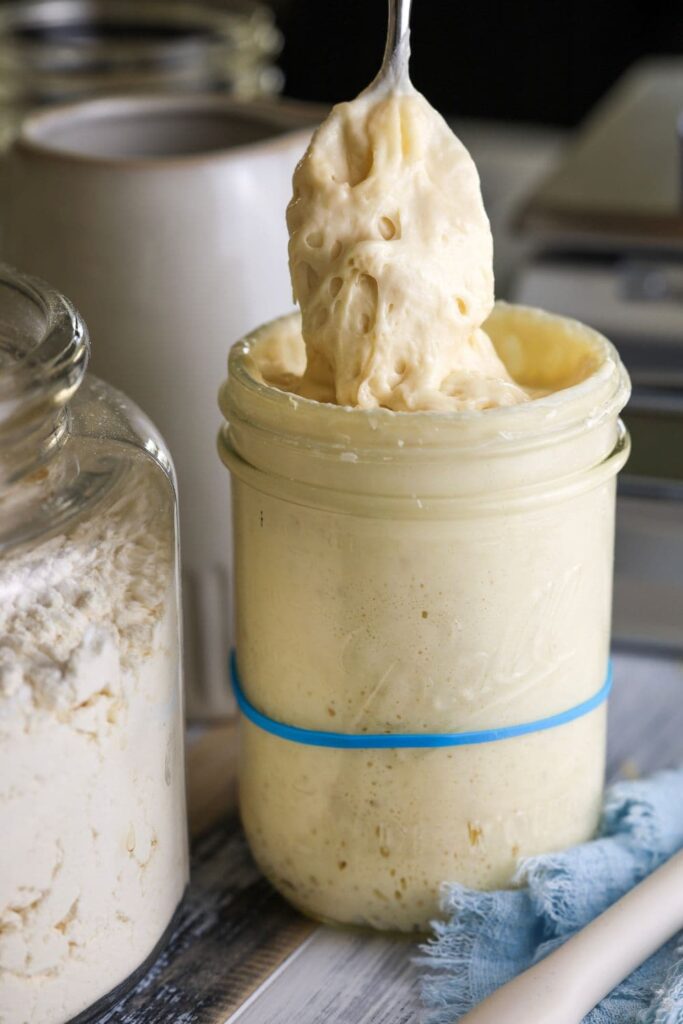
What Equipment Will You Need?
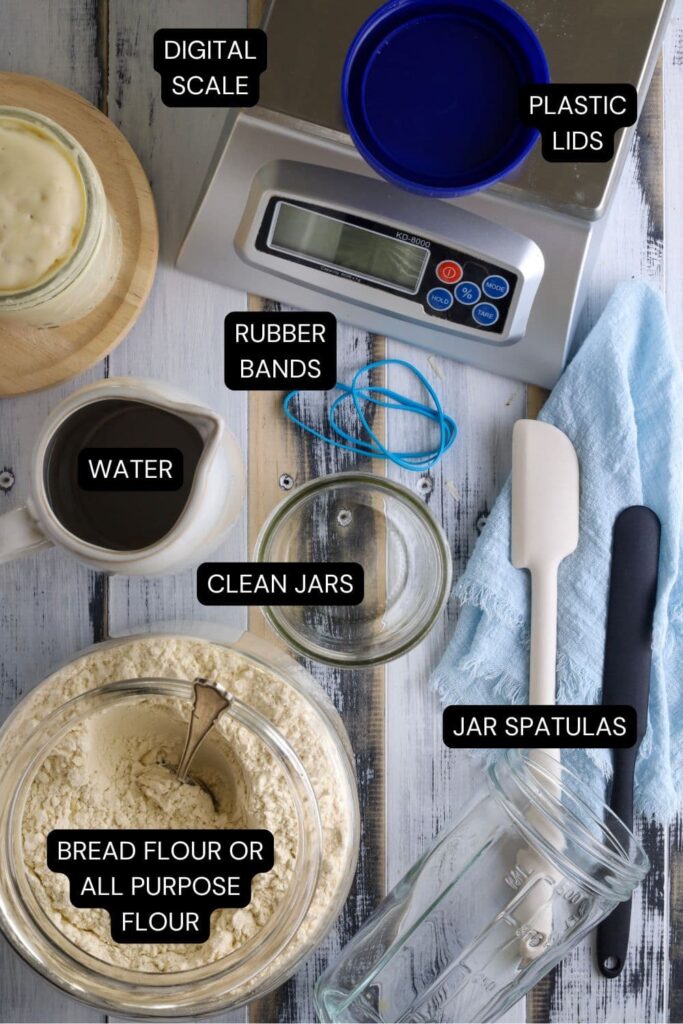
You don't need any fancy equipment to make a sourdough starter, but you will need:
- Clean Glass Jars - I recommend having at least 2 jars on hand (I prefer 16oz mason jars). Check out the sourdough starter jars I recommend.
- Rubber Band - is really handy to place on your jar so you can check when and if your sourdough starter is doubling.
- Spatula or something to stir your sourdough starter with (a butter knife is a good stirring tool too)
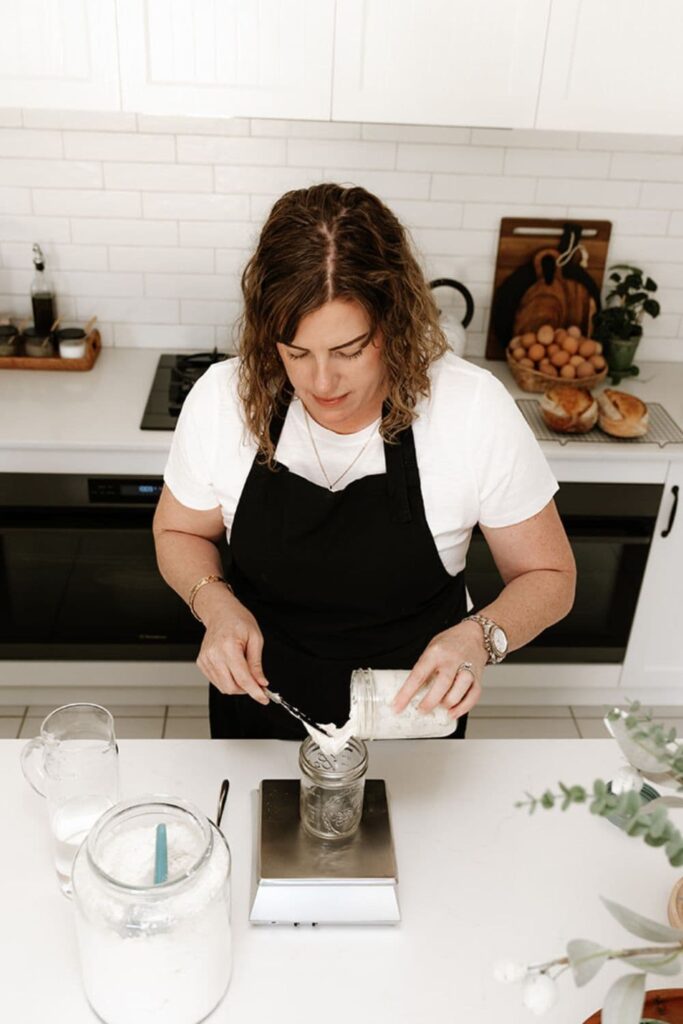
- Digital scale - this is essential for accurately measuring the flour and water for your sourdough starter.
- Flour - all purpose flour or bread flour is fine to use. Having some rye flour or whole wheat flour on hand to strengthen your sourdough starter is also a good idea.
- Water - good quality, clean water is essential to making a sourdough starter. Do not use distilled water or tap water full of chlorine (although filtered tap water is perfectly fine). If you're not sure of the quality of your water, use bottled water.
How Long Does It Actually Take?
There's no doubt, making a sourdough starter takes time and a lot of patience! While it generally only takes about 7 days to create a viable sourdough starter, it will usually need more time before it’s truly ready for baking. You can check out my guide to understand when your sourdough starter is ready to bake with. The float test isn't always a reliable method to check your sourdough starter's readiness for baking. Just because it floats, doesn't mean it's ready to bake sourdough bread with.
The exact timing depends on your home environment, particularly temperature and conditions. Don’t be discouraged, your starter can still be used, but you’ll notice your sourdough loaves improve as it continues to mature. Many bakers find their starter becomes reliably “active” after around 14 days, though for some it can take several months. This is totally ok.
In the meantime, you don’t have to let your discard go to waste. Try making sourdough pancakes, sourdough waffles or even a quick sourdough discard sandwich bread. Just keep in mind that your starter should be at least 7 days old before you begin using the discard to bake with.
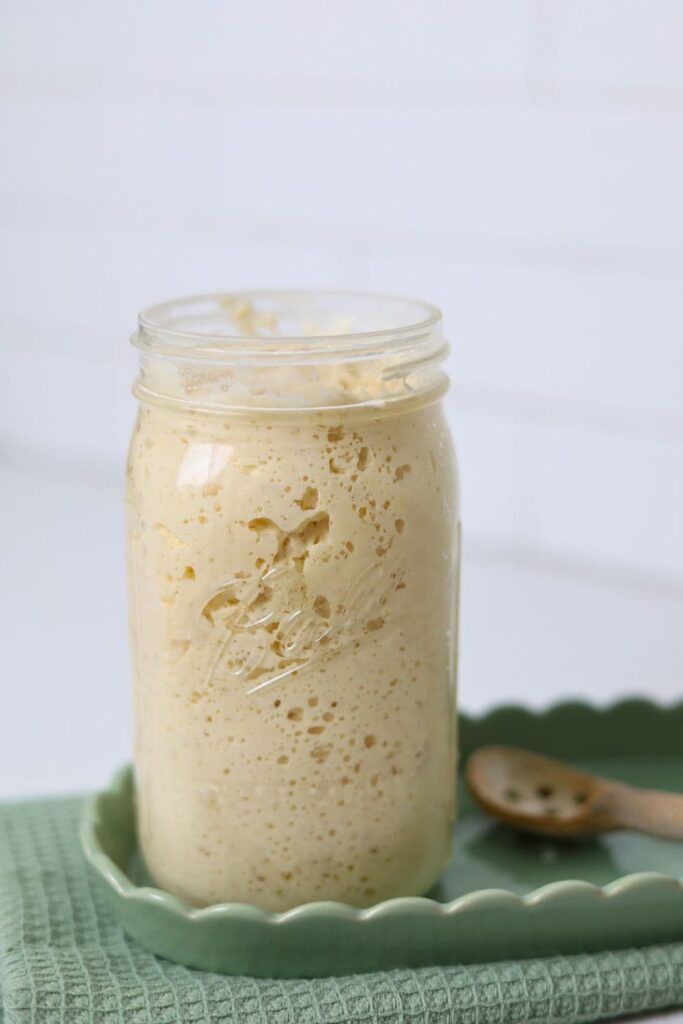
What Flour Should I Use to Make Sourdough Starter?
You can really use any type of plain, non raising flour made from a grain that you like for this sourdough starter recipe. Do not use self raising flour or bleached flour of any kind.
I have successfully created sourdough starters with plain flour (all purpose flour), bread flour and wholemeal spelt flour. I've also milled my own whole wheat berries and started a super active starter from this freshly milled whole-grain flour
Your starter will gather yeast not only from the environment, but also from the bacteria on the flour. Whole flours will have more of the "good stuff" on them, so will generally take off sooner. Read more about where the yeast in sourdough starter comes from.
A little rye flour added to your plain or bread flour will often help to get your starter bubbling sooner. It's like superfood for your sourdough starter!
How To Make a Sourdough Starter
Days 1-3
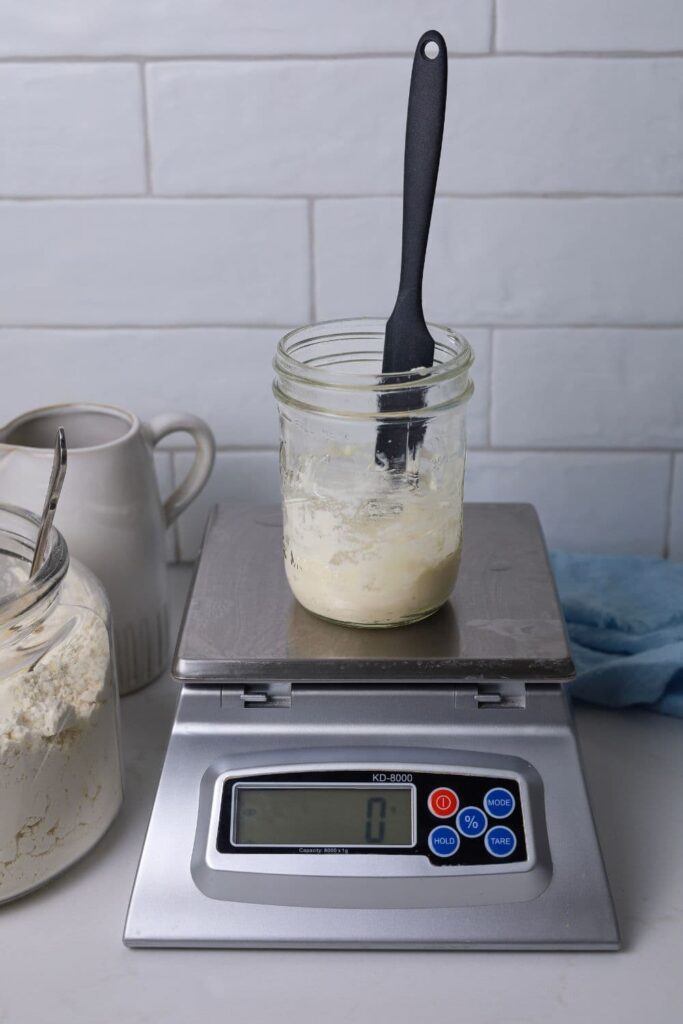
To create your sourdough starter, begin with 50g of flour and 50g of water in a clean jar on Day 1. Mix well, cover loosely, and leave it somewhere warm for 24 hours. On Day 2, simply stir the mixture to add oxygen, no extra flour or water needed. By Day 3, you’ll start a routine of discarding some of the starter and feeding the remainder with equal parts flour and water (50g each). This daily feeding encourages growth, bubbles, and even some interesting smells - completely normal signs that your starter is alive. If you notice a layer of liquid on top, called “hooch,” stir it back in when you feed.
Days 4-7
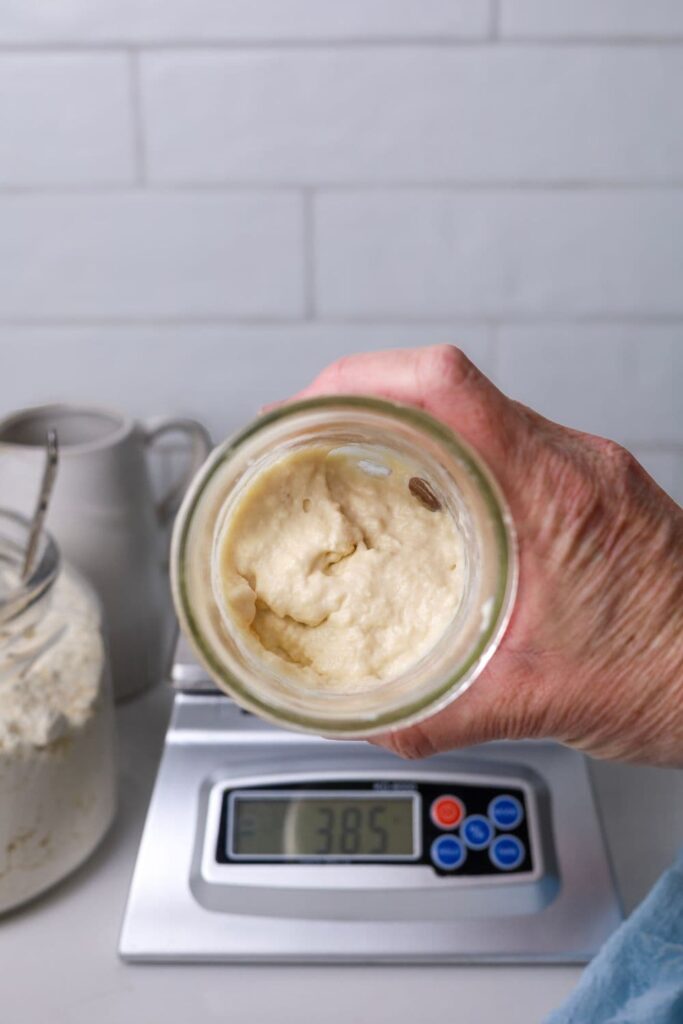
From Day 4 onward, your starter will need to be fed twice a day, around 12 hours apart. Continue discarding before each feed and watch as your starter becomes stronger, rising higher each time. By Day 5, you may want to mark your jar with an elastic band to track its growth. Keep this up through Day 6 and beyond. On Day 7, your starter will officially be a week old! While it may not be fully mature just yet, the key is consistency.
Keep feeding twice daily until it reliably doubles within 2–6 hours of a feeding. At that point, your starter will be strong enough to bake with. It will continue to improve as it matures over the coming weeks.
You will find a very detailed set of instructions for making a sourdough starter in the recipe card at the bottom of this post.
Tips For Success
- Be patient! You won't create magic overnight, but with time and patience, you will make a thriving sourdough starter.
- Temperature is important. Try to keep your starter between 24-28C (75.2-82.4F) to encourage fermentation.
- Use a scale. Skip the cups and spoons and measure your flour and water accurately to give your starter the best chance.
Troubleshooting Your Sourdough Starter
While you are growing or developing your sourdough starter, you may have some issues or questions that arise.
Here are the most common questions that I get asked about sourdough starters. You might also like this comprehensive list of the most common sourdough starter questions I get asked.
- Liquid forming in or on top of your starter - sometimes you may get some dark liquid forming on top of or in the middle of your starter. It's called hooch and is perfectly normal (it's actually a mixture of alcohol, water and byproducts of the fermentation process). Just pour it off if you can and feed as per normal (if you stir the hooch back in, you'll make your sourdough starter hav ea much stronger flavor). You'll find that your starter develops hooch when it is hungry. You can read about how to prevent hooch on sourdough starter.
- My starter smells like nail polish remover - again it's perfectly normal, it's just hungry, so feed, feed, feed.
- My starter isn't bubbling like the first few days - sometimes starters start out strong and then taper off a little between days 3-7. It's ok and may just be that the good bacteria is taking a little longer to win. Just keep feeding it consistently and you should see some action. Even if it's not really doing anything, the yeast will still need to be fed.
- How do I keep my starter warm - it's not totally essential to keep to keep your sourdough starter warm, it will still work. It will just take a lot longer in a colder environment. Some ideas to keep your starter warm are inside the oven with the light on, next to the kettle, inside an Eziyo yoghurt maker or in a cupboard next to your oven. Check out this guide to keeping your sourdough starter warm.
- Fruit Flies in my starter - your sourdough starter may attract fruit flies. They might have already been in your kitchen or they've heard there's new food! You can eliminate fruit flies in your sourdough starter using this guide.
- Why is my sourdough starter forming a skin? - sometimes you'll find that your sourdough starter develops a crust or skin. It's totally ok and just means that it's getting a bit too dry on top. Try covering your sourdough starter with a jar lid that's not screwed on. Just scrape the skin off and feed as per normal.
- My starter has grown mold - if your starter develops anything pink or orange or furry, it's definitely time to ditch it and start again. Make sure that your jar is clean, especially the sides of the jar. If the mold happens a few times, consider using a different flour as sometimes the mold spores come from the flour and not the environment. Believe it or not, my very first sourdough starter actually grew mold (I was heartbroken), but the experience made me stronger and allowed me to get a better understanding of how sourdough starter works.
- Can I feed my starter with different flour? - If you run out of the type of flour you started with, it's ok to feed it with a different flour. If you just feed it once and then go back to the type you started with you shouldn't have any issues. If you are swapping the type of flour for all subsequent feeds then your starter may go through an adjustment stage as the levels of bacteria and yeast get used to their new food.
- Can I cook with my discard straight way - no, you need to wait at least 7 days before you use your sourdough discard. It's not recommended to keep your sourdough discard before this time. When you're ready to start using your discard, you can use some of these sourdough discard recipes.
- What water to feed my sourdough starter with? - water quality is extremely important to a sourdough starter. You should avoid many types of water including distilled and reverse osmosis. You can read this full guide to the water you should use for your starter.
What To Do If Your Sourdough Starter Isn't Ready to Bake With:
- Continue to feed your starter with fresh flour and water twice a day for a few days until its consistently rising and falling. Remember that every starter will be different. It could take 14 days, it could take 28 days, but a consistent feeding schedule is key.
- If you need a break pop it in the fridge for a few days. When you’re ready, take it out and start feeding it twice a day again for a few days. I generally don't recommend keeping an immature starter in the fridge, however if you need a break or you're going away, this is an option.
- Try feeding your starter a different type of flour for a few feeds. Unbleached is best. Rye flour is always a good one - it's like superfood to your sourdough starter.
- If you live in a cooler climate you might only need to feed once a day. Check to see when your starter is actually hungry (it will fall and be smelly).
Why Does Hydration Matter?
The instructions for this sourdough starter use equal amounts of flour and water to achieve a 100% hydration level for your starter. Majority of recipes (and all of my recipes) use a 100% hydration starter. If you need guidance on understanding hydration more, take a look at my guide to sourdough hydration for beginners.
As long as you always feed your starter equal amounts of flour and water, it will be at 100%. Even if you only have 20g of starter, and you feed it 50g of water and 50g of flour, you'll still have a 100% hydration starter.
When you are feeding your starter, you just need to make sure you always feed it more than it weighs itself. For example if you have 50g of starter in your jar, you'd want to feed it at least 50g of water and 50g of flour (a total of 100g) to make sure it has enough food.
Generally, the rule is 1:1:1 so 1 part starter, 1 part flour, 1 part water. But as long as you feed the starter more than it weighs, it will thrive. This is called a sourdough starter ratio. A lot of the time when a sourdough starter isn't doubling consistently, it's because it's not being fed enough. Always remember the 1:1:1 ratio.
A pasta madre is a good option if you want to build a lower hydration sourdough starter.
Maintaining A Sourdough Starter
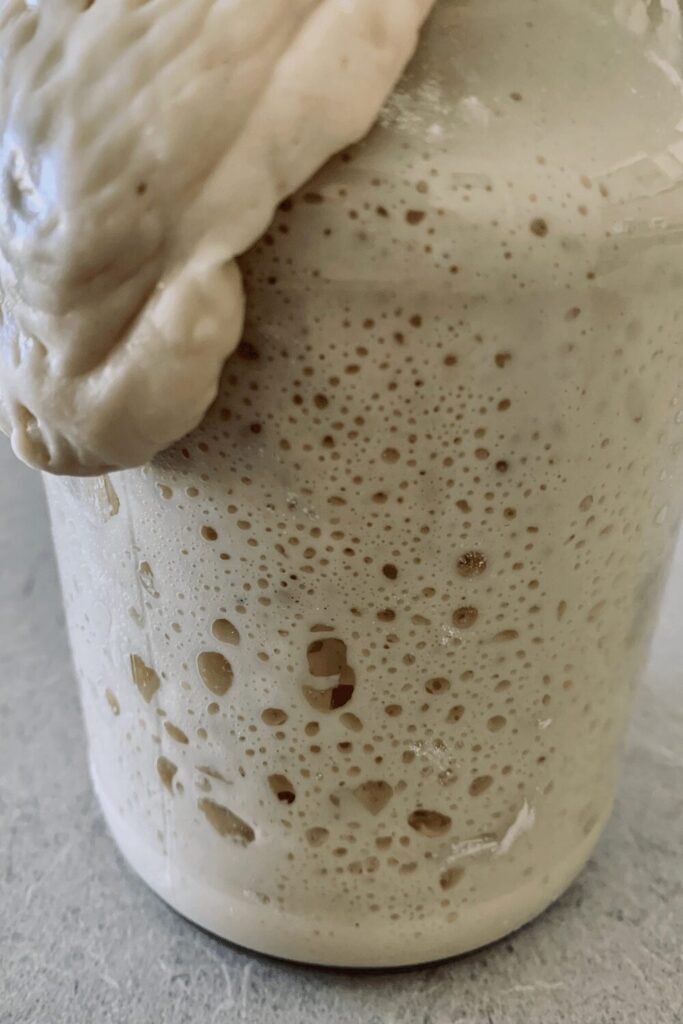
Once you have a thriving sourdough starter established, you'll need to continue to feed your sourdough starter regularly to ensure it remains healthy and active.
There are lots of ways to feed a sourdough starter and I always get asked what the best way to do it is (especially when using a clean jar every time).
If you’d like to put your starter into a clean jar each time, then the easiest way to do it is to take 50g of your sourdough starter and place this into a clean jar. Feed the 50g of starter in the clean jar as normal (ie 50g of flour and 50g of water or whatever sourdough starter ratio you prefer). Creating less mess with your sourdough starter is always a good thing.
You could also use a bowl to pour the 50g of starter into and feed it and mix it in the bowl while cleaning your jar so you can pour it back in. This is a good method if you only have one jar to use.
You can either use the discard in the old jar or just wash out and have a clean jar ready for next time. It’s a good idea to transfer to a clean jar when the rim of your old jar gets really built up but you don't have to clean your sourdough starter jar as much as you think. If you’re feeding everyday, change your jar at least once a week.
How To Make Sure You Never Have to Start from Scratch
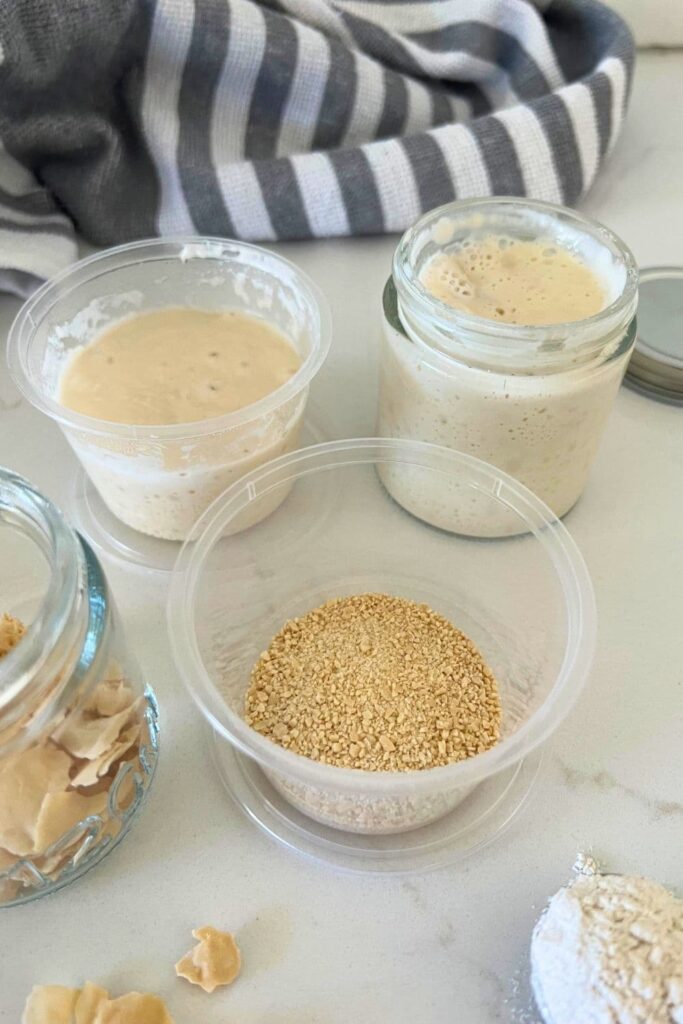
Once your starter is viable, it's a great idea to dry some of it out to ensure you never have to start again. These instructions on how to dehydrate your sourdough starter are your insurance policy to never having to start from scratch again. You'll simply be able to reactivate your dried sourdough starter if something happens to the starter on your kitchen counter.
Other alternatives to drying your sourdough starter include:
Using A Digital Kitchen Scale
I have provided the measurements for this starter in grams because it is easier to ensure accuracy (although sourdough starters are very forgiving and can tolerate eyeball measurements - as long as you're feeding your starter more than it weighs).
Many people come to my Facebook Group asking for help with their sourdough starter - and often the problem is that they are measuring using volume rather than weight (remembering a cup of flour does not weigh the same as a cup of water). Once they start weighing their ingredients accurately, their sourdough starters develop quickly and rarely have issues.
The benefits of weighing your sourdough ingredients vs using volume measurements cannot be ignored.
What to Bake with Your Sourdough Starter
When you are in the process of creating your starter (from 7 days onwards) you can start using your sourdough starter to make sourdough discard recipes like sourdough discard banana bread, sourdough blueberry buckle and sourdough discard lemon muffins.
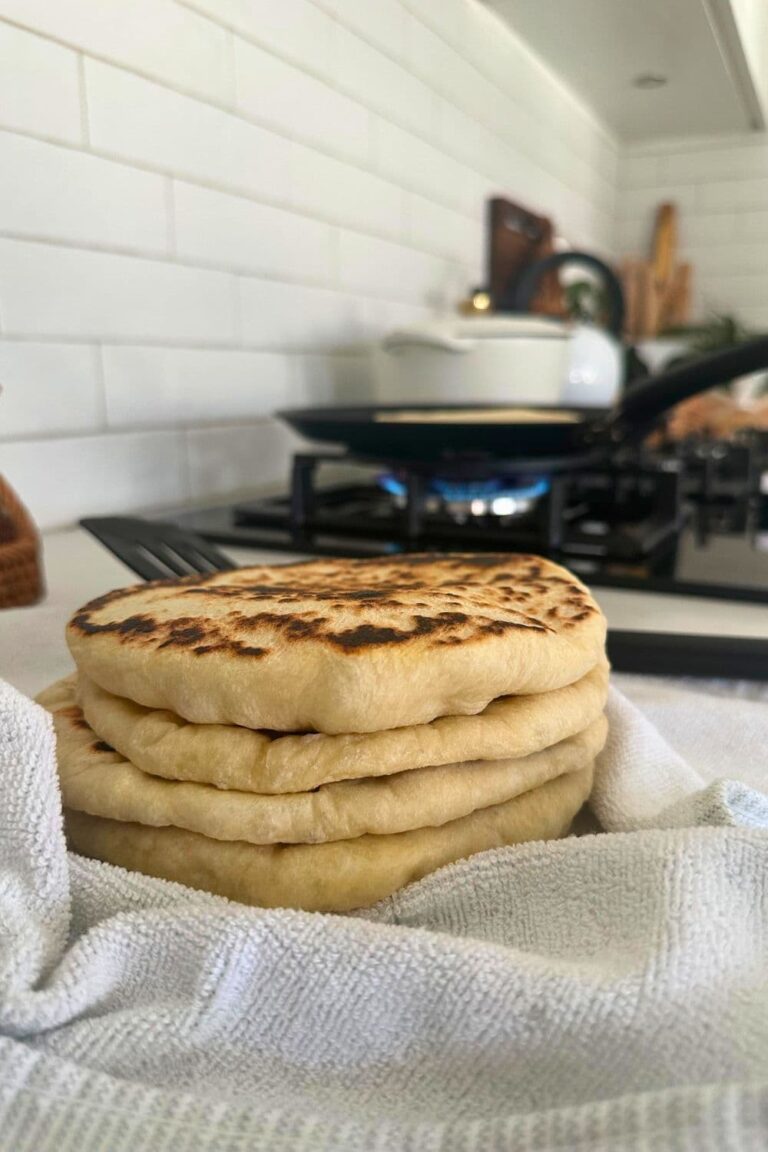
Once you have a mature, active sourdough starter, you'll be able to use it to bake this simple sourdough bread recipe, as well as lots of other sourdough recipes like these sourdough dinner rolls, sourdough bagels and sourdough pizza dough.
Frequently Asked Questions
Yes, you can use gluten free flour to make a sourdough starter. Brown rice flour is a great one to start with, or a store bought blend of gluten free flour can be helpful too.
When your sourdough starter is considered mature, it should peak in around 4 to 6 hours when fed a 1:1:1 ratio, but the time it takes to peak will be dependent on the ratio you use and the temperature you keep it at.
Yes there are lots of different types. Read about 10 different types of sourdough starter.
Sourdough Starter Recipe
Video
Equipment
- Clean Jar
- Digital Scales
- Silicone Spatula
Ingredients
- 50 g Flour Bread, All Purpose, Rye, Whole Wheat - whatever you'd prefer
- 50 g Water Filtered
Instructions
- DAY 1:All you need for today is 50g of water and 50g of flour plus a clean jar. Mix the water & flour together in the jar, pop the lid on loosely (or a piece of paper towel & elastic band). Place the starter somewhere warm for the next 24 hrs. If your house is cold, pop it near the kettle or oven to keep it warm.
- DAY 2:Once your starter is 24 hours old, you need to check on it and give it a good stir. You do not need to add anything today - just get some oxygen into your mixture and then recover and pop aside for another 24 hours.Your starter may already have some bubbles forming - this is a great sign. But it's also totally fine if it's not doing anything. Time is everything! Make sure it’s in a warm spot - you can find some ideas here.
- DAY 3:On day 3 remove half of your starter and then add 50g of flour and 50g of water to the remaining 50g of starter in your jar. Mix it together with the end of a wooden spoon, being sure to get lots of oxygen into your mixture. Replace the cover and pop it away until tomorrow.See notes below for more info on using a clean jar vs same jar.Don’t worry if you keep checking it - it’s completely normal It’s good to notice how it changes in shape, size and smell over the 24 hours.At this stage it's completely normal for it to smell really bad and to have developed a layer of liquid on top (this is called hooch). It might look like the water has separated from the flour but it's just telling you that it's hungry. Stir the hooch in when you feed your starter. It's also quite normal for it to double in size. Keep going - it will be fine
- DAY 4:Step 4 is to feed your starter in the same way as you did yesterday. Remove 100g of your starter and then add 50g of flour and 50g of water to the remaining 50g of starter in your jar. Mix it all together with the end of a wooden spoon. Replace the cover. You’ll need to do this twice today, around 12 hours apart. While your starter will be fairly forgiving, set a reminder on your phone if you think you’ll forget it’s just like having a pet.
- DAY 5:Step 5 is to feed your starter in the same way as you did yesterday. Remove 100g of your starter and then add 50g of flour and 50g of water to the remaining 50g of starter in your jar. Mix it all together with the end of a wooden spoon. Replace the cover. You’ll need to do this twice today, around 12 hours apart. It's a good idea at this stage to pop an elastic band around the jar you are using. Put the elastic band at the level of your starter when you feed it. This helps you to be able to see how far your starter is rising when it peaks.
- DAY 6:Step 6 is to feed your starter in the same way as you did yesterday. Remove 100g of your starter and then add 50g of flour and 50g of water to the remaining 50g of starter in your jar. Mix it all together with the end of a wooden spoon. Replace the cover. You’ll need to do this twice today, around 12 hours apart.
- DAY 7:YAY! Your sourdough starter is a whole week old. Keep feeding twice a day as you have been for at least 14 days.Now I know you want to get to baking bread … but just remember that the most important thing about this whole process is time. Your starter might be ready, but chances are it will need a bit longer to mature - generally 14 days. You need to keep feeding your starter the same way as you have been, twice a day (discarding before you feed) until it's consistently doubling within around 2-6 hours after you've fed it. Once it's consistently doubling after every feed you can try and bake with it. Your starter will keep maturing as you use it.For more information on how to know when your starter is ready, go here.
Notes
Nutrition




May I know if I start a new starter, can I use the discard starter from the 2nd days onward or do I have to wait longer?
No, you need to wait at least 7 days before using the discard 🙂
Hi I have had a rye sourdough starter for many years that went mouldy so threw it away and started a new one but using only rye flour it is very thick using equal amounts of water and flour, is it batter to use a mix of rye with white flour instead of all wholegrain rye. Thanks for your help.
Am I supposed to discard every time I feed my starter? Since I’m supposed to feed it twice a day on the second feed do I also discard?
Yes, you need to discard before every feed, even when doing it twice a day 🙂
Hi I’m new to this and would love to try it a Q when you take out before each feed do you throw away the amount you take out or can it be used for starting another ? thanks
Hi thanks for sharing this amazing recipe. Would you pls let me kno do i have wait for feeding my starter until it doubles in size or just after every 12 hours just feed it? Feeding in rising time must be done?
Thank you
Hi, do I have to continue to feed my starter twice a day everyday, forever?
I don’t need to leave the dough counter after placing it in mould
And can i bake it before 24 hr after fridge
Hi there my starter is doubling even tripling in size and only on day 3, have only fed it once. I’m not noticing it sliding back down- do I wait to feed again until it has slide marks?
Thank you for any info!
Trying my first attempt ever at sourdough starter and have to be gluten free…any tips for gluten free or can I use the same method for standard starter? Super excited to get this down!
Looking forward to hearing from you:)
Excited to get started!! Quick question before I get into it - if it’s doubling in size in 2-6 hours after ten days or so, won’t it overflow the jar? Or will it peak and fall so that won’t happen? Just want to be prepared ahead of time for an unruly starter!
Thanks!
Hello! Just a bit confused here. Do I have to always live only 50g of starter in the jar before feeding it? For exemple… if second feeding is already 100g of discard I’m assuming it will get to be more than that once it matures?
A friend gave me a starter years ago and it has been in my frig ever since. Can I start feeding it or discard it and start new?
This might be a dumb question but when feeding my starter(going on 4th week) is it possible to Over Stir the ingredients? I just want to make sure it is mixed thoroughly. This has been a journey of patient waiting and i don't want to mess up.
Thanks
No there's no possibility of over stirring - in fact sourdough starters love to be stirred vigorously! 🙂
😩 ugh, my starter is 8 days and it hasn’t risen at all. My house is cold so I have it in the oven with the light on. It’s about 75-76° in there. I’m using King Arthur organic bread flour and bottled water (my only other option is tap or reverse osmosis) and a clean jar each feeding. I’ve tried to do this in the past had didn’t have any luck and I’ve accidentally killed one by letting it get too hot which is why I’m trying do be very specific. The ones I’ve tried in the past had started rising by now. What am I doin wrong?
Try adding wheat or rye into the mix
This is so helpful! Thank you. I have a starter that I made about a month ago but I'm still struggling to get it to rise consistently. I think if I follow your directions for a while it will become stable after some time.
After the initial growth period, after the 14 days, do you continue to feed twice a day?
Yes, you'll need to feed twice a day for a good 3 to 4 months - then your starter would be considered mature 🙂
Hi, never tried this & a bit skeptical (get a bit lost/confused with the measuring, had to google the water back to mls instead of grams so hope its right), but I'm on day 4 & need to remove 100g of starter- how the heck do i measure that (ie spoons or mls be easier measure for liquids)? Is 100g the same as 100ml or how many Tbs is 100g of starter?
Thanks, hope this thing works 🤔
You need to weigh both the water and flour in grams, not mills (although technically water will be the same in mills and grams). However, if you have the scale out, it's just easier to weigh both. If you have 150g of starter in the jar and need to remove 100g, just remove 50g into a clean jar and then add 50g of flour and 50g of water to that 50g. Discard the remainder in the original jar (you should toss this as it is too young to do anything with).
Hello
I'm on day 5 of my starter due to shift work I'm going to miss the 12hour mark of feeding my starter will this ruin my batch?
No it will be fine, feed it when you can 🙂
Is there any point we stop feeding it? Also when we use our starter for actual bread do we replace what we took out?
Once mature, do you only feed it again when you take some out to make your bread?
Amazing blogs! I've followed so many.
Question: I have followed instructions and starter doubles in about 4 hours (day 7) and then sinks back down to where I started. I have tried feeding 3 or more times a day, but still sinks.....not as far as when originally started, but significantly. It also tastes more acidic.
I started on whole wheat flour and feed with 50/50 all purpose and wheat flours.
Suggestions?
I'm on day 3 of my starter. It's fairly thick, not rising, and no bubbles. Is this normal?
Hello. Love your site! A couple of questions: I like to clean my jar each time, but what I do is just rinse it out with hot water, no soap, when I feed it. Then I put it back into the jar that’s been rinsed with hot water. I make sure there’s no water inside the jar. Will that work? Also, my starter will be seven days old on Friday and I have to be out of town for two days. It will miss the Friday night and Saturday morning feeding. should I put it in the refrigerator till I get back and resume feeding? I could take it with me, but I’d rather not. Should I leave it on the counter? I asked this question in a Facebook group and got different answers. Thank you.
Do you Have a video on this Starter recipe?
I am a little confused on step 4 where it says to remove 100 g of starter. Isn’t the idea to remove half of the starter? Which removing 100 g would would suggest that I have 200 g of starter before discarding. When I remove 100 g it seems like more than half. Would it be better to discard leaving 50 g of starter and go from there? I am using a Weck jar and forgot to write down the beginning weight of the jar alone and don’t currently have a second jar to transfer to! Thank you!
At what point after the 7 days can you start using the discard in recipes?
You can use discard in discard recipes from day 7 onwards 🙂
So, I have been given a jar of (I think) discard today. It has been fed today and left at room temp for a couple of hours. I can see the level in the jar has doubled. I've been told to put it in the fridge. What then??
Can I start the starter with a smelt floor or does it need to be white flour?
Hi! I'm doing my second starter, the first one I threw away because grew but suddenly stop growing. Now with this new one I'm on day 5 and still don't see my starter growing. I clean the jar every time I feed and keep in the oven with the light on. When I'm doing the discard, I can see there is not much to throw away 🙁 I'm using 1:1:1 - 50g starter, 50g flour and 50g water each feed.
Hi, I am currently on day 6 of feeding my starter. I don't get much of a rise - about 0,2 inches and only tiny bubbles. I used tap water for the first 3 days and then switched out to filtered spring water. It is spring right now so my house isn't cold at all. Could it be that I rinse my utensils and jar with normal tap water? Please help!
My starter has Trippled for the past two days, is quite spongey, floated briefly yesterday morning but drops o the bottom today. I’m confused. How long does the float test need o last to make sure your starter is ready for a bake?
What if I forgot to feed twice a day?
I got starter from a friend and have been discarding half all but 50g and feeding it once daily. In reading this again, am I supposed to be feeding it 2x daily forever or is that just for when making starter from scratch? At what point do you accumulate enough dough to make a loaf?
Depending on how old the starter was when you got it, I would still feed twice a day for a bit so that it adjusts to your flour and kitchen environment. Once it's happy, you can store it in the fridge between bakes. It's not about accumulating enough for a loaf, anytime you want to bake, you can make as much starter as you need using these instructions.
Hello, It seems like I need more that 50g water to get all 50g of the flour moist. Also, how liquidy should it be? Thank you so much for this blog!